


The government this week dressed up Help to Buy as “Your First Home” in sheep’s clothing – desperately hoping nobody would pick up on the similarities. The wolves on the Square Mile welcomed the news along with developers who watched their share price rise from the dark depths they have resided in the past year or so. Meanwhile the government was sending Estate Agents back to school and reining in the fees management companies can concoct for turning their computer on. At the same time, empty homes were given notice that councils could seize control if a resident wasn’t found within six months. Yet the building safety regulator continued to take their time, no matter the cost to leaseholders. This all came as house prices continued to tumble in southern regions while rents rose as stock levels dwindled in the capital. Welcome to another UK Property News Recap – 02.10.2026.
Help to Buy/ BUILD proves popular with markets…Developers’ share prices rise off first time buyers’ backs
New name – same deal. Labour shakes hands with developer lobbyists agreeing to keep them afloat while seemingly helping first-time buyers in more affordable areas on the ladder despite the risk of negative equity for them. Your First Home will be open to first-time buyers with a 2.5% deposit and provide a 20% equity loan with an initial interest-free period.
There will be a property price cap and it will only be available to those on low incomes…the rationale – to enable those unable to bank with mum or dad or with the ability to save due to income…here lies the rub. This is presuming house prices continue to rise, which by now most should see isn’t the case, and their jobs are stable…the risk is all with the buyers but hey, developers are happy and housing numbers get a boost. The government’s job is to look after the welfare of its citizens – this feels irresponsible.
Empty homes are put on notice
The government announced new powers for councils which will enable them to take over the management of empty homes after six months instead of seven years. This will provide much needed additional housing if it is in a liveable condition.
However I can’t see councils: 1, having the manpower to do this and 2, affording upgrades on a property they don’t own. At the same time regaining possession of the property you own is a challenging concept if it was unlawfully taken in the first place. Regardless, it will certainly force a complacent homeowner into action.
Flat out. Service charges hold property prices and its residents to ransom
Many banks won’t lend money on a property if the service charge is more than 1 per cent of the purchase price, which has made some flats unsellable. Hamptons estimated this month that 37 per cent of flats in England and Wales — almost 2 million — have a service charge that could stop buyers getting a mortgage. The government is focused on building more, not the welfare of those who went before and are now paying the price
.
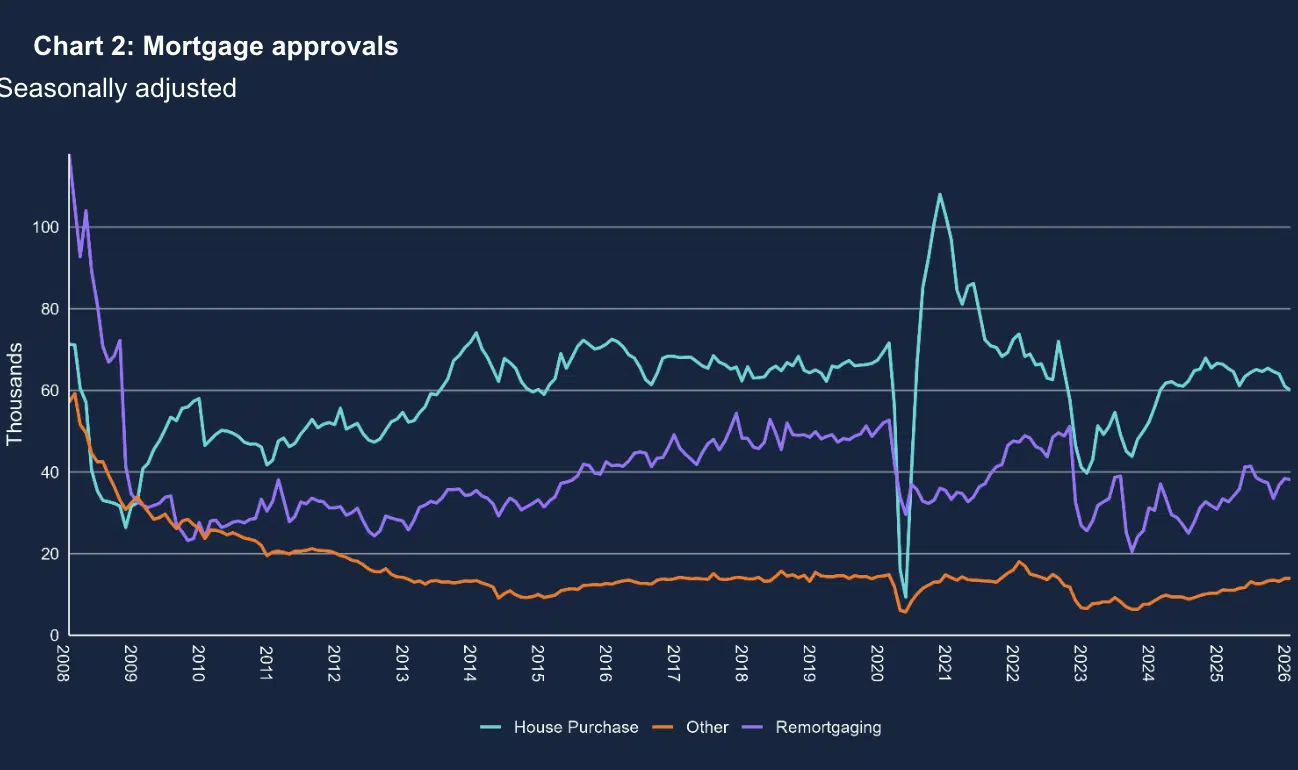
Mortgage approvals and remortgages fell in August
Heatwaves and Middle Eastern conflicts caused many prospective buyers to take a step back over the summer, while others hoped for a reprieve before remortgaging. In August the interest rate on newly drawn mortgages increased to 4.60% weighing down mortgage approvals and renewals numbers. Net mortgage approvals when seasonally adjusted for house purchases decreased to 54,900 in August, from 55,900 in July. Approvals for remortgaging with a different lender decreased to 34,000 in August, from 34,600 in July. When not seasonally adjusted the numbers are more stark; house purchases fell from 65,591 to 53,017 and remortgaging from 36,924 to 31,355.
The North/South divide widens
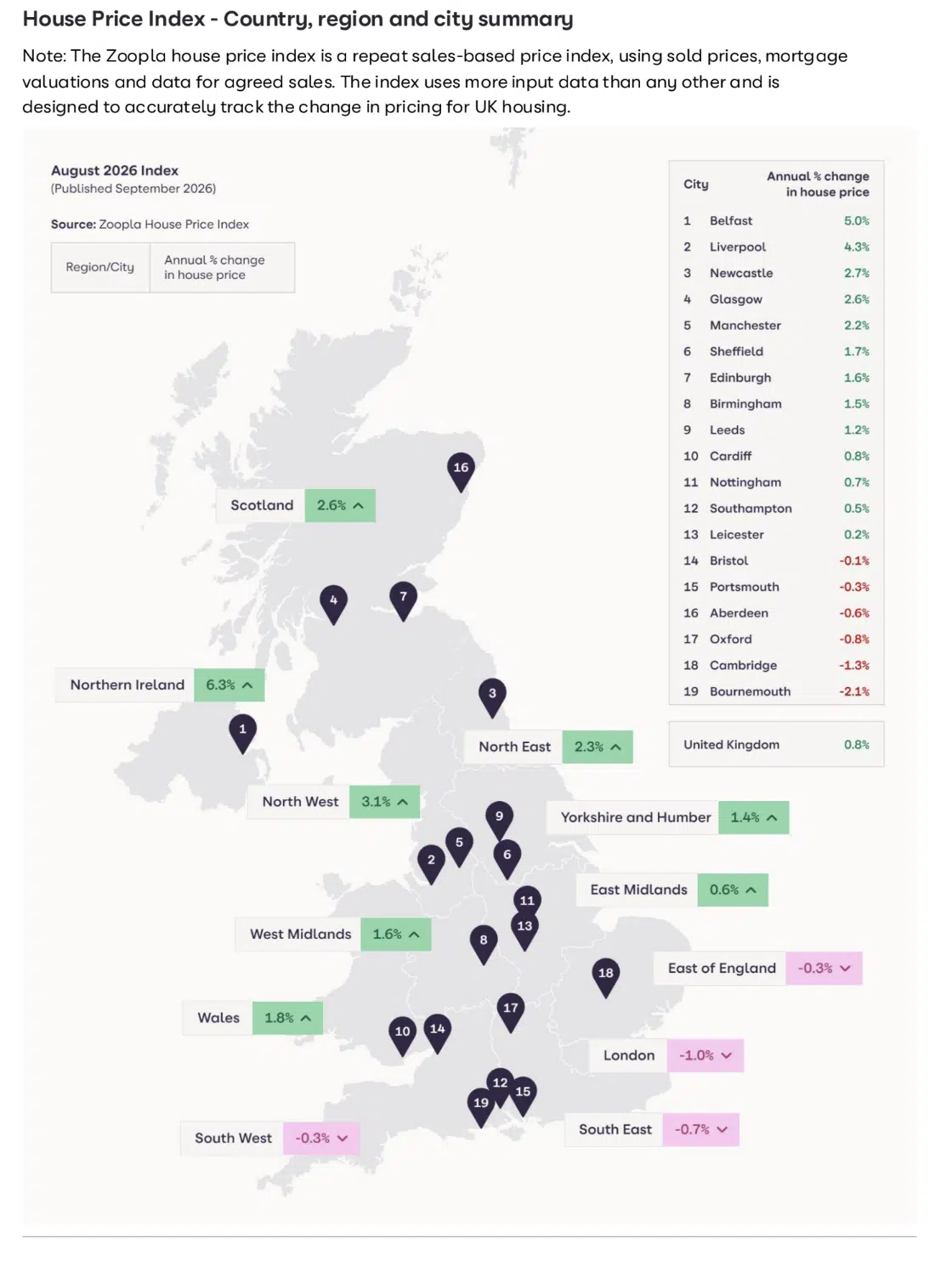
Some sellers struggle to accept change and continue to “test” a higher price before realising their mistake. Zoopla found a quarter of newly listed homes in September were listed before, most often flats and larger homes, with 60% then relisted at a lower asking price. This not only costs sellers time, but also money. First impressions count; blow it and all sellers have left is a portal footprint demonstrating to buyers the trajectory of travel. Greed when rising mortgage rates and overall caution about the global economy is shaky, is never going to serve sellers well, especially in those areas where affordability remains a stretch. For flat owners, with high service charges, finding a buyer who will swallow them is nigh on impossible without a sizable discount. The same applies for homes at the top of the ladder – sellers keen to downsize, or escape the county and increased taxes, have a smaller pool of savvy buyers looking. These buyers know the market and are happy to play the waiting game till the price is right.
Head North and the outlook shifts – homes for sale in more affordable markets are attracting buyers at speed and causing prices to rise. This North/South affordability divide means price growth and falls remain at polar oppoisites across the UK and will remain so till peace is sought in the East.
Best laid plans and all that
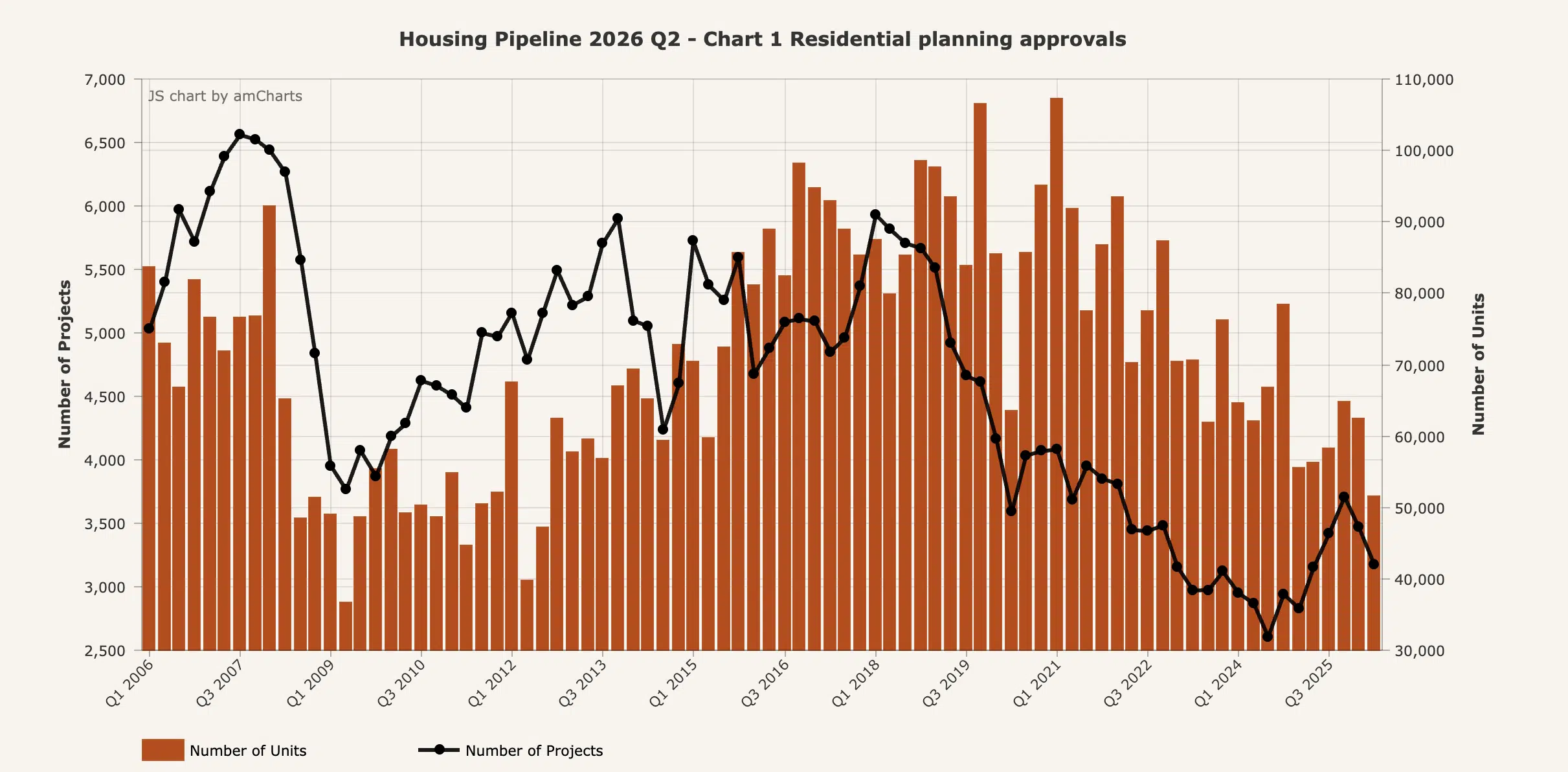
Seeking approval when there is no financial motivation to do so dents the UK’s housing pipeline in Q2 2026. The Home Builders Federation found the number of new homes receiving planning permission fell by 21% in the last quarter with larger developments falling further than smaller sites. Regionally, annual approvals rose in the East and West Midlands, North East, Scotland and Wales while steep declines were reported in the North West, Yorkshire & the Humber, London and the South East. Developers welcomed the government’s new Help to Buy/Build scheme but continue to lobby for a moratorium on further policy costs, taxes and levies on home building to make building stack up financially.
Feeling the economic pinch
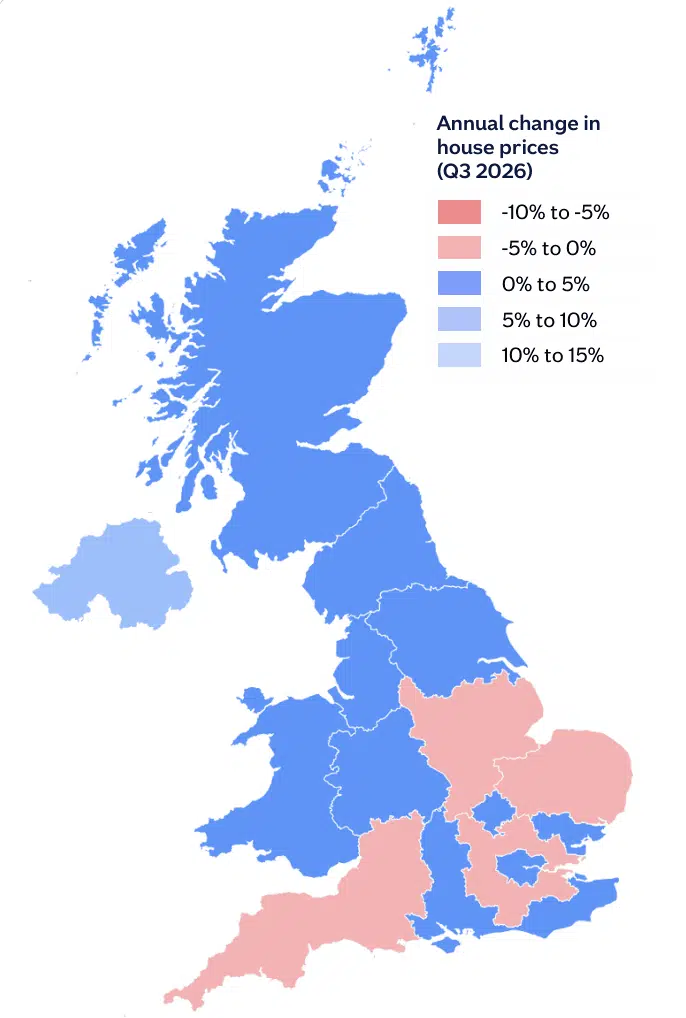
Annual house price growth on Nationwide’s HPI halved to 0.8% in September, from 1.6% in August. Prices reduced by 0.2% over the month and fell by 0.4% over the quarter when seasonally adjusted.
The north continued to prop up the national average with annual prices up 1.6% annually while the south reported falls up to 0.7% in East Anglia, the worst performing region. Despite the North’s bullish growth spurt there were signs of fatigue as the ongoing crises in the East wore down on investment confidence. As a result eight of the thirteen regions saw annual growth below 1%, with four of these recording a small annual decline
Terraced houses remained the go to for buyers, prices rising on average 1.8% while flats flatlined especially in the London region.
Rental demand in London rises
After a sluggish summer rental demand in the capital jumped 7% in September. This came when the number of available rental homes in London was 10% lower than at the same point last year. This drove rental growth; prices up 3.1% year-on-year making the average advertised rent £2,763pcm. Compare this with the national average of £1,578pcm it’s a sizable dent in renters’ take home pay. Demand was reportedly focused on smaller cheaper properties, 0-1 beds, as opposed to sharer homes. Apart from the price this could be to enable greater flexibility if thinking of buying should rates about turn or to enable a level of separate as well as control over outgoing costs. Either way, living in the heart of London is in danger of becoming elitist
Developer gets lending extension
A difficult few years resulted in development group Crest Nicholson asking for an extension on its lending till the 30th of November 2026. A statement read; “The Group remains in constructive discussions with its lenders to amend its covenants and ensure that it has an appropriate level of funding and liquidity going forwards..” Cracks are beginning to widen with each month the war rages on and inflation climbs.
Estate Agents and Management Companies come under scrutiny
It’s back to the classroom for Estate Agents and Management Companies, if they want to pass go and collect £200. Angela Rayner promised this week to cap management “permission fees and administration charges.” In the same breath she will force estate agents to qualify to obtain a licence to act – combating what she described as “rogue property agents”.
Cladding delays prolong leaseholder pain
Since the end of January this year, the cladding backlog rose 12% to 4,697 blocks. The lack of urgency to help leaseholders is debilitating for those trapped both physically, mentally and financially. Despite progress on completed projects; up 22.2%, the mounting number of blocks in need of work, still face 33 weeks for the Building Safety Regulator to approve remediation applications before any work can begin and that’s if a contractor is available.
That concludes another UK Property News Recap – 02.10.2026. Any comments or questions please get in touch.