


Some weeks you feel short changed, and this was one of them. Sellers saw house price predictions fall, tenants saw stock levels diminish as landlords continued to exit the sector, but only if they could find their way out past the numerous no exit signs. Developers failed to make the numbers add up and those already on the hook for a mortgage who have so far managed to escape higher rates will face their day of reckoning come 2027. As we head into December many may well feel the need for a drink, they just have to cobble together what pennies remain to afford an inflated one. Welcome to another UK Property News Recap – 27.11.2026.
Future house prices are revised in the wake of the Iran War
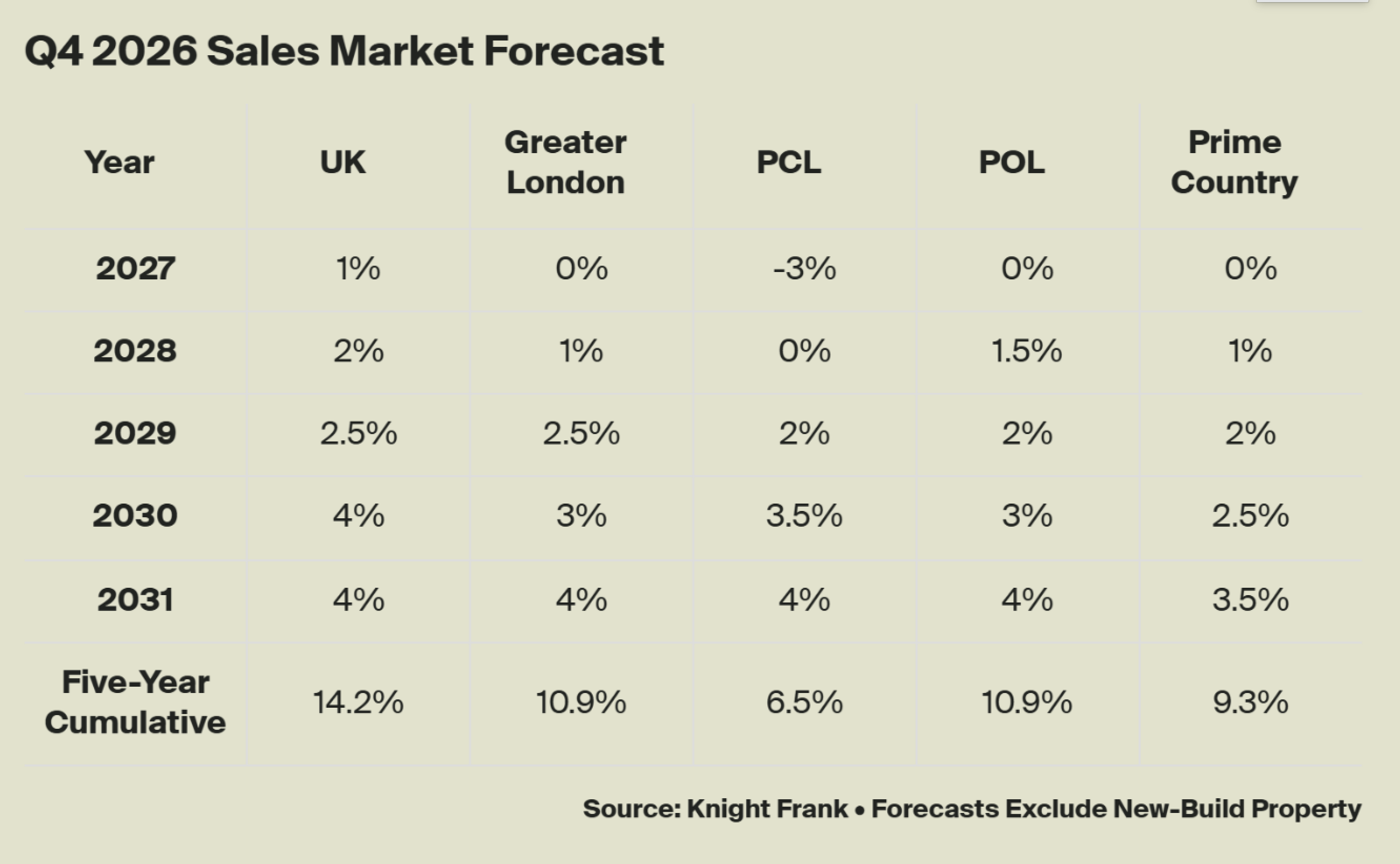
After 2026 reneged on its promise of a buoyant year, Knight Frank revised its house price forecasts down by 1% overall and 3% in prime central London for 2027. Over the next five years they still expect UK house price growth – just not to the extent they once envisioned before Trump decided to take on Iran and taxation rose. As a result growth has been revised down from 20.4% to 14.2%, and further in Prime Central London, which is expected now to only manage 6.5% growth as opposed to the 16.8% promised.
A weak sales market means a strong rental market. So, with demand on the rise and supply low, UK rents are forecast to increase 18.1% over five years; and 19.2% in London where caution over the mansion tax, higher rates and falling prices has buyers biding their time in a more accommodating rental market should their position change and they desire a quick exit.
Rental growth expected to outpace UK house prices
Despite the rental growth swell, landlords faced with rising outgoings continue to abandon investment in the sector. This limited supply has led Hamptons to predict rents will almost lap house price growth of 7.2%, and grow by 14.2% between 2026 and 2029. Increased taxation in April 2027, and upgrade demands when paired with rising mortgage rates has many indebted landlords questioning investment in a sector where they no longer have control over their own asset. This means tenants will continue to be hit by rental rises especially with new lets, while existing tenancies lag behind as landlords fear the loss of a reliable tenant for an unknown quantity or a potentially costly tribunal.

The prime minister is exposed to past development choices
Angela Rayner is stuck between a rock and a hard place as she faces the prospect of launching a probe into her boss’s use of taxpayer funds when he was the major of Manchester and allegedly handed Daren Whitaker’s Renaker group £600million of loans from a £1billion housing fund and didn’t do AML checks… The truth, no doubt, will be hiding behind the show.
Labour looks at withdrawing interest from holding deposits
In a further attempt to discourage landlord investment, the government is considering taking a proportion of interest raised from tenant deposit schemes. Many of these providers are just for profit while others should either be reimbursing landlords should damage occur to their property or be handing tenants their money back for their next home. By pocketing some interest under the guise of tenant welfare the government is alienating everyone.
Worse it is deterring investment which reduces rental stock levels; keeping rents high for the tenants they want to protect.
Crest Nicholson is crest fallen
Another week, another trading update from a developer bemoaning the state of the market. Crest Nicholson’s latest trading update reported an adjusted EBIT loss including associates for the year to be in the range of £30m to £40m. As the year progressed trading conditions worsened; the group’s market sales rate for the year was 0.43 with 0.48 achieved in H1 that fell to 0.39 in H2, and then 0.34 across September and October. Expectations for the near term are for conditions to remain tricky in 2027 unless a resolution is sought in the East that will reduce inflation bringing down rates while elevating buyer confidence…In the meantime, the group remains “in constructive discussions with its lenders to amend its covenants and ensure that it has an appropriate level of funding and liquidity going forwards.” Watch those shares tumble…
Under EPC pressure
Déjà vu anyone…? Energy Performance Certificates (EPCs) which are currently pretty useless, are due a makeover at some point late 2027. How they will be fully reimagined, and what criteria landlords will have to adhere to, remains unclear.
In the meantime the zero rate of VAT on “energy saving materials and installation will be removed” from March. This coupled with increased costs overall mean the chances of all rental stock managing to be C ready by 2030 are slim to none, which will have the government clapping their hands in glee when they will slap a £30,000 fine on landlords for not complying… if they haven’t abandoned ship already.
1% deposit mean lender desperation
Lender Nationwide has launched a new residential mortgage that only requires a deposit of 1% for five years at 5.99% on freehold houses and period flats. Is there less risk of negative equity if not a new build property or subject to the hefty services charges flat fall foul to?…Potentially, but the repayments aren’t cheap and if as a buyer you couldn’t save enough for a bigger deposit there is no buffer should the market descend further. Better to save a bit more and spend less each month. On the plus side the lender is clearly anticipating this type of purchase is for the long haul and so will ride out many a bump in the road in their favour.
PCL prices feel the absence of international buyers
According to official figures released last week, prices fell 18.5% in the City of Westminster and 15.6% in Kensington & Chelsea in September from a year earlier. The reason? Everything has gone up especially for foreign buyers who propped up this market creating artificial prices for years. Higher stamp duty for foreign buyers, the scrapping of the Non Dom tax status, and the introduction of a mansion tax in 2027 all have contributed to the downfall of prices. This mixed with extortionate service charges, economic uncertainty and historic stock that’s expensive to upgrade, maintain and heat has resulted in an exodus of international investors and limited cash rich domestic buyers. Of those that remain, only a significant discount will persuade them to buy and that’s if the sellers will relent.
Unfortunately, PCL boroughs that are considered prestigious now are considered a liability by many unable to sell.
The Bank of England warns lower-income households are most at risk
The Bank of England’s Stability Report claimed 7 million households are projected to refinance between June 2026 and December 2029. Of these, around 6.5 million are expected to see payments rise, while around 350,000 are projected to see payments fall.
As is, there are 1 million households currently on mortgage rates below 3% that are due to refinance by 2027 Q4, meaning that by then most mortgages remaining on such low rates will have refinanced. This cumulative increase has left some households with less financial headroom to absorb further shocks. This is particularly the case for lower-income households, renters and borrowers with limited savings buffers which could prompt further cut backs. However, according to the Bank of England current Debit Servicing Ratios are around long-run averages, household indebtedness is low, and arrears remain limited. Much hinges on whether the ongoing conflict in the East leads to a prolonged period of high inflation and elevated interest rates. For now, we may be scraping by, but for how much longer?
Build it and they will come…?
The Home Builders Federation found almost three-quarters of SME home builders reported moderate or significant difficulties in securing commercially viable bids from Housing Associations for Section 106 Affordable Homes. Seven in ten cited schemes being too small or offering too few Affordable Homes to attract interest as a minimum of between 11 and 30 Affordable Homes is required. This disincentives builders from construction both on smaller sites and on those that should comply.
If no one is buying, no one is building.
Transaction numbers feel the economic climate
To season or not to season? Seasonally; residential UK property transactions fell 2% on September’s levels and 8% when compared to October 2025. The economic climate, cooling transaction levels with increased anxiety. However, non-seasonally adjusted residential transactions in October 2026 were 7% higher than in September 2026. Showing that those who committed early doors, remained so.
What’s fascinating is that both seasonally and non-seasonally non-residential UK property transactions rose 8% and 12% respectively in October 2026. Suggesting bulk investor buying at a discount and a potential uplift in purchasing for some best in class commercial property or data centres.
That concludes this week’s UK Property News Recap – 27.11.2026. Any comments or suggestions please get in touch.


