


This week house prices fell as rents rose, and construction starts tumbled as borrowing costs climbed. The only constant was the base rate, which held a steady course despite their path remaining unclear. Labour’s self-imposed housing target is now so far out of their sights that they are adrift; reliant on the mercy of developers who are baying for help-to-”build” if they are to be saved. Welcome to another UK Property News Recap – 17.09.2026.
Rental prices continue to rise
Supply weakens as demand grows leading to higher rental inflation across the UK.
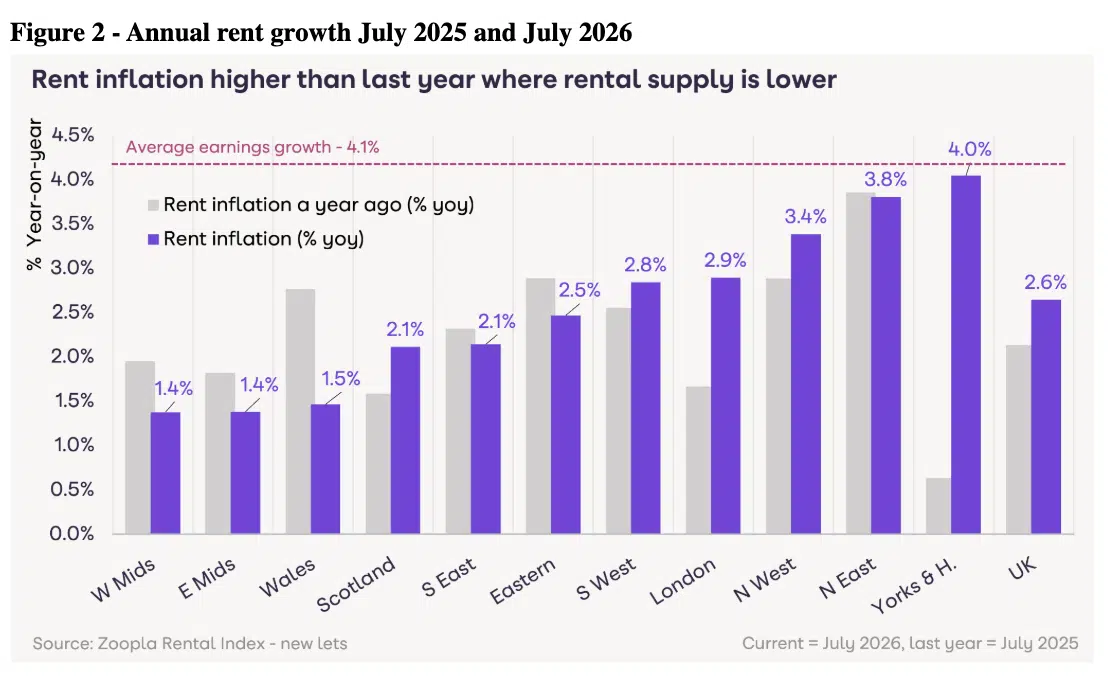
Higher interest rates have driven many buyers back to the rental market just when stock levels slipped 3%, creating the ideal petri dish for rental growth. This is most noticeable in London and Yorkshire and Humber where the average number of homes for rent fell six per cent and twelve per cent respectively, causing rents to jump 2.9% and 4% respectively. Typically cheaper markets registered more significant growth spurts that were twice the national rate of 2.6% as tenants competed for an affordable home before it fell out of reach. Unfortunately due to ongoing economic uncertainty, @Zoopla expects this trend is here to stay leading to further rental growth of 4-5% over the course of 2026.
Shining a light on Help-to-buy
A government “review” of the Help-to-Buy scheme found the scheme was responsible for one in seven additional new homes being built in England. Enabling 300,000 people onto the ladder, and nudging up house prices by… “ONLY” 2 percentage points. The Institute for Fiscal Studies also found that Help-to-Buy “disproportionately benefited higher earners and did little to increase affordability for those on lower incomes.” But still, this has given the government the ammunition it may need to introduce a similar scheme, to make up their housing numbers, if driven to it by the many disgruntled developers baying at their door for a leg up.
House price growth slows in July as rents continue to shift up a gear throughout August
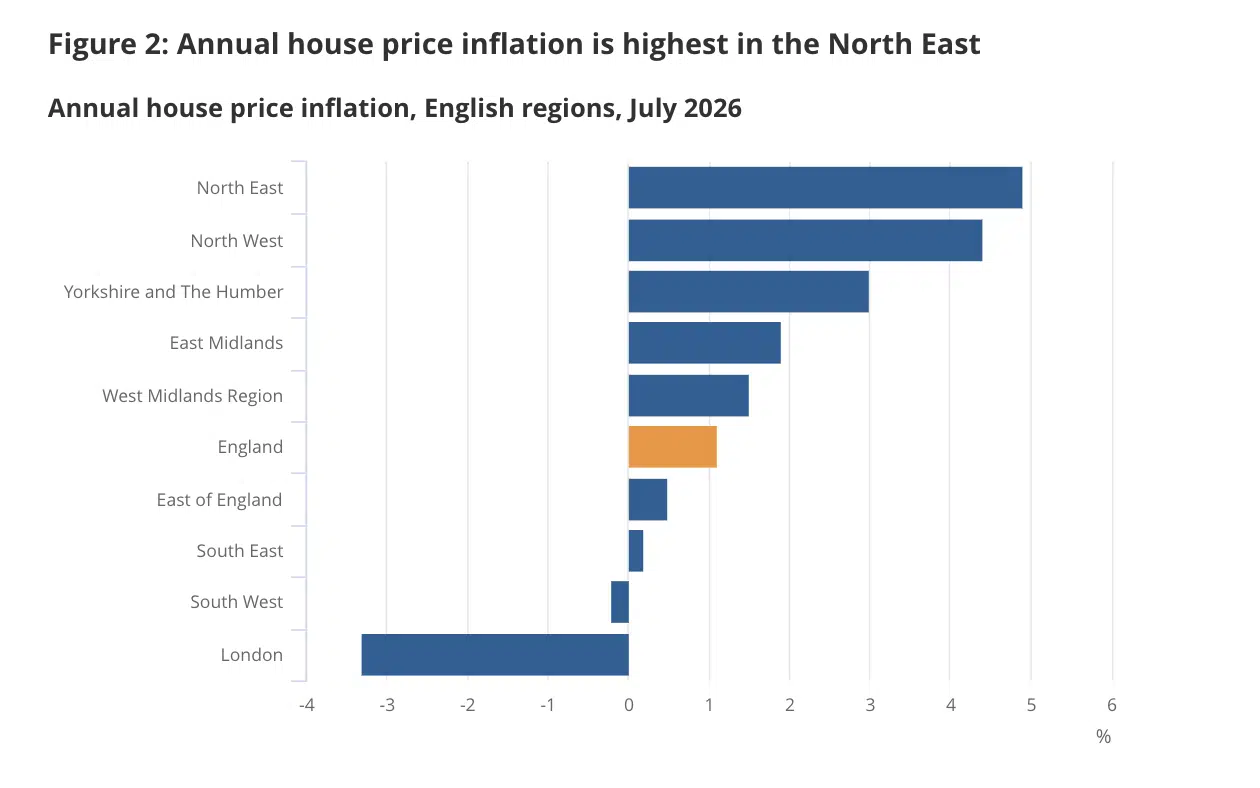
The ONS ESTIMATED that UK house prices rose by 1.4% in July down from 1.5% in June. The North East was the English region with the highest house price inflation, at 4.9% however Northern Ireland continued to see house prices surge 9.2% from Quarter 2 2025. At the other end of the spectrum, London saw prices fall for the 11 consecutive month, down 3.3% annually. Higher taxes and flat outgoings that are anything but flat, deterring cash strapped buyers.
As soaring rates cause more buyers to revert back to the rental market so rental prices continue to climb
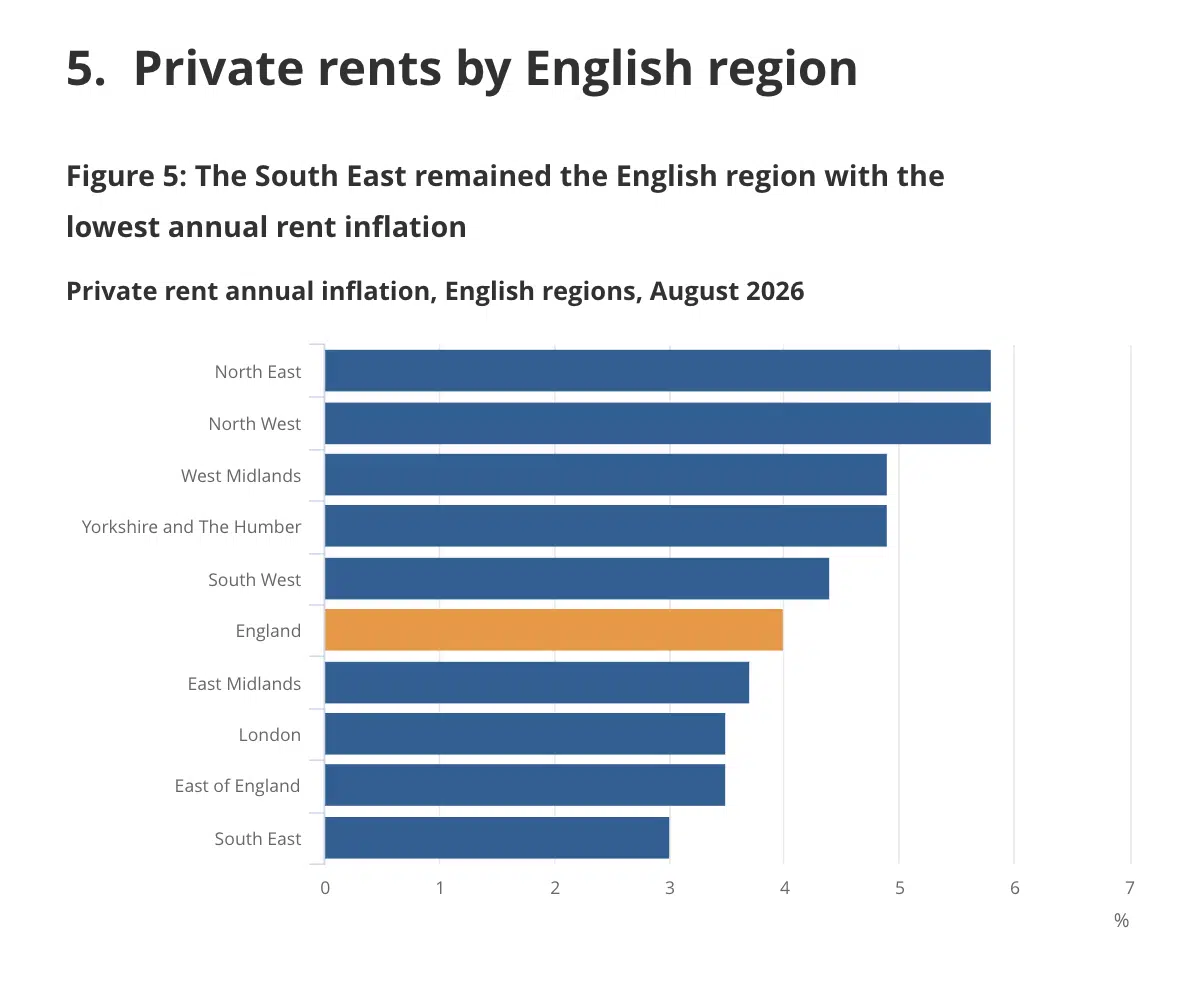
In the rental market the average UK monthly private rent increased by 3.8%, in the 12 months to August 2026. Growth was driven by demand in the North East and North West which drove prices up 5.8% while the South East only rose 3.0%.
The Kier Group pivots away from residential development to more profitable sectors such as infrastructure.
FTSE 250 builder Kier Group is just one of many, desperately trying to winch their business out of the red and into the black, and leaving the government’s housing targets hanging
Wandsworth faces a 98% rise in council tax
£84m of annual funding cuts due to come into place by the end of the next three years has the Conservative-run local authority reluctantly implementing a £985 increase in council tax to make up for the shortfall.
“Value remains firmly in the eye of the buyer”
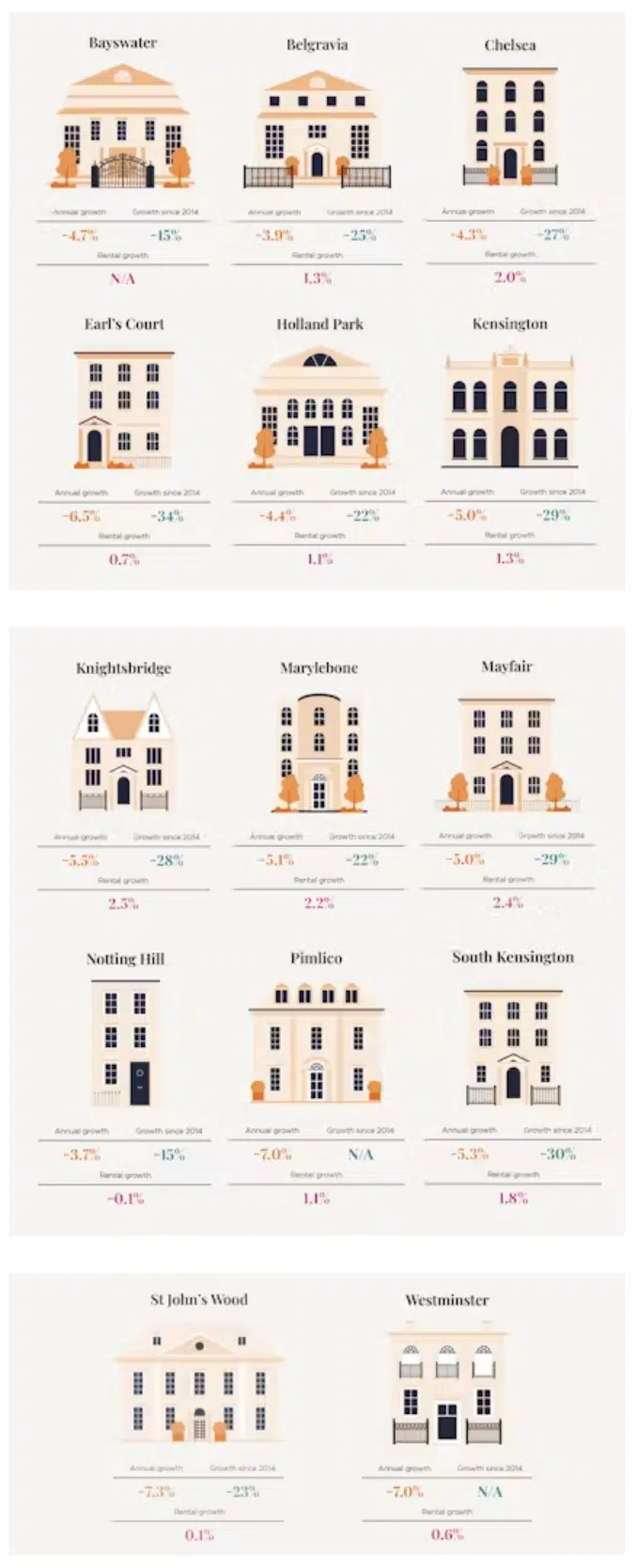
Prime Central London stats from Savills show values were 26% below their peak in 2014. A further 2.5% was shaved off just this year with more expected in the short term. Some sellers are still struggling to accept prices have plummeted but others who’ve come to terms with the market’s about-turn are still managing to move on.
The estate agent group found 60% of sales this year were for houses above £5m as flats continued to fail to “service” buyers’ requirements. Despite all this, Savills remains optimistic, believing growth will return but not until 2028 when it will steadily increase 7.5% by 2030. From what low though remains to be seen.
Delivery proves difficult when hammered down by economic uncertainty and rate rises
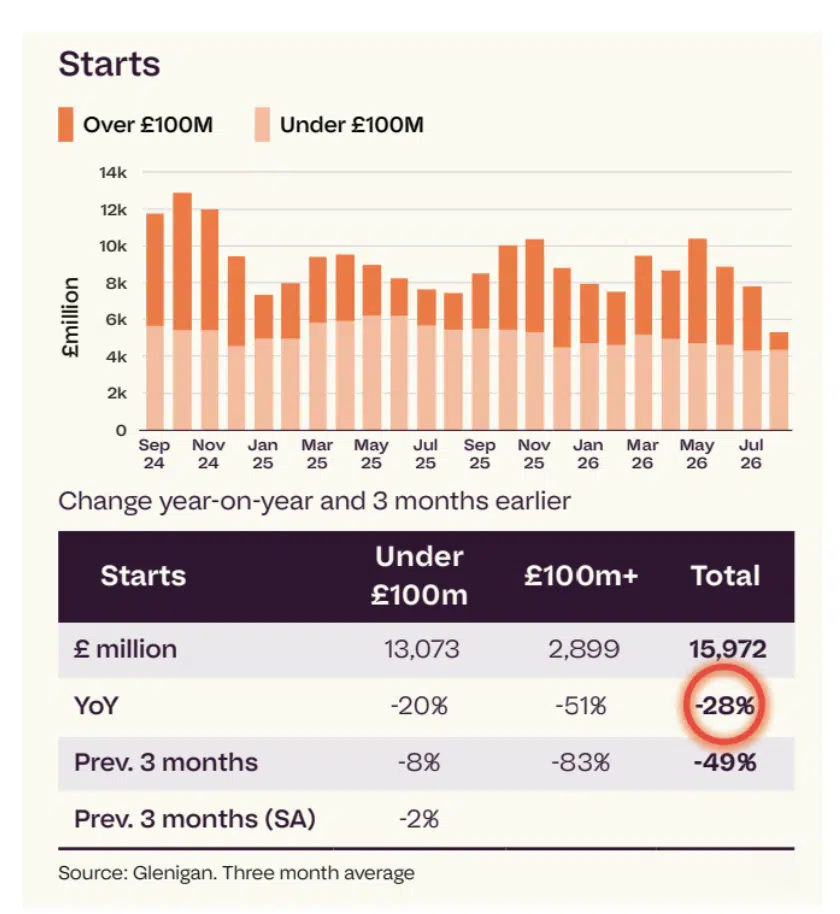
Glenigan’s September Review of the construction industry over the past three months showed getting started proved sticky; Project starts fell 49% and 28% y-0-y. Industrial activity fell hard, down 49% annually followed by residential starts at 33%. On their coat tails was education and civil engineering works. Only retail, health, amenity and roads projects managed a rise. That said, awards were largely on the rise giving some future respite for the industry; the public sector was up 1,852%!
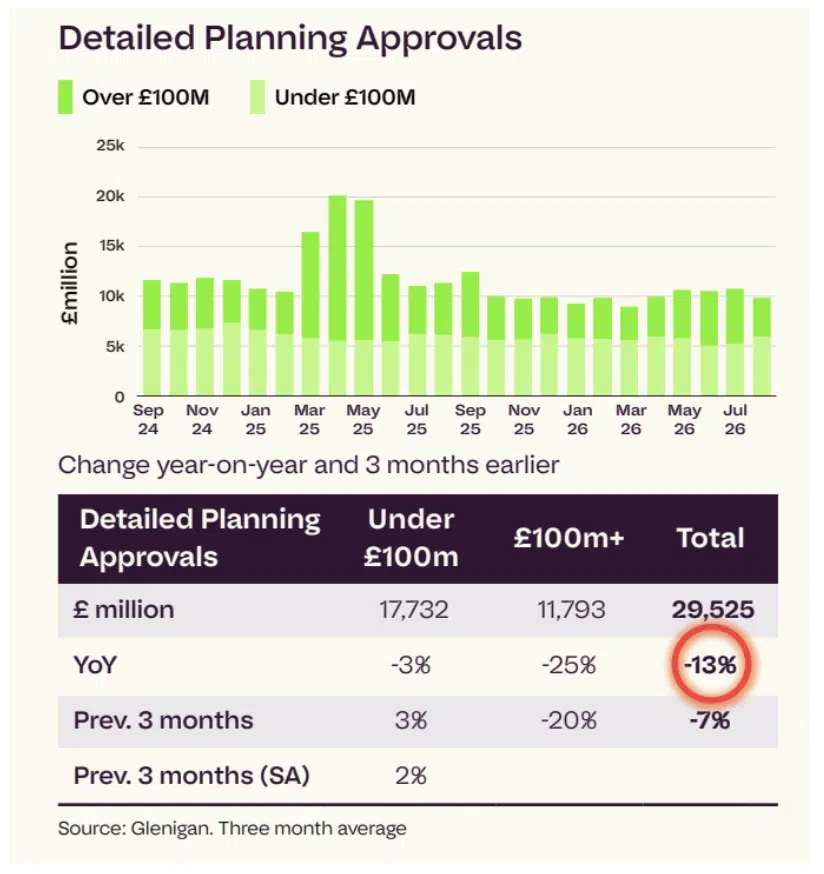
Meanwhile planning approvals fell 7% against the preceding three months and dropped 13% lower than the previous year. The blame laid heavily on strained and under-staffed planning departments and the new infrastructure Levy delaying many from committing while money is scarce
Developers offered environmental deal to receive swift planning
Pay £2,000 to pass go…developers are promised planning applications will be fast-tracked if they build up a nest egg for environmentalists to spend on the damage caused from development upfront.
Base Rate holds as Interest rates rise
The Monetary Policy Committee voted by a majority of 6–3 to maintain the Bank Rate at 3.75%. The Committee judged that the current bout of economic combinations risks the inflation outlook tilting further to the upside compared with at the time of the previous MPC meeting. The big question mark is how much of a hit the economy can take in round two should the first round continue as is. As is, interest rates moved with speed over the course of the week; the average residential two and five year mortgage rate closing on Friday at 5.84% and 5.88% respectively. This doesn’t bode well for borrowers. For anyone keen to move but yet to fix, time is of the essence.
The type of landlord and stock they hold has evolved
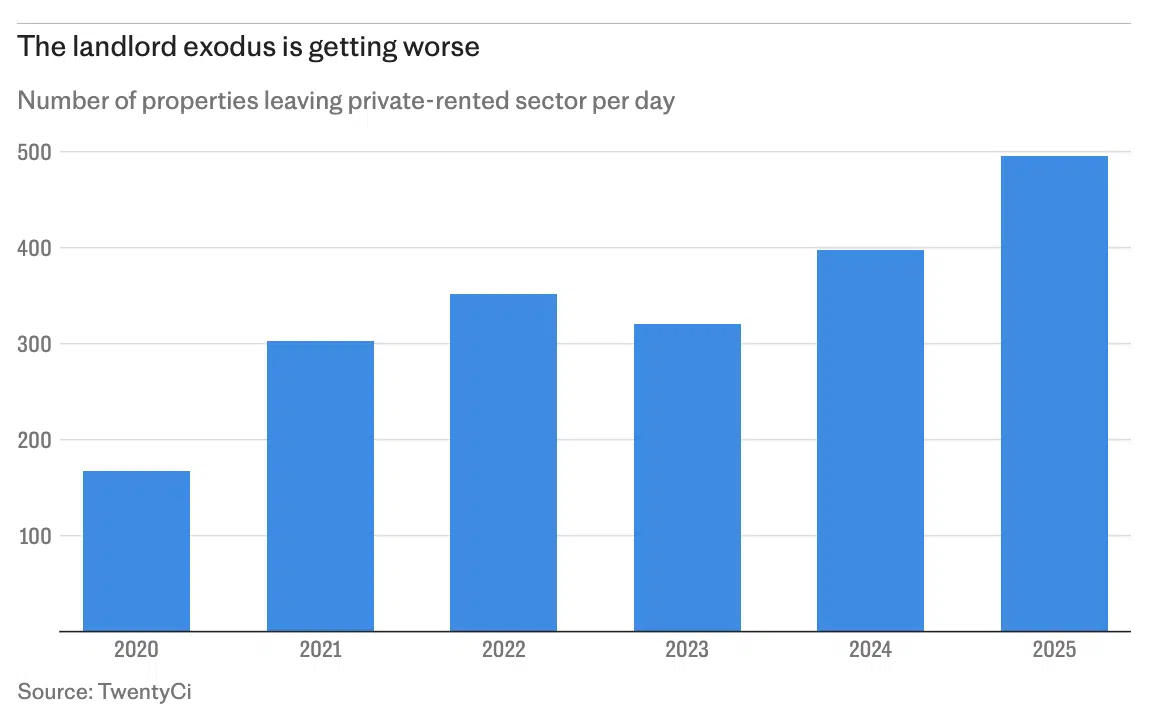
The part-time or heavily indebted variety with aging stock is fleeing the market, if they can, to be replaced with more professional outfits prioritising newer stock. According to TwentyCi 562 rental properties were being lost from the market every day in Q3. However new, energy efficient, build-to-rent properties drove stock levels up 1.3% on average.
Growth was dominated at the lower end of the rental market; up 7pc for those properties costing between £800 and £1,500 a month, but down 1.1% for homes costing 1,500 and £3,000 a month and 6.5% in more expensive homes. This is hitting London tenants hard as they continue to compete for what stock remains within reach.
That concludes this week’s UK Property News Recap – 18.09.2026. Any comments or questions please get in touch.
.
