


This week, the government’s housing ambitions collided headfirst with economic reality. Plans to accelerate housebuilding were threatened by potential steel tariffs, social housing waiting lists stretched further into the distance, and concerns mounted over the growing number of London flat owners forced to sell at a loss. Meanwhile, ministers nudged leasehold reforms forward by a year, considered changes to stamp duty and sought new ways to tackle domestic abuse in social housing. As house prices softened and rental demand continued to outstrip supply, the UK’s housing market once again highlighted the widening gap between political promises and practical delivery. Welcome to another UK Property News Recap – 12.06.2026.
Steel tariffs to delay housebuilding
As a result of lobbying this week the government is reconsidering implementing 50% tariffs on imported steel for another 3 to 12 months.
Economic issues cause even the best laid plans to come array. Timing is everything. Until we can produce more steel; tariffs on imports will take us yet further away from housing targets.
Domestic abusers could face eviction
15,000 households in England were forced to find new social housing because of domestic abuse. New laws could enable landlords to take back possession but this intervention could only hurt victims further if the tenancy is in the abuser’s name. Abusers need to be kicked out, how you keep them out is another thing. Re-housing the problem to appease neighbours is only transferring the problem. This needs finessing and abusers need assessing.
Social housing lists currently would take a decade to clear
The 2012 rental income handshake deal with the government has councils servicing debt rather than serving its residents. The charity Shelter found that “more than 1.3 million households are on a waiting list for a social home, but only 12,198 were built by councils.” The debt pile is growing while social housing numbers stagnate. This is a crisis that isn’t going away and has no chance of improving while inflation is high and money is scarce. Just saying “build, baby build” as if to galvanise an imaginary work force into action simply won’t cut it with those struggling to find a roof.
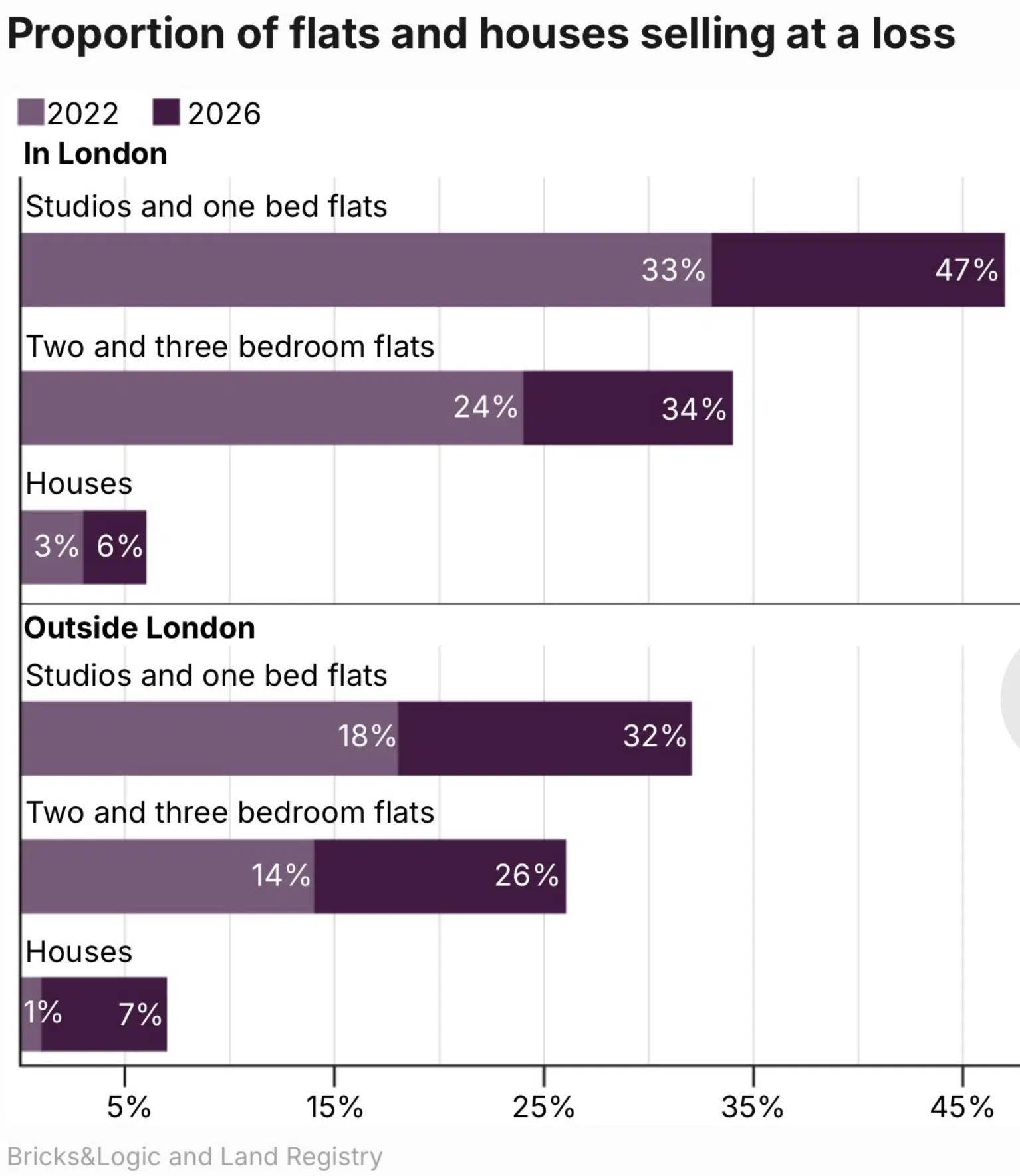
The number of flats in London selling at a loss rises
Moving on up the ladder has become harder from those already clinging on in apartment blocks. Cladding and building safety issues, high service charges and a general mistrust around management and leasehold has buyers looking for alternatives or waiting and saving for longer before heading straight for a house.
This is an issue for the government who wants to build. If current stock isn’t of interest, new homes won’t fare much better unless trust is gained. Without this the whole market chain slows and further pressure is put on the rental market just when investment is waning.
Selling at a loss is galling, not being able to sell at all is devastating. A home is supposed to be a sanctuary not a prison.
Prime Central London forecasts get downgraded
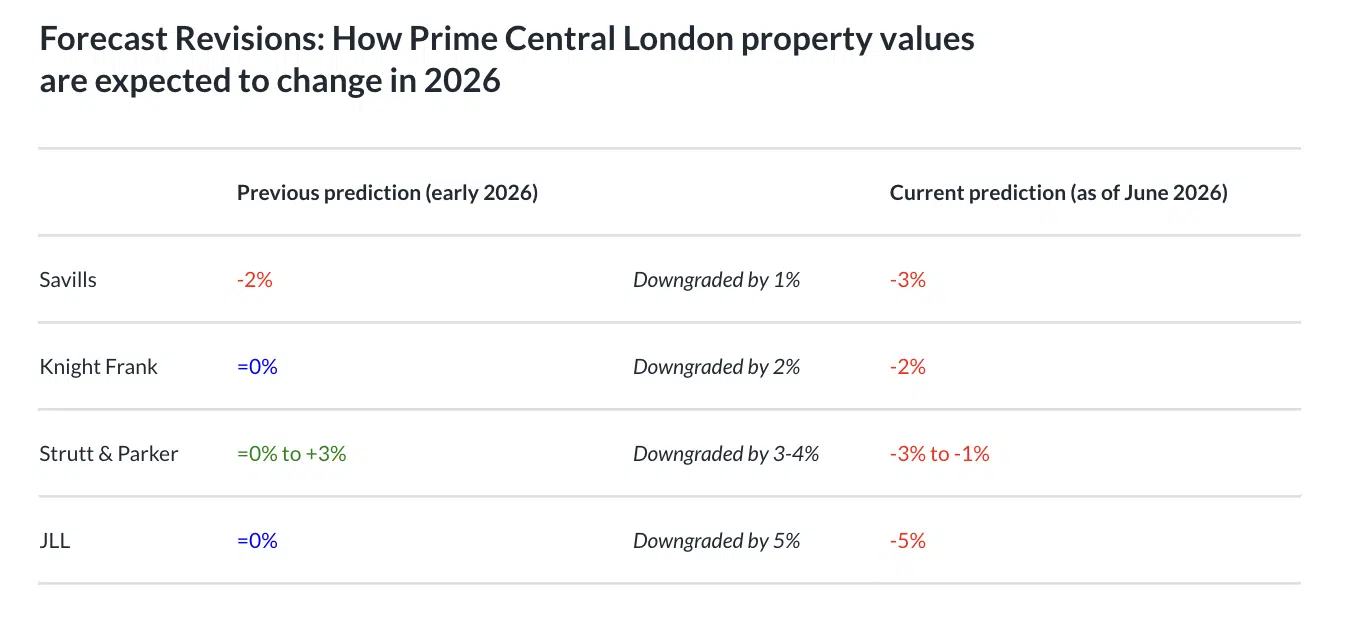
Knight Frank, JLL, Savills and Strutt & Parker have rethought their prime Central London property forecasts in the face of continued economic turmoil generated by the ongoing conflict in the East. Keen not to be the harbingers of doom, they also paint a picture of recovering come 2027…just as they once did for 2026.
Stamp Duty Reforms to be considered
A committee wants to give the constipated property market movement by setting up yet another consultation on how to reduce stamp duty rates to stimulate more transactions. Potentially overhaul the banding thresholds; and updating reliefs and exemptions. This would definitely create flow but it could just bulk up prices. A lot depends on what they decide to do in its stead.
Ground rent to be capped a year earlier
The government – keen to show some housing “ground” has been covered – will stop freeholders from digging deeper than £250 for rent from leaseholders by late 2027. This move, while welcomed, still gives lobbyists a year and a half to either be appeased by the government or take them to court. Promises are nice but implementation is much better
Mortgage arrears decrease while new possessions creep up
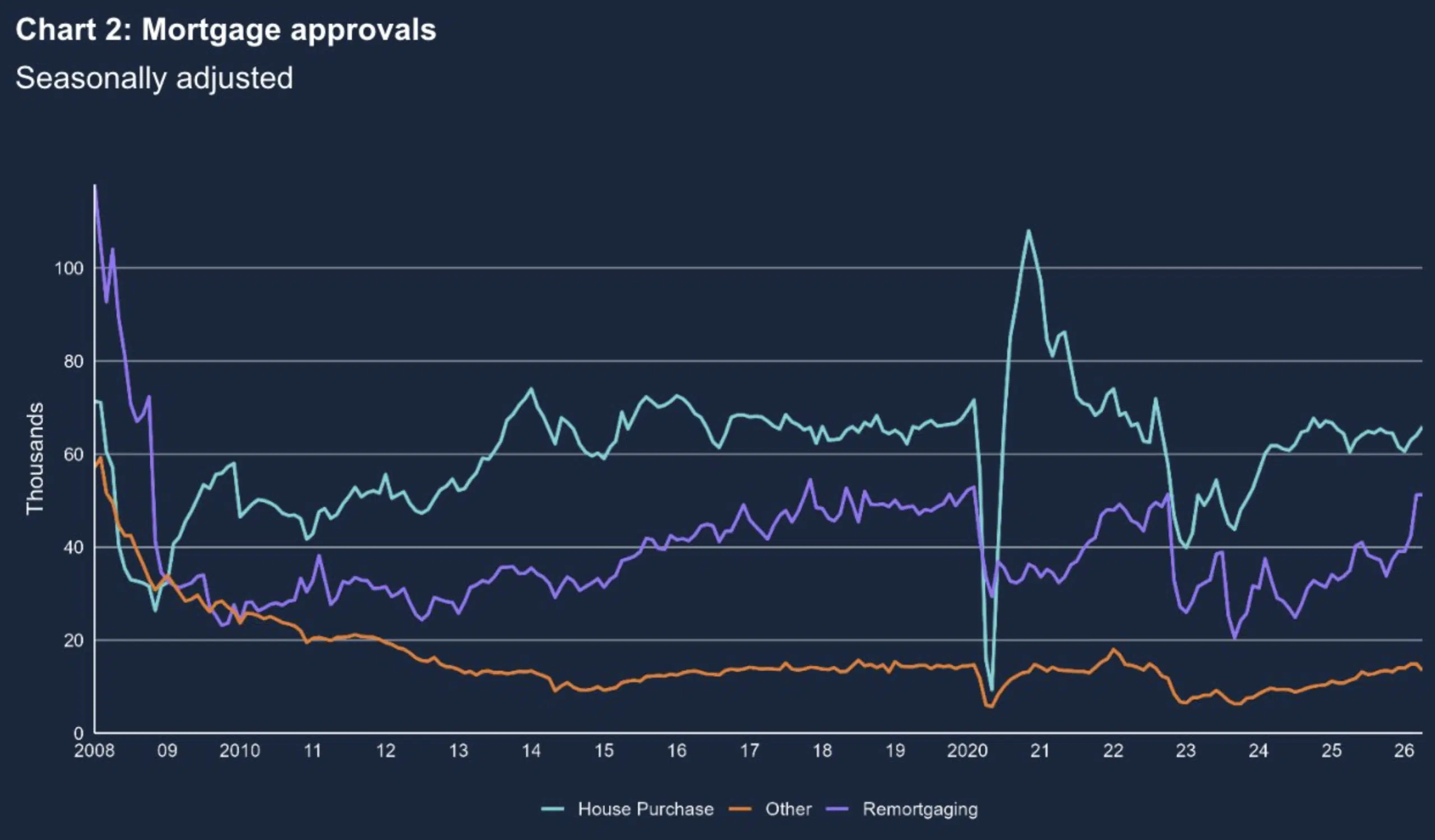
The lending market shows resilience in the face of higher rates and economic uncertainty. The value and the number of new arrears fell in Q1 2026; down 1.7% and 0.1pp respectively. Meanwhile new possessions increased by 1.6% from the previous quarter but the total stock of possessions decreased by 0.8% to 9,247, the first decrease since 2021 Q1.
RICS surveys the UK Property Market
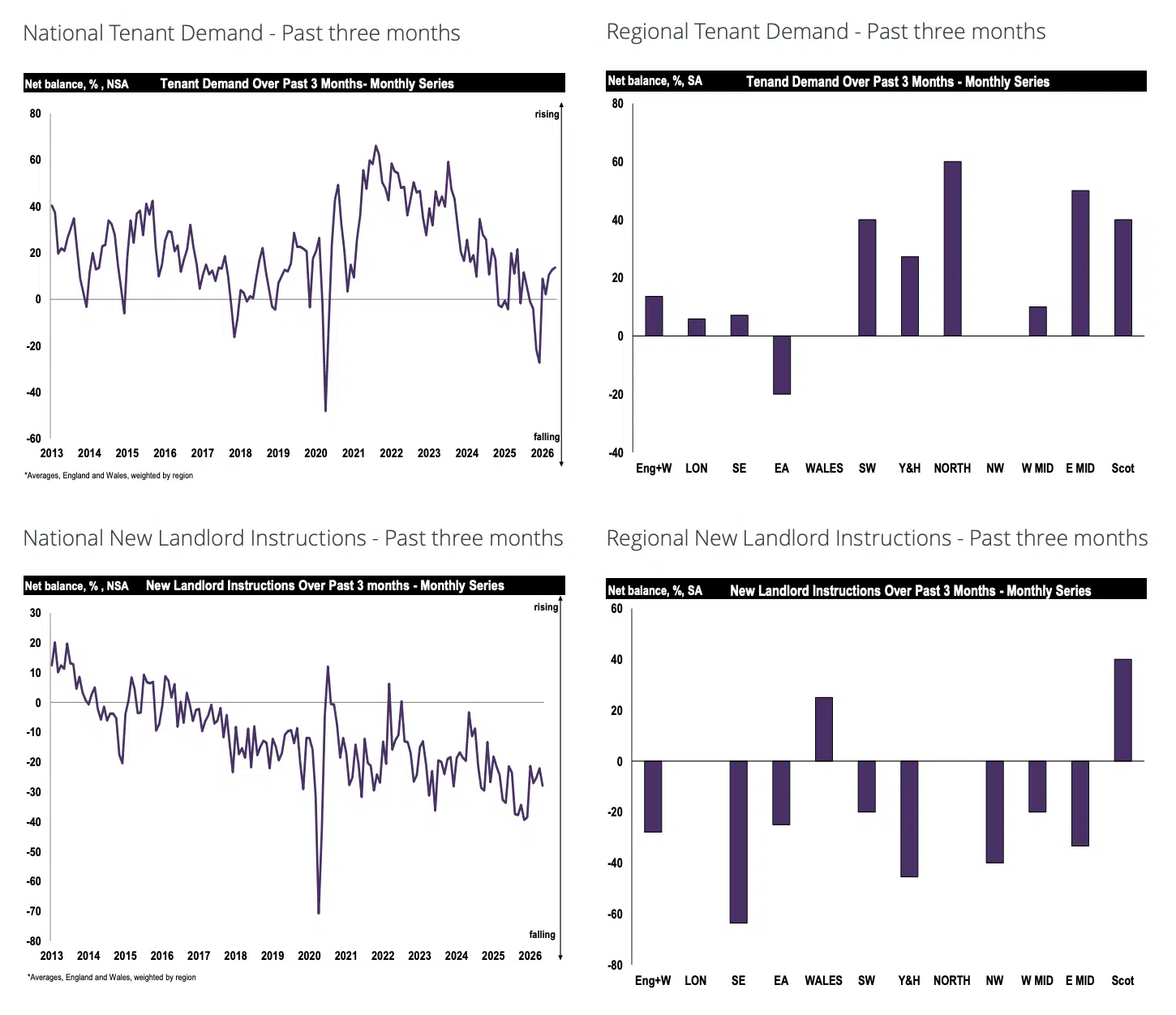
The UK property market is proceeding with caution as it navigates chopping economic waters, surveyors report. Agreed sales and demand remained consistent in May, indicating market activity is stabilising as house prices fall further especially in the South East and East Anglia. Meanwhile Northern Ireland continues to outperform the rest of the county and agreed sales in the North remain robust for the foreseeable. Looking ahead RICS surveyors remain wary, with many expecting things to get worse over the summer before moderating.
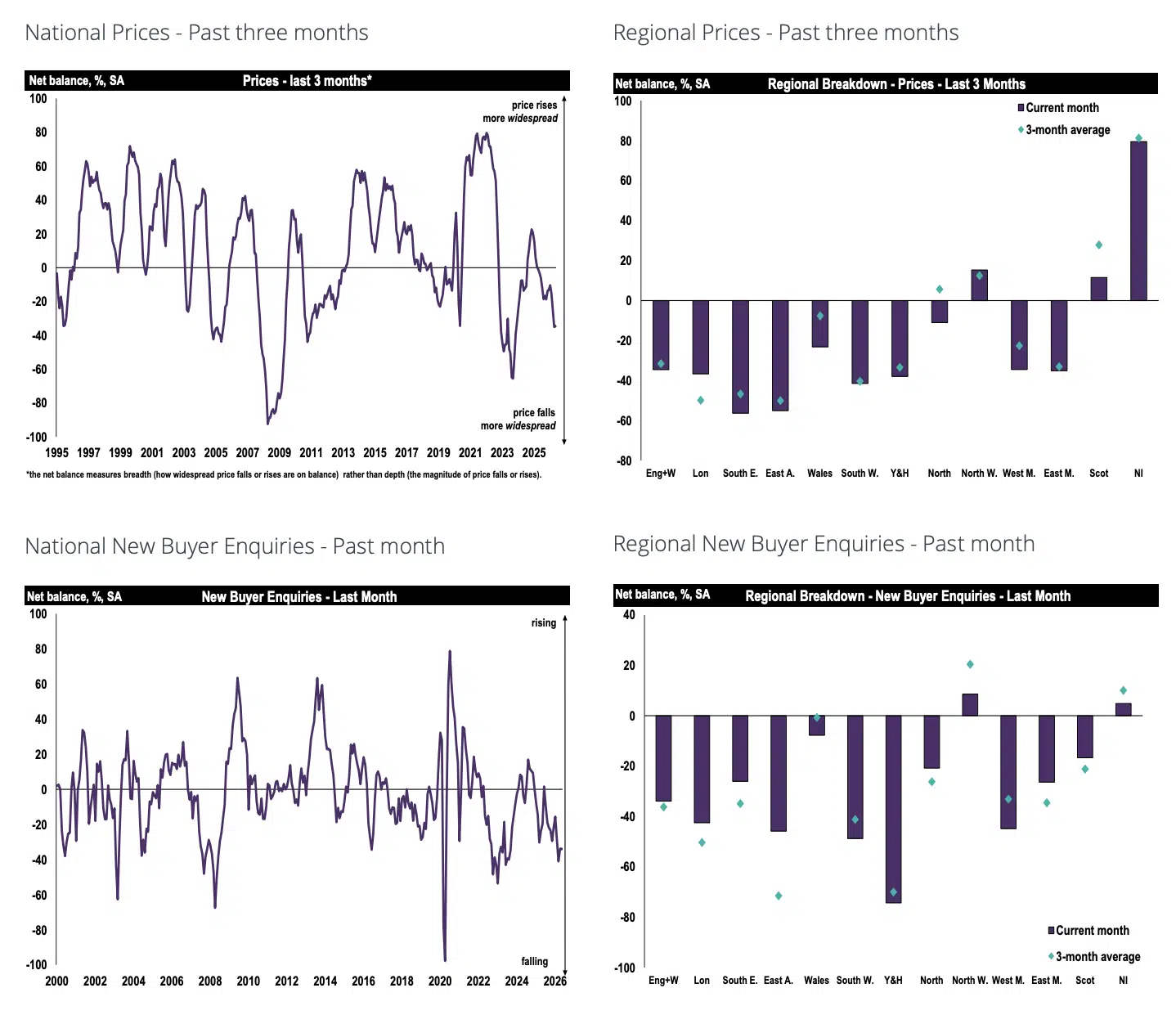
In the rental sector demand grew everywhere with the exception of East Anglia. Meanwhile Landlord instructions fell in all regions bar Scotland and Wales. As a result prices are expected to continue to rise as demand outweighs supply; further squeezing tenants’ finances.
First time buyers boost prices in affordable areas
First time buyers are honing in on homes under £170,000 in northern areas, boosting prices. Rightmove found the areas with the fastest price growth were in Bridlington, in Yorkshire and The Humber closely followed by St. Helens in Merseyside, both with growth of 18% year-on-year. Overall though average asking prices for a typical first-time buyer home in Great Britain reduced by 0.7%. In Exeter, however, prices fell hard, down -20.5% year on year making the average first time buyer home now worth £201,248.
As prices dip, buyers are a step closer to achieving their homeownership dream. Making the leap at a lower price point though remains more palatable, which in turn causes prices to rise with increased demand as opposed to starter homes in more expensive areas where buyer caution remains.
Climate change damages UK Housing foundations
When the foundations of your home move you lose both the physical and financial stability which underpins your everyday existence. Analysis by the British Geological Survey predicts 26% of homes in “populated parts of London including Camden, Islington and Barnet are most susceptible, as well as Kent in the south-east of England” to subsidence issues as the climate becomes hotter and more erratic.
Construction maintains itself
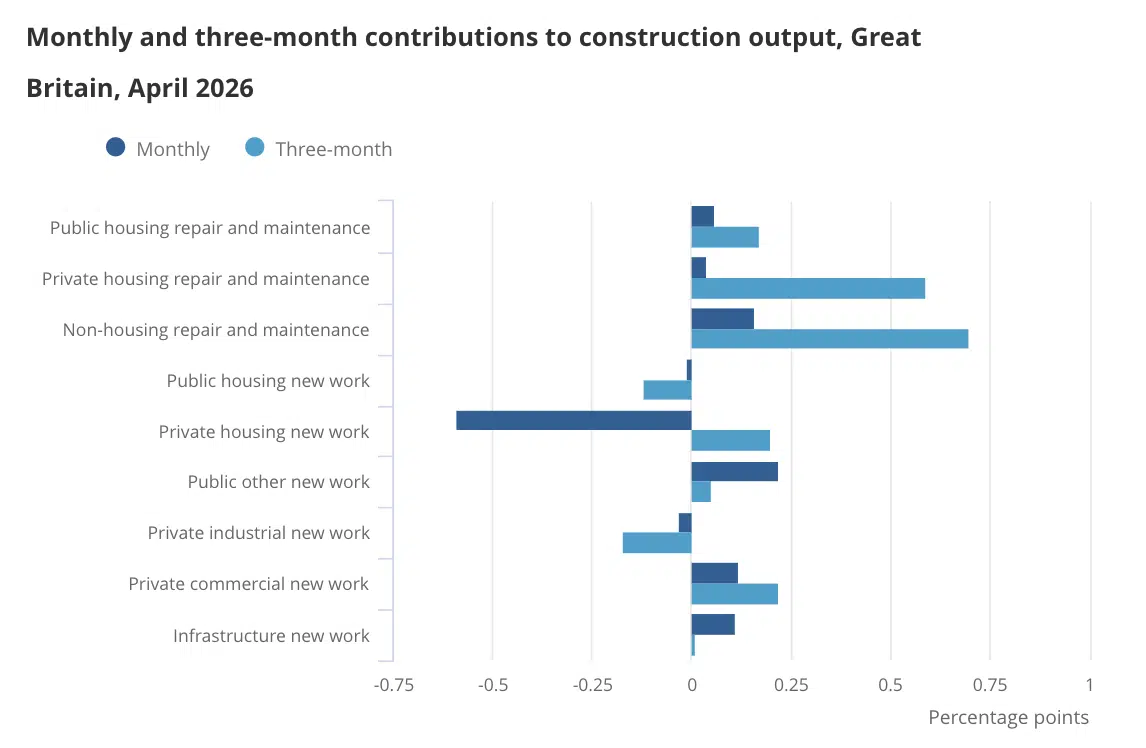
As the weather improved so did overall construction output before the ongoing effects in the Middle East took hold. In the three months to April 2026, total construction output grew. This was predominantly driven by non-housing repair and maintenance activity, which grew by 3.5%. Hot on its heels came private commercial new work, which grew by 2.1% as data and tech demands grew. And despite new housing increasing over the three month period it subsequently nose dived in the past month as the reality of a quick seize fire faded.
Major contractor Ardmore goes into administration
Construction contractor Ardmore downs tools under weight of historical building safety claims which have left them owing more than they have. As a result, many existing sites are now at a standstill and concerns rise that other contractors will follow suit as the chain of blame is passed down the line. Regardless, this get out of jail card for companies will leave leaseholders trapped for longer and Labour further from their housing target.
UK rental rises divide country
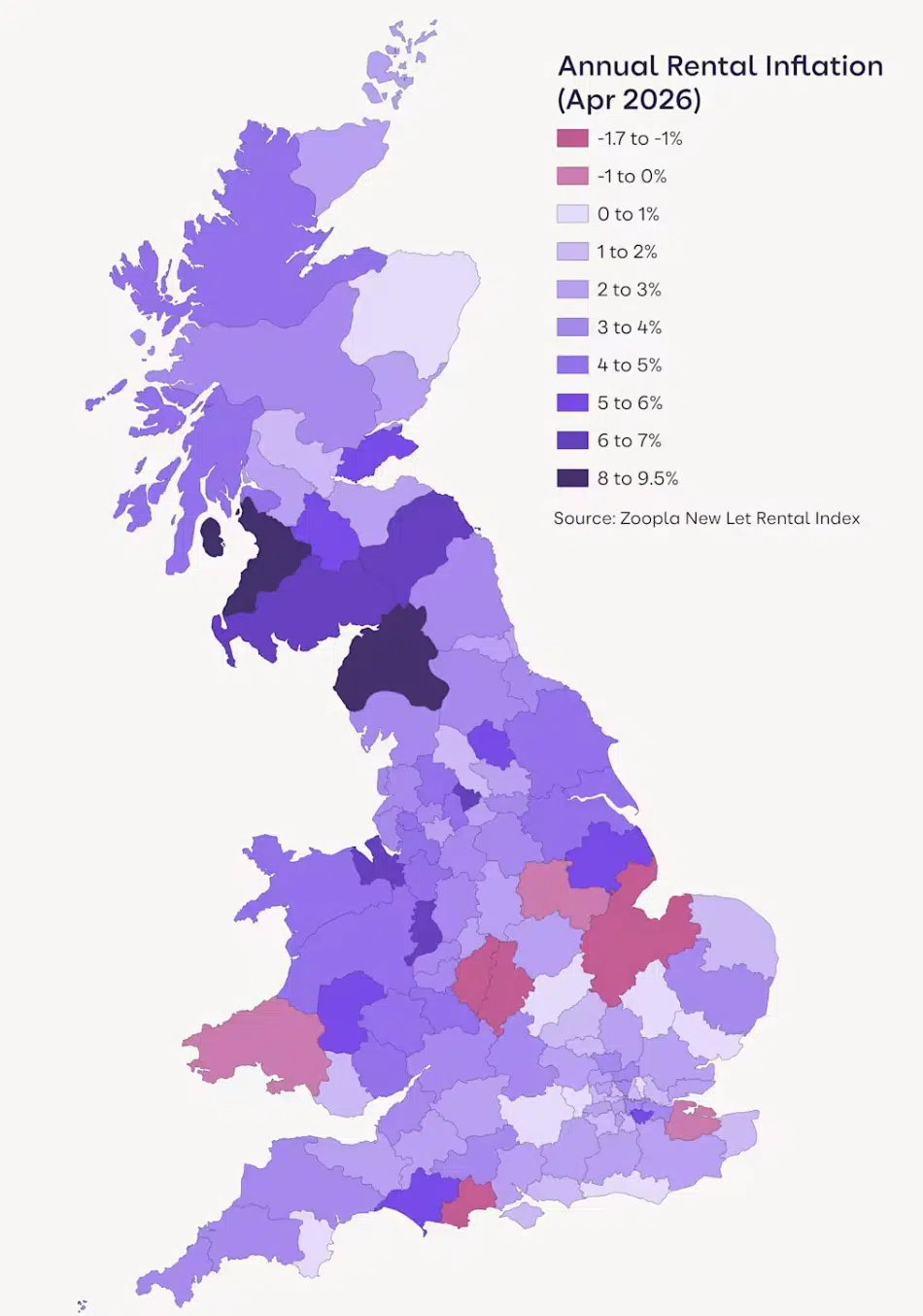
UK rental growth is divided by affordability. In more expensive regions growth is prohibited by already stretched affordability, leaving some areas to see price reductions or minimal growth. However, in areas with lower average rents, 5% year-on-year growth has been reported. This is predominantly in areas where prices are around £750 a month according to Zoopla.
Demand has waned, down to an average of 5.6 enquiries per rental home in May 2026. Rents however have remained immune as the number of enquiries still exceeds pre-pandemic levels. At the same time stock levels have reduced and any appetite for future investment is constrained by increased taxes and fears of new legislation and rising costs .
 ,
,
That concludes this week’s UK Property News Recap – 12.06.2026. Any comments or suggestions please get in touch.


