


Many consultations went on their merry way this week and all centred around how to obtain more tax. Be it landlords or foreigners, HMRC is coming for you. UK construction continued its descent back to brick in the absence of any solid economic foundations and house prices slumped as Trump continued to give Iran the hump. Meanwhile lenders dropped their pants in the hope of a reaction from buyers, most of which if first timers had already coupled up to reach but welcome any helping hand. And tenants clubbed together to question rental rises as buy to let numbers fell. Welcome to another UK Property News Recap – 04.06.2026.
UK House prices slump from prolonged uncertainty
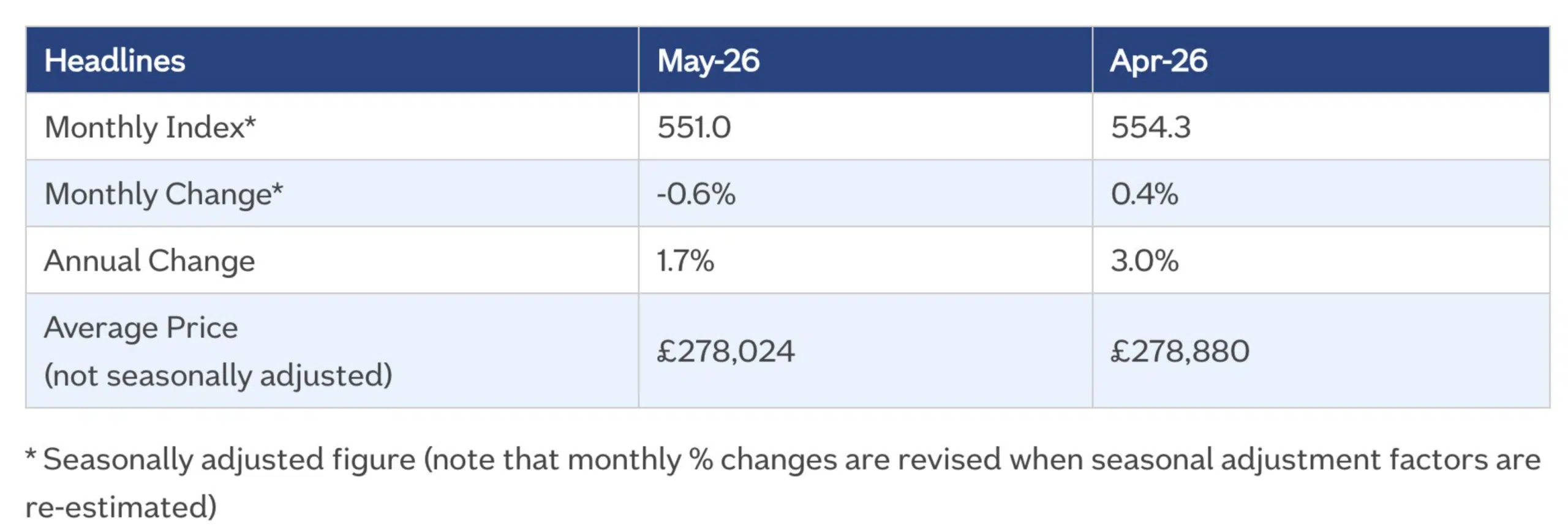
UK house prices are starting to feel the heat from the Middle East, falling 0.6% in May. As a result annual growth slowed to 1.7% in Nationwide’s latest house price index. Further falls can be expected if a resolution to the conflict remains elusive. For those already struggling to sell this will come as a blow. Many waited with the hope that 2026 would herald lower interest rates incentivising many to move. Instead hopes were “shelved” while some first-time buyers dependent on significant lending retreated once again. For others more financially secure this is a time of opportunity…depending on where you are buying in the UK.
Housebuilder’s bid to build
Housebuilder firms have shed 56% of their stock market value in the past five years, and pleas for help-to-buy or a similar scheme are growing as construction firms try to rebuild demand.
Along with paying less stamp duty, cheap land, less tape, more regulators and lower interest rates, some political stability and wage growth would also not go amiss. Until then, expect building to slow, targets and share prices to fall and lands left to fallow.
A reversal of seller fortunes
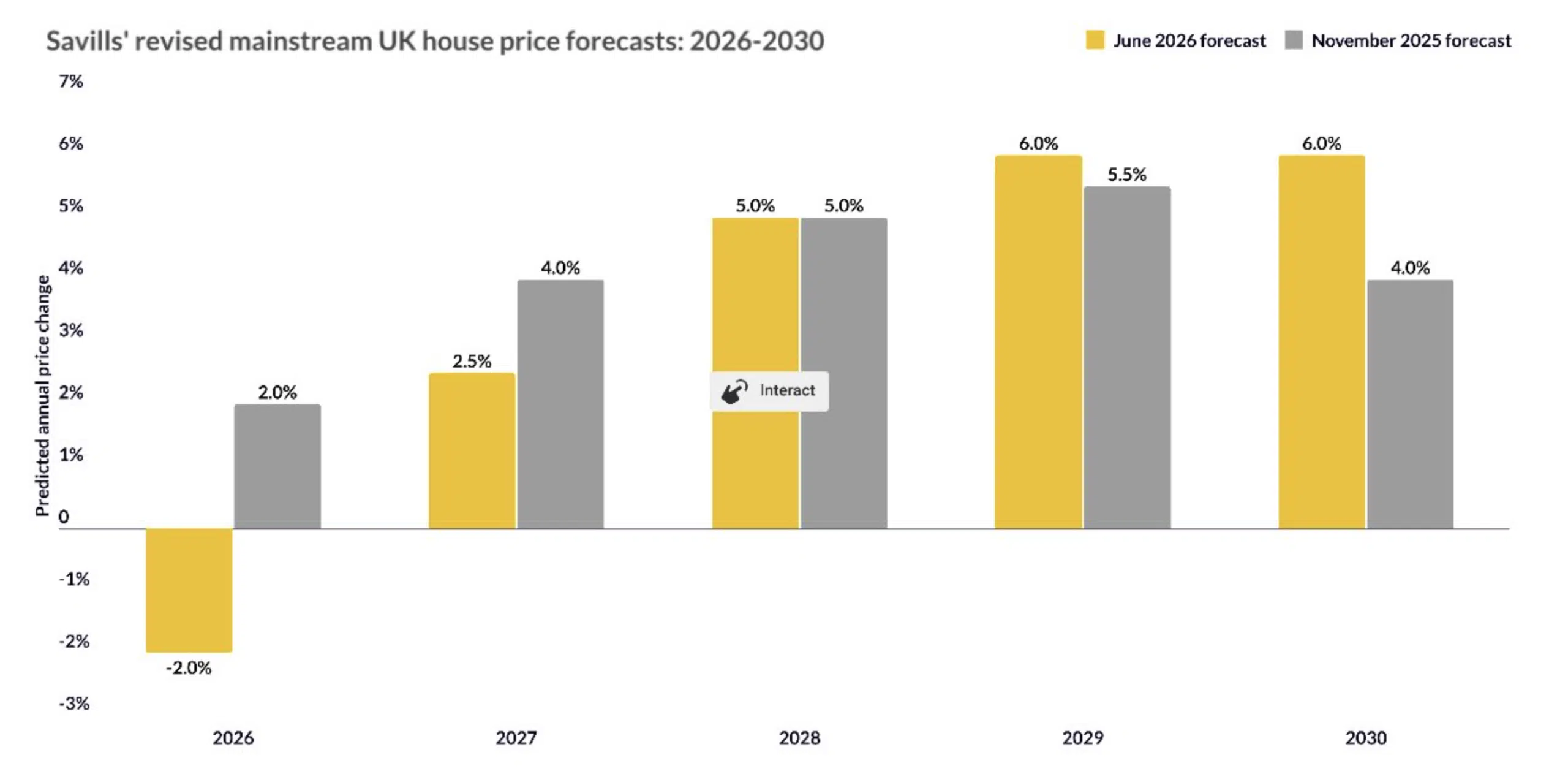
Savills downgrades its five-year forecast for a third time. 2026 promised 2% growth and lower interest rates. Instead rates rose in response to the conflict in the East causing the estate agent to now predict prices to fall 2% this year and 18.5% over a five year period down from the 24.5% predicted back in June 2025. Around election time UK house prices rises are expected to increase but typically the market holds depending on what is being promised at the time. Scrapping stamp duty or the Mansion Tax would stall activity until realised, so all eyes and ears will be on who looks set to deliver or not.
Finding a significant other is the key to getting the keys
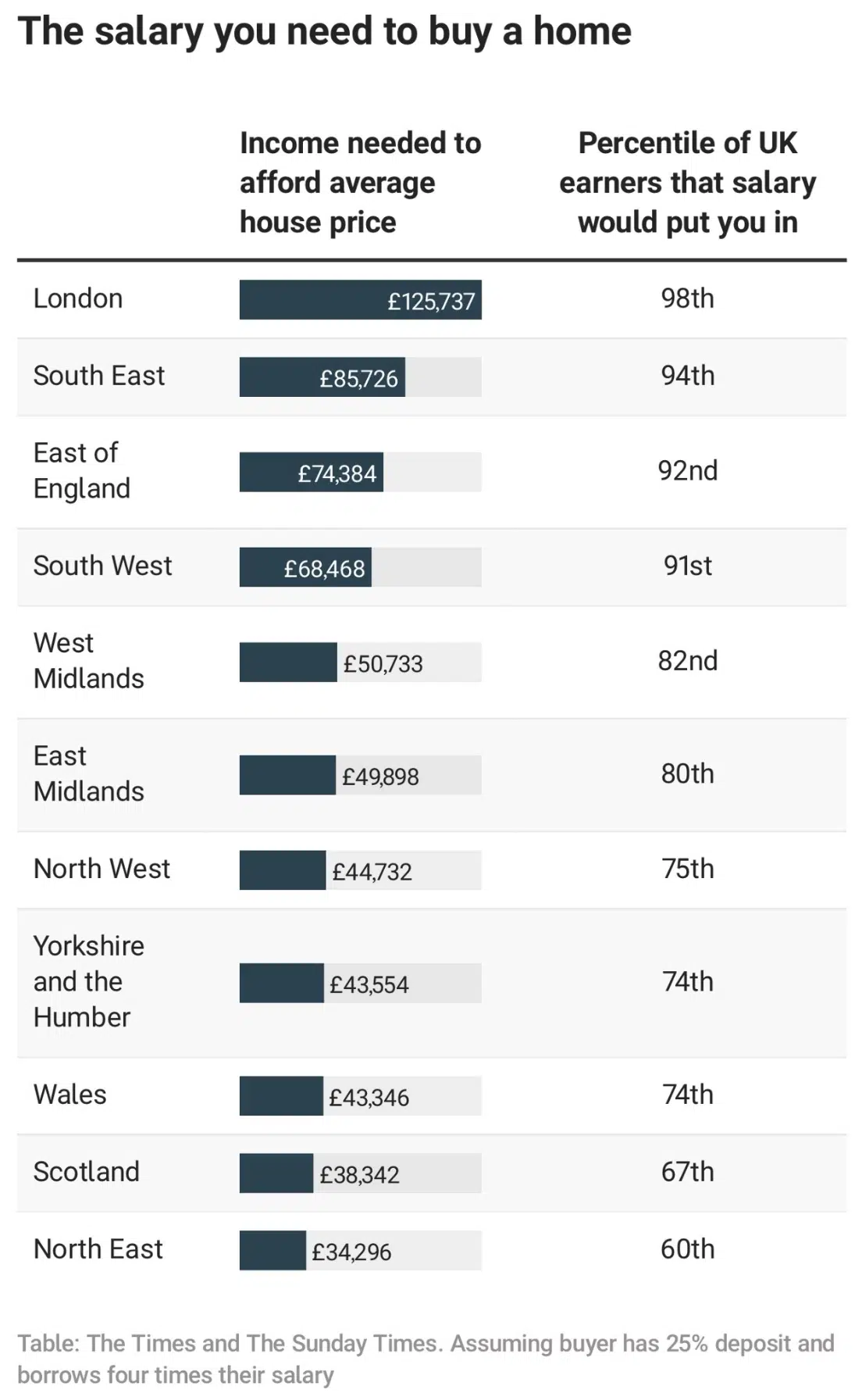
According to Savills “the average single person would need to earn at least £65,520 a year to afford the average £346,744 house price in Britain — a salary only 11 per cent of workers take home.” Lenders are loosening mortgage affordability rules to accommodate more buyers but without further wage rises, interest rate or price falls many will remain at the foot of the ladder looking up.
Borrowers pay down more and borrow less in April
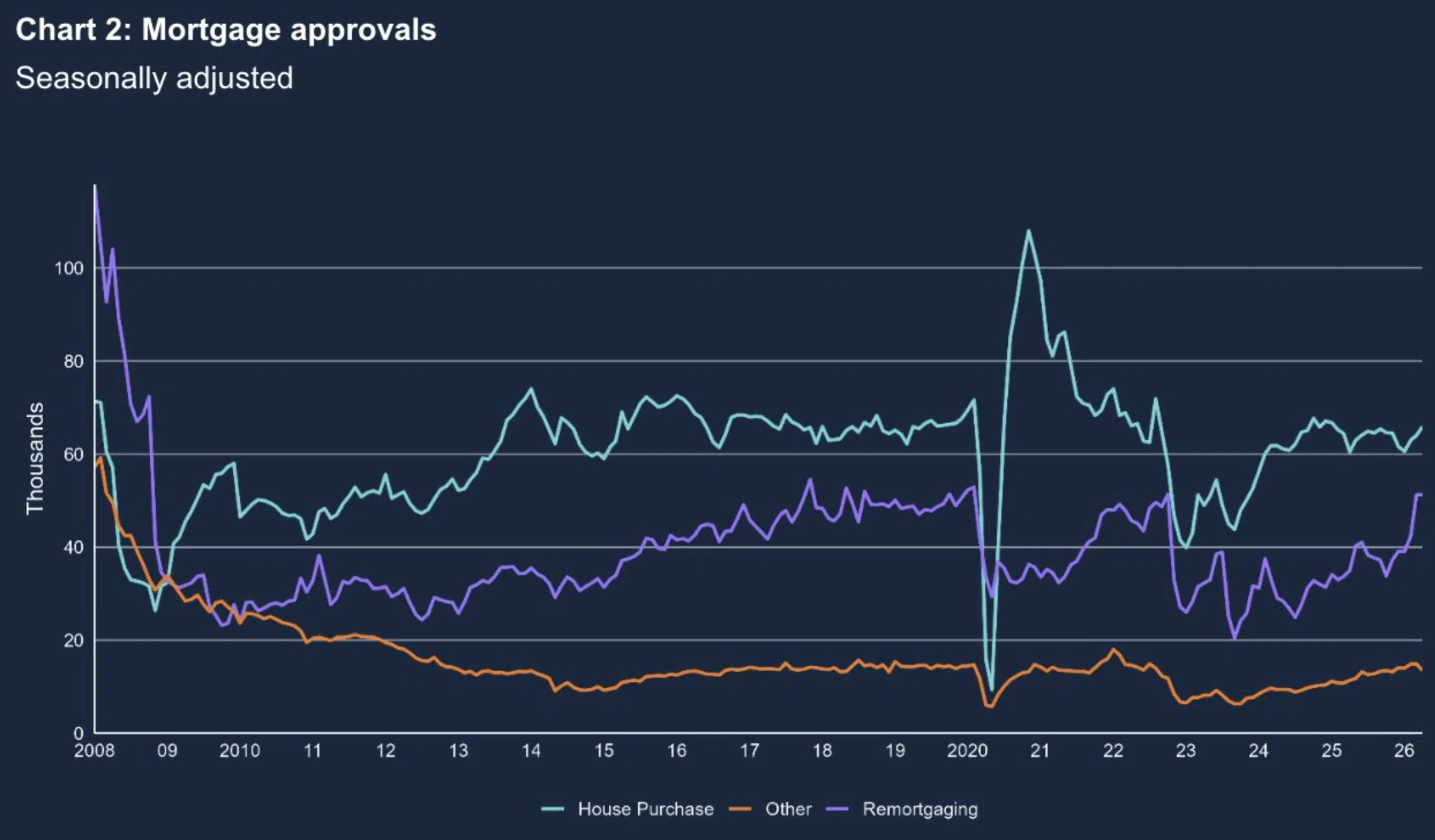
Mortgage approvals rose in April on a seasonally adjusted basis, in spite of the ‘effective’ interest rate on newly drawn mortgages increasing to 4.08%, from 4.03% in March.
Net mortgage approvals for house purchases increased when seasonally adjusted to 65,900 in April, from 64,000 in March. At the same time approvals for remortgaging (which only capture remortgaging with a different lender) remained broadly consistent with the previous month. However, when non- seasonally adjusted; house purchases and remortgaging fell 4,832 and 9,884 respectively.
Sotheby’s gets hot under the collar
Prime estate agency Sotheby’s has come under fire for sexual misconduct in the workplace. Big egos pitted against each other in a high states environment with no accountability has a tendency to support dick swinging.
Tenants to question rental rises
Tenant unions launched online tools to challenge rent increases through first-tier tribunals. According to their release “Even unsuccessful challenges can delay rent increases from taking effect, reducing interim payments. Successful cases may also establish precedents that support neighbouring renters in similar disputes.” On one hand this is good for tenants being used as a cash machine, on the other it’s a cracking way to avoid paying landlords for longer (who maybe asking for a minimal increase) which could pose another potential long term stock problem.
Consultation is underway for Landlords to pay NI
Landlords: the welfare money tree that just keeps on giving until it’s overly pruned. Rents will rise, unless capped, which will yield the same result. Stock will dwindle and the government will have to build more social housing to compensate which to date.. ain’t going too well.
Rates are reducing
Lenders keen not to sweat out the summer alone, make their move; reducing rates to attract wannabe buyers back into the fold by getting up close and personal with swap rates. Santander followed other high street banks cutting rates by 17bps this week.
Stacking taxes on non-UK residents
HMRC are holding a consultation on the benefits of implementing an additional tax on top of the additional taxes non-UK residents pay on property. International investment could struggle to stack.
Commercial rents rise for prime city offices
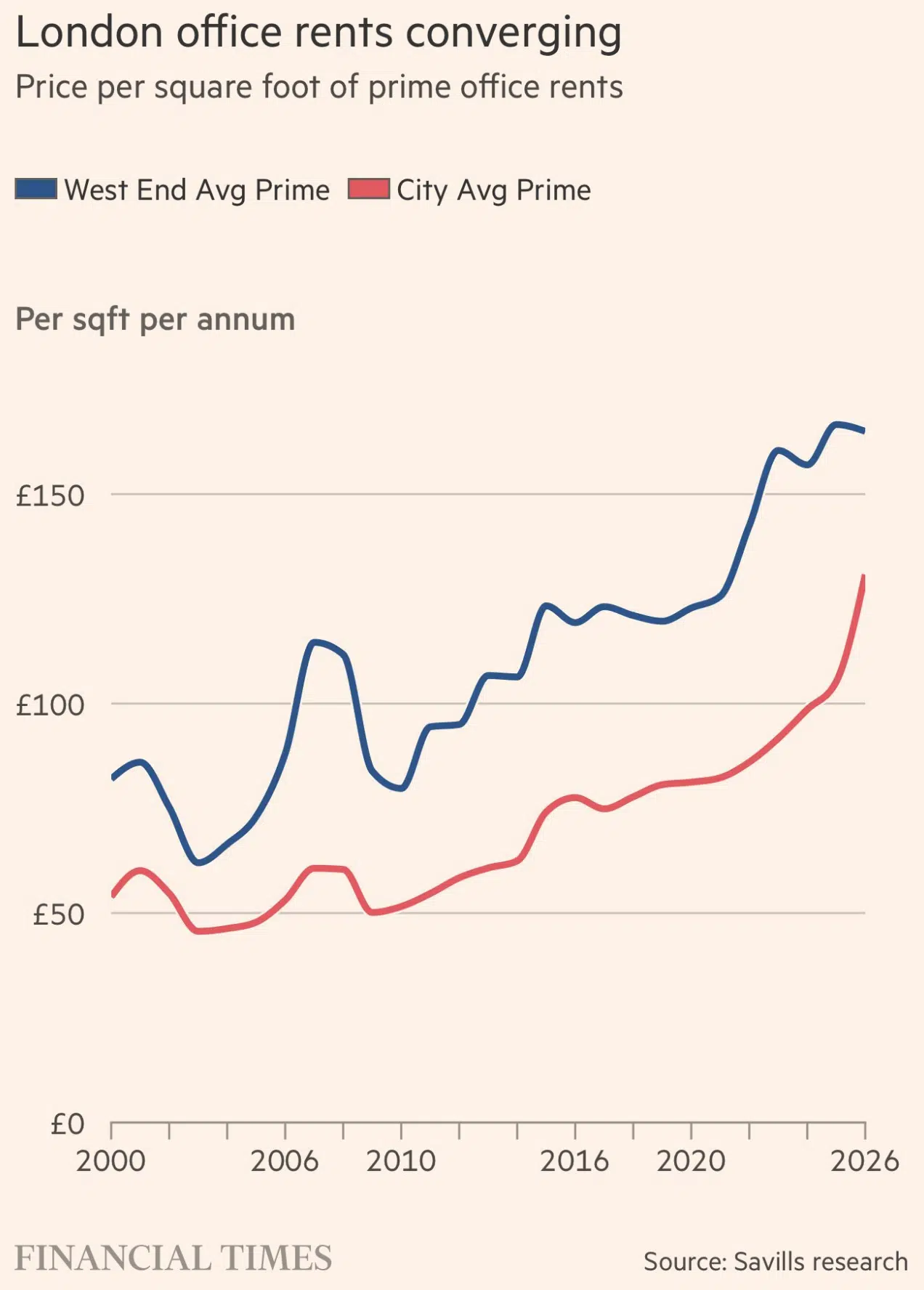
Limited stock has driven average office rents in the City on new buildings to £130.80 per sq ft in the first quarter, compared with £165 per sq ft for prime West End buildings according to Savills. This is sweetened with rent free packages for initial terms to draw tenants in. Despite this uplift many older offices in the area struggle to get a rise. Tenant preferences have changed in favour of something new with room for staff to “play” – leaving many an older block bereft of life.
UK construction struggles to build on numbers
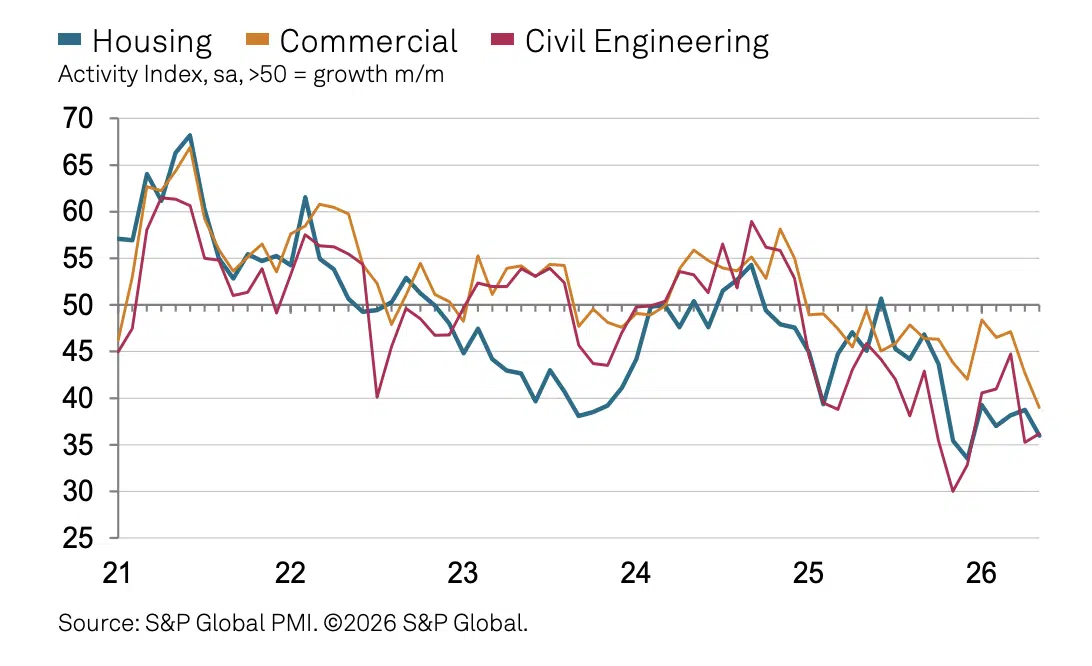
The UK construction industry is freefalling under the weight of economic uncertainty, increased supply times and rising energy costs. As a result, activity in all three UK construction sectors fell in May with residential development falling hard without the support of lower interest rates to bolster buyers. As a result future orders are on ice and the industry continues to cut back to stay in the game
Buy-to-let lending numbers fall
The writing is on the wall…the Buy-to-let market is reducing in response to the continued vilification of landlords and the government’s determination to meddle. Tenants need homes, a balance needs to be struck so both sides ultimately win. The Paragon Banking Group has seen its shares fall 19% over the past year as profits fell back 5.1% in response to a 4.7% fall in Buy-to-let lending.
Service charges rise
The scars of time prove costly for those in 18+ storey apartment blocks who face service charges averaging £7,337, according to The Property Institute. Keeping up appearances proves expensive; the biggest increases in cost came from repair and maintenance that account for just over 20%, and reserve fund contributions, which account for 16.4% of total budgeted spending in 2026. For those homeowners; rising service charges on top of rising mortgage costs and the cost of living are draining financial resources and their ability to sell should they need to.
House price growth cools
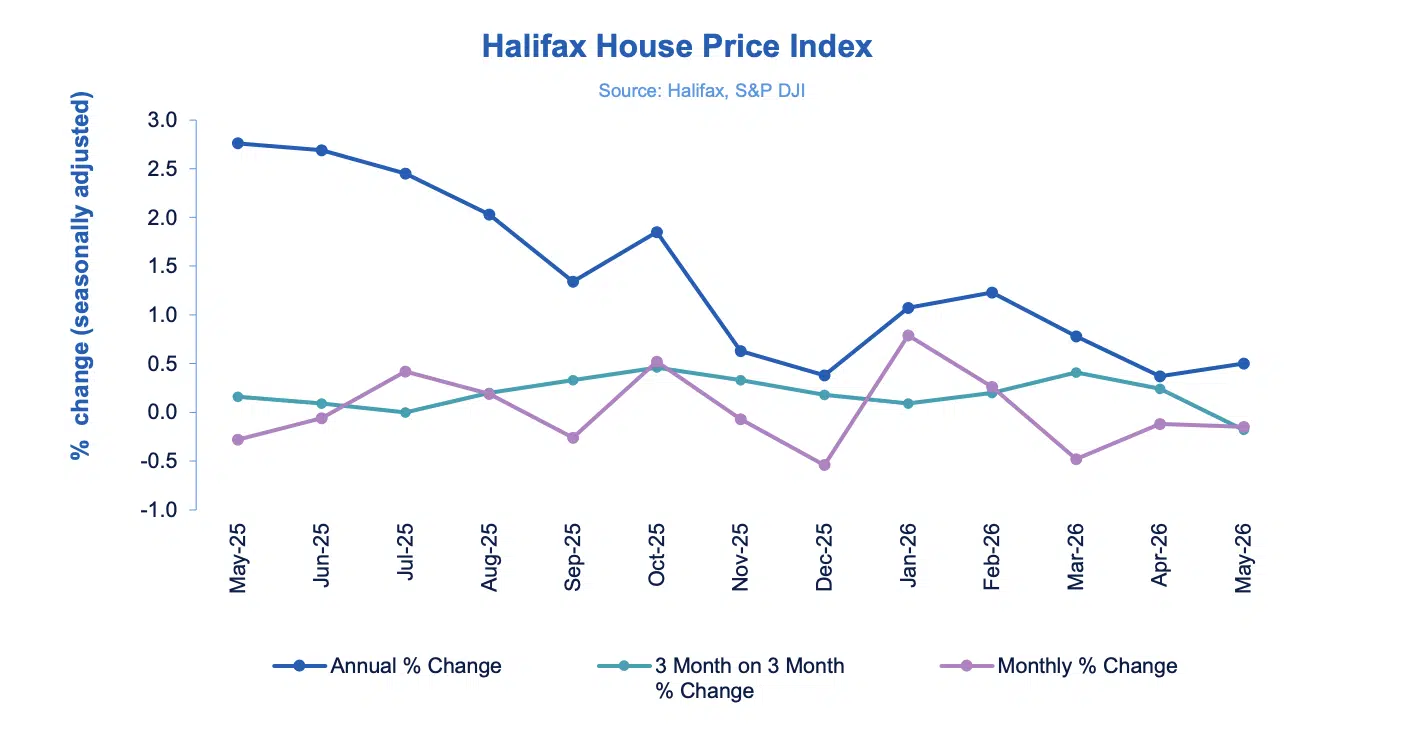
House prices took a -0.1% step back in May as the ripple effect from the stand off in the Strait of Hormuz is felt across the globe – in this case, denting house price growth. Annually, according to Halifax HPI, growth rose 0.5% – driven by activity in Northern Regions. Northern Ireland continued to outperform; prices up 7.8%. Scotland followed, prices up 3.8% while England saw the largest increases in the North East and West with annual growth of 3.1% and 3% respectively. Meanwhile, southern regions continue to struggle. Prices in the South East falling 2.1% and 1.5% in London.
Demand increases as stock decreases
According to a poll of NRL Association members – tenant demand is up especially in Northern regions but supply is at risk as Landlords shed unwanted stock in response to increased taxation and new legislation.
“Despite high tenant demand, more landlords said they had sold property than bought over the past year.
21% of landlords said they had sold, compared to 7% who said they had purchased.”
That concludes this week’s UK Property News Recap – 05.06.2026. Any comments or suggestions please get in touch.


