


This week UK property prices were impacted by shelling far afield. This left many sellers on the back foot and developers benched until rates return to sub-5% levels again. As for rates, after a brief Easter reprieve they continued to climb before stalling at the news of a ceasefire in the Middle East. Many buyers and sellers are banking on this holding but we have a long road to travel to reach certainty. Welcome to another UK Property News Recap – 10.04.2026
Construction starts stall…again
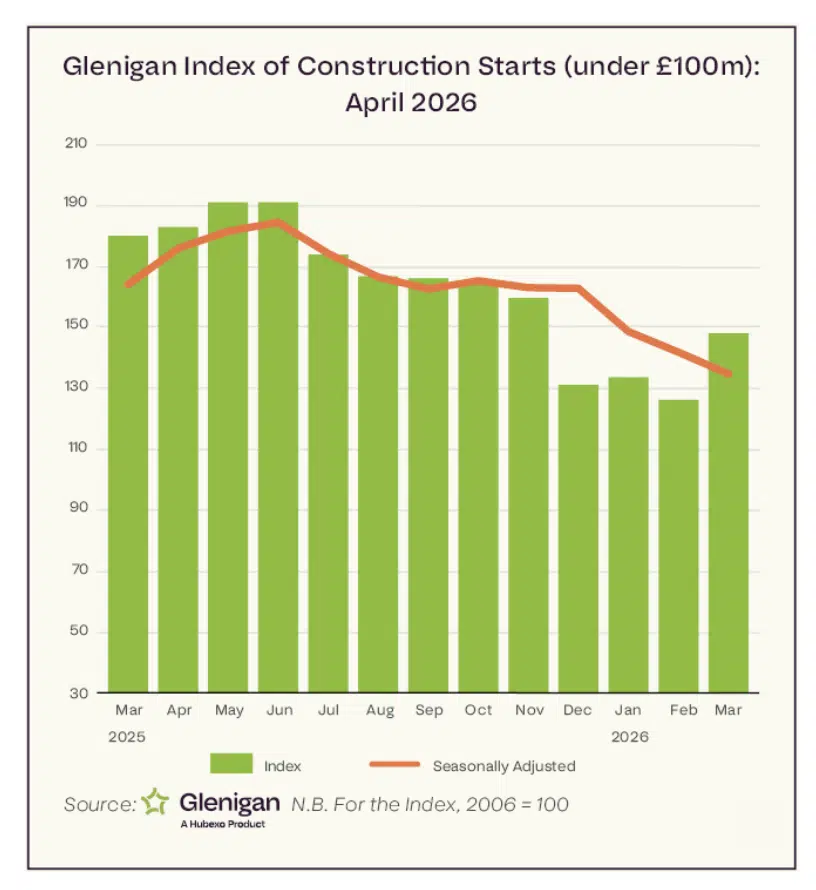
Before Trumpflation hit, 2026 held so much promise for the construction industry. Today however many developments remain on hold. The Glenigan Construction Index reported construction was struggling to get started; in the first three months of this year; work starting on-site declined by 17% along with residential construction starts, which dropped by 13% compared to Q4 2025. Non-residential project-starts didn’t fare much better, down 15%, but civil work was the worst performer, down 37%, with utilities contributing within this a 42% decline . Only office development showed up for work, up 37%, however this was largely due to one substantial development, the 105 Old Broad Street office development in the City of London.
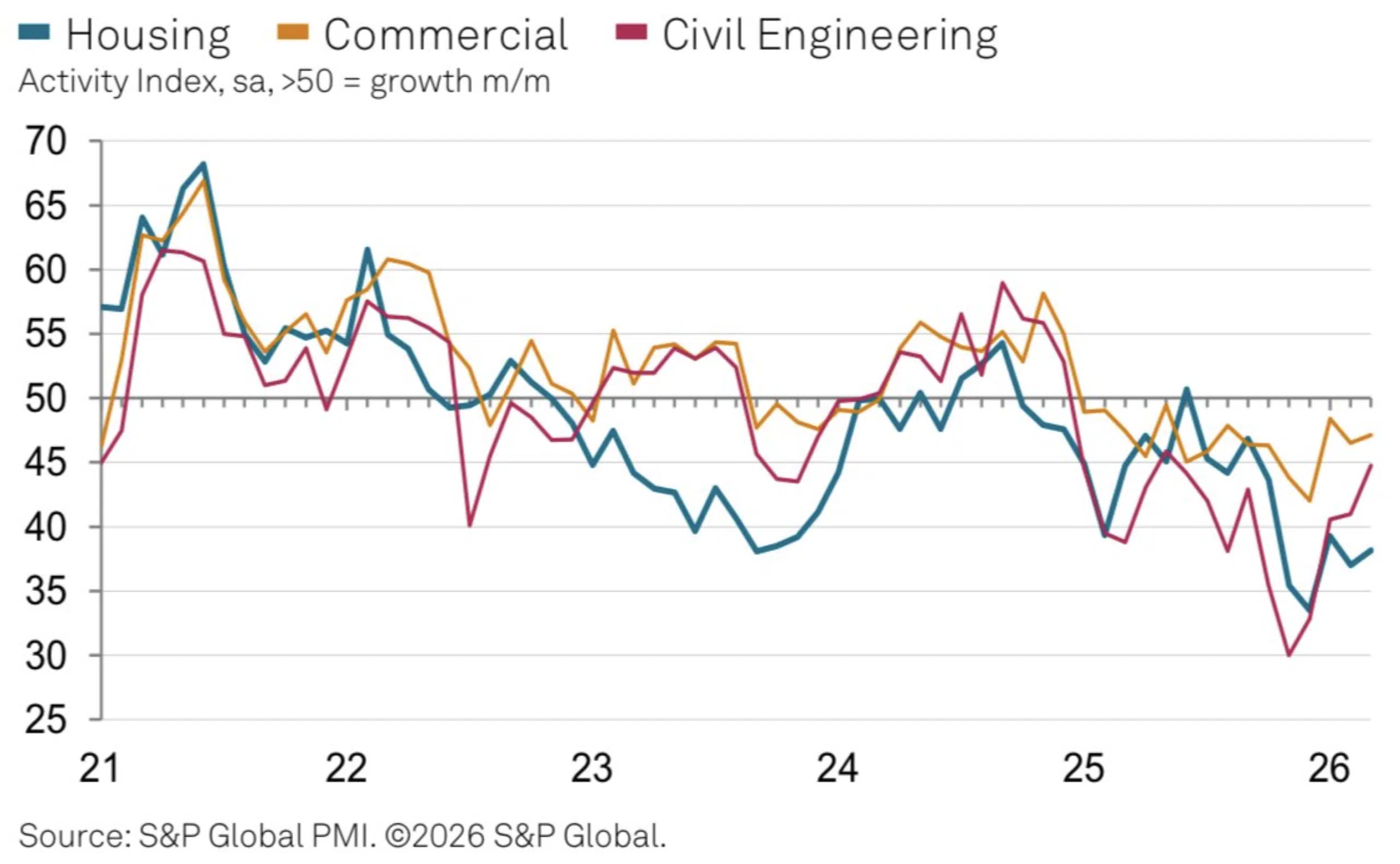
Meanwhile, in this month’s S&P Global UK Construction Purchasing Managers’ Index a slower rate of contraction was reported in February’s results but new starts plummeted as investors held back while war rages in the Middle East, inflating rates. As a result of the ongoing conflict, building supply costs rose along with lead times and cut backs were made via subcontractors and new employees.
Developer Vistry struggles to make repayment deadlines
The developer Vistry’s IOUs drag as costs soar and buyers flee. Servicing the debt, in unstable times, results in flash sales to balance the book.
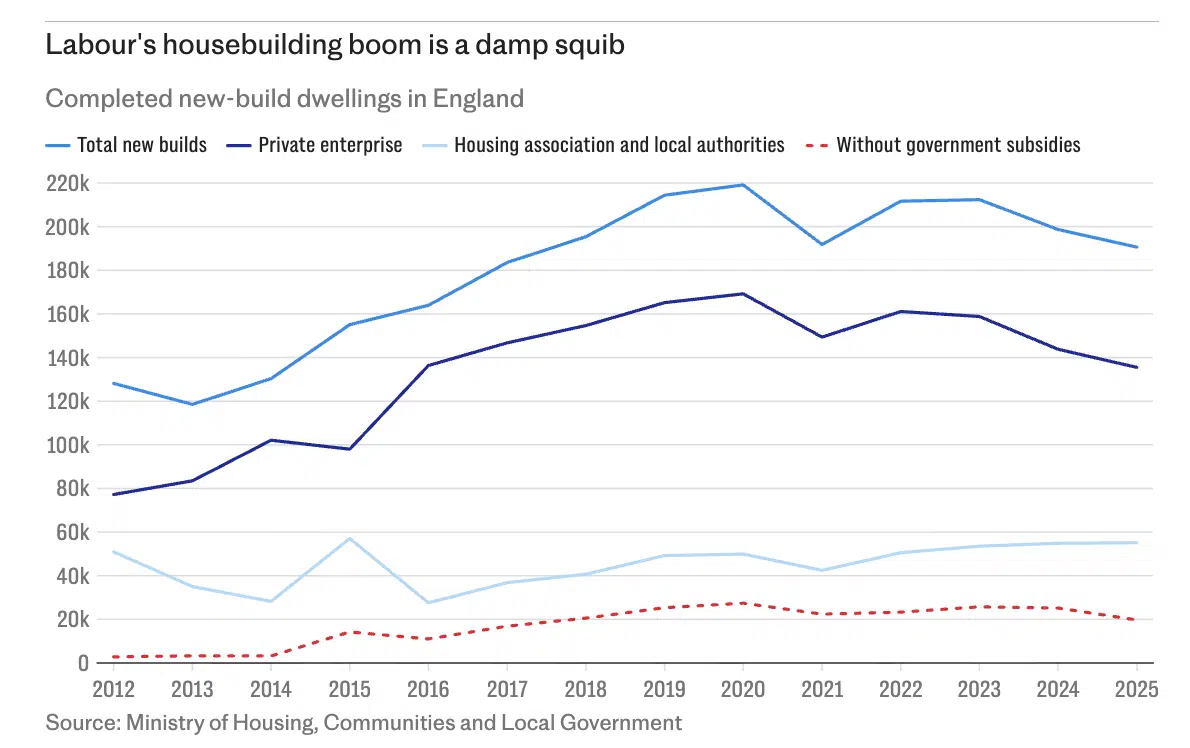
The possibility of breaching loan agreements if the downturn is protracted is plausible, warned the “affordable” developer. Expect others to follow and developments to stall, leaving new housing numbers to wilt.
House prices come under Eastern fire
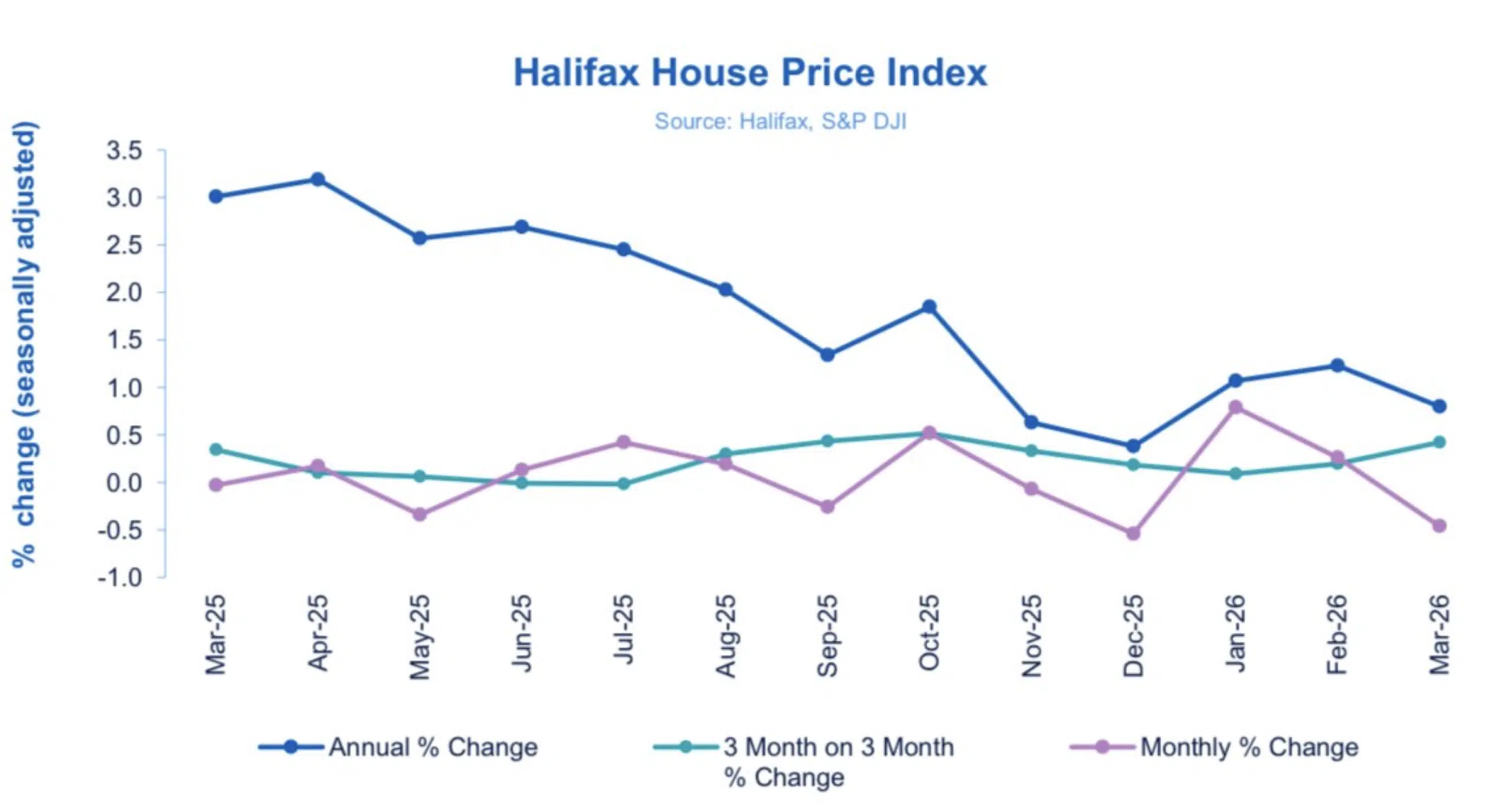
Activity in the Middle East dented house price growth in the latest Halifax HPI. House prices reduced by -0.5% in March, following a +0.3% rise in February, slowing annual growth to 0.8%. This makes the average property price, on this index, now £299,677. Annually, Northern Ireland remains the region demonstrating the most significant growth at 8.7%, however the North East top trumped Scotland’s 4.4% with 5% growth, putting it in second place. Meanwhile the South East was the biggest loser, prices down 1.9% with London house prices following with 1.2% annual falls. A lot rides on how protracted the conflict in the East is..should it escalate; house prices will continue to shed post-Covid growth and dent some of the low interest rate driven growth of yesteryear; depending on location and property type. Any resolution, however, could see a slow and steady rebound in activity, with prices gradually recovering some of the most recent falls.
The UK Property Market retreats
In response to soaring rates and economic uncertainty, buyer demand fell back in March along with agreed sales. This put further pressure on house prices especially in London, East Anglia, as well as the South East and South West of England. Meanwhile prices in more affordable regions like Northern Ireland and Scotland continued to swell. Overall though the lack of clarity stanched the flow of new stock as sellers, who don’t need to sell, thought better of listing until a resolution can be found in the East.
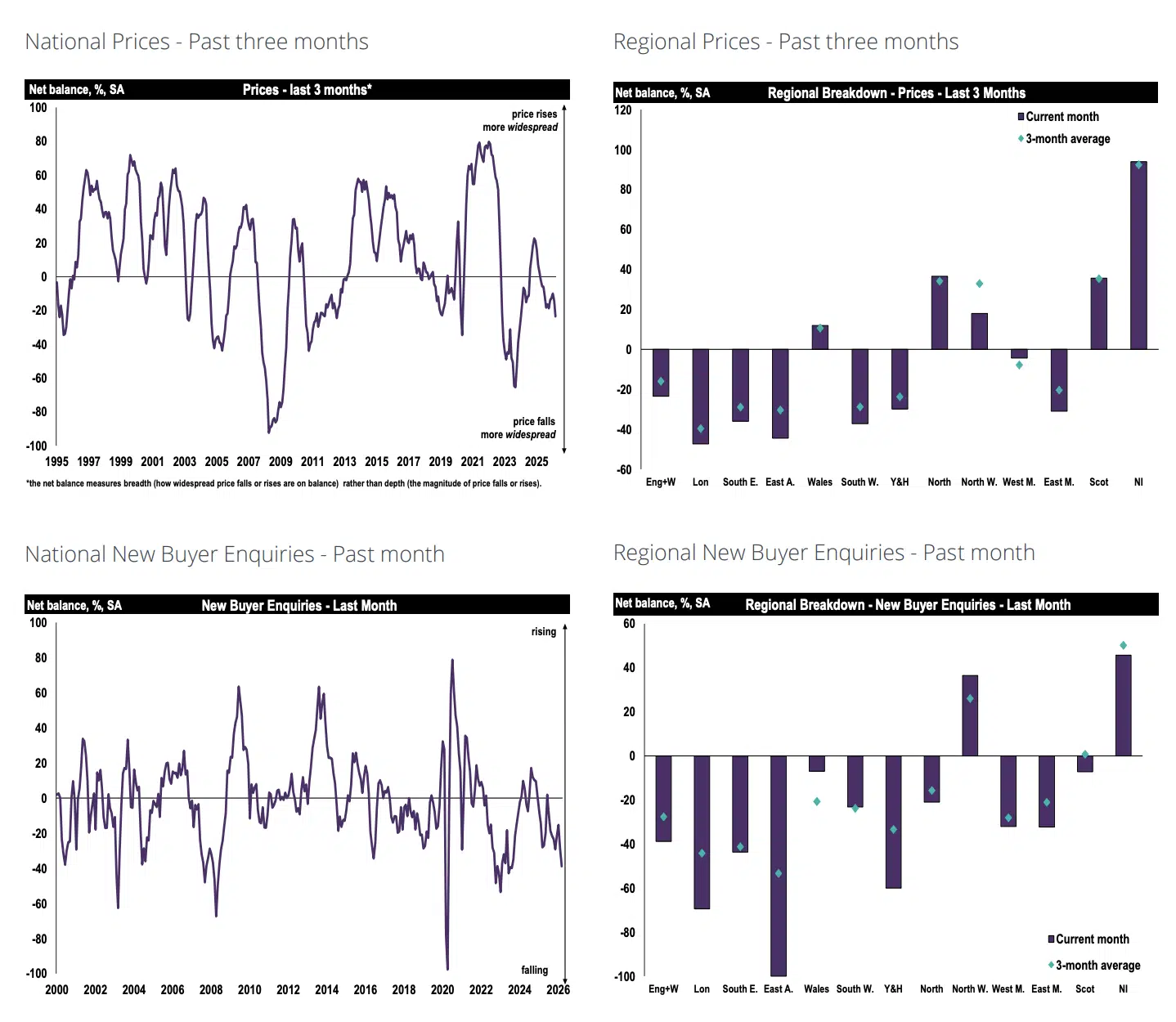
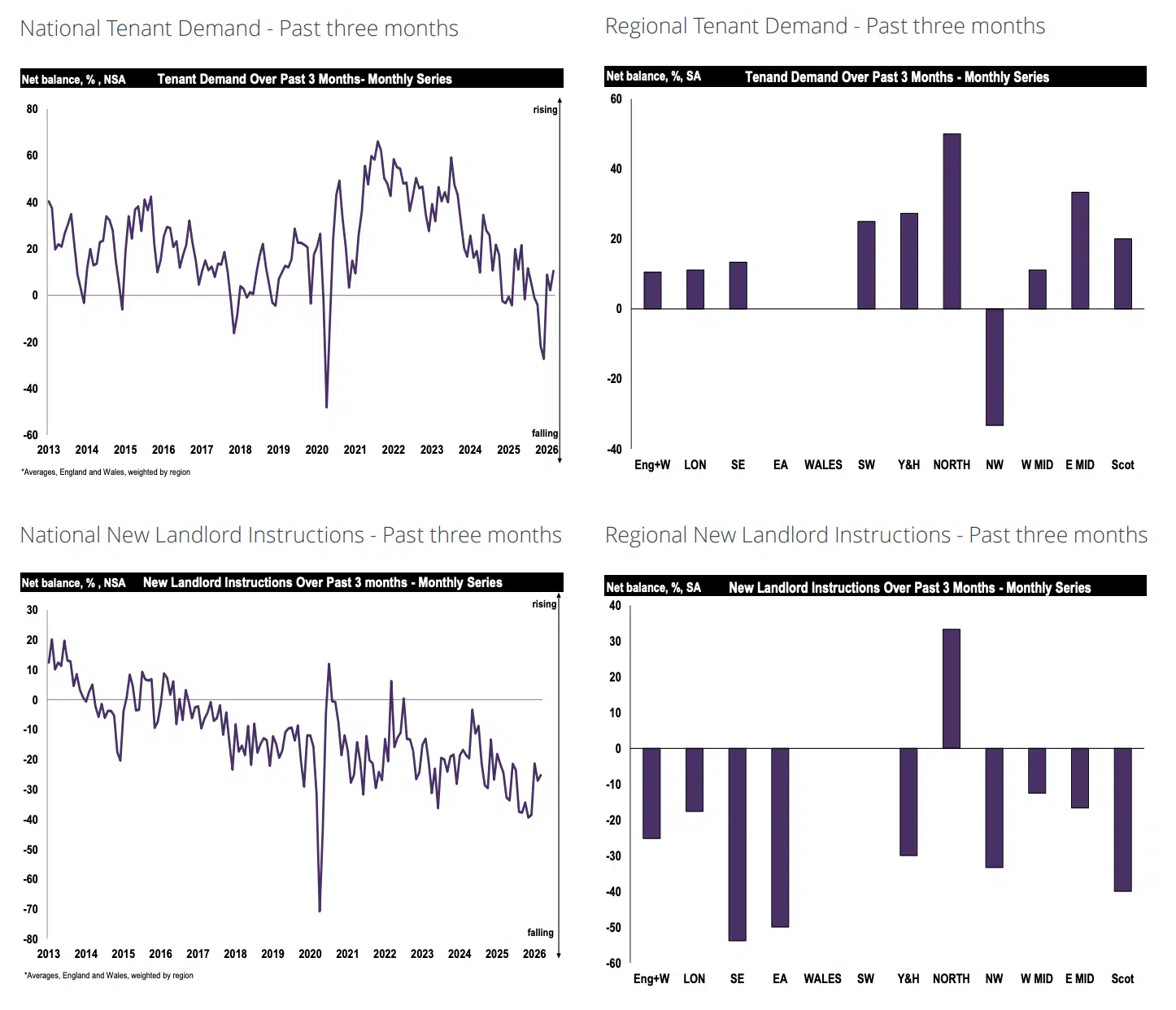
In the rental sector, prices were on the rise once again as demand increased as wannabe first time buyers turned back to the rental circus. This comes as stock levels continue to dwindle as disenchanted or heavily indebted landlords exit the market in more expensive central locations. As a result, RICS surveyors foresee rents moving higher over the near term, denting any saving deposits for a new home.
Harrods Estate closes its doors after demand wanes from foreign investors.
The loss of foreign investors and buyers to more tax efficient havens has cost the Super Prime Market in Central London dearly. This market was reliant – and created – by this tier of buyers who caused prices to artifically balloon, driving domestic buyers to the peripheries. As a result prices have plummeted but realism remains hard to come by. Getting a property listed at the right price can take years and then getting it agreed is fraught with obstacles to overcome, be it complex leases or extortion service charges for dated properties. For any agent in Knightsbridge times are hard and slow. The passing of Harrods Estates therefore comes as no surprise.
Developers claim affordable housing targets are costing the government their housing targets
Affordable home requirements are deterring smaller developers who can’t find housing associations willing to invest. With interest rates back up, buyers are struggling to make the numbers stack which has resulted in an estimated 45,000 homes across the country being delayed. Developers in some cases have managed to cut back on the number of affordable homes required for developments in the Capital and no doubt many more will continue to chip away. The government has even suggested some of these homes if unable to sell could be offered to the open market but this still won’t prove enough of a carrot for developers in the current market. The issue is many of these homes which are deemed “affordable” are rarely that, and while rates are high and associations have a backlog of works due on existing stock we are at an impasse.
Greens show how green they are about property
In a bid to win votes, Green Party leader Zack Polanski wants councils to be able to opt to cap rents…this sounds good but could lead to more landlords exiting the market, putting further strain on stock levels in areas where they are most needed. He also wants to stop developers from profiteering. The issue with this is they aren’t a charity and if the numbers don’t stack they too will down tools reducing housing numbers further. In everything there is a balance to be found. Extremes only lead to extreme outcomes.
That concludes this week’s UK Property News Recap – 10.04.2026. Any questions or comments please get in touch.


