


This week, leaseholders’ value proved too much for the government to manage, leaving marriages intact and promises broken. Seller delusion remained at odds with buyers’ realism. Landlords prepare to brace for tribunals that cause rents to yield under scrutiny, and rates continue to rise putting further pressure on a market that’s struggling to hold face. Welcome to another UK Property News Recap – 24.10.2026.
Prime market struggle to hold their shine
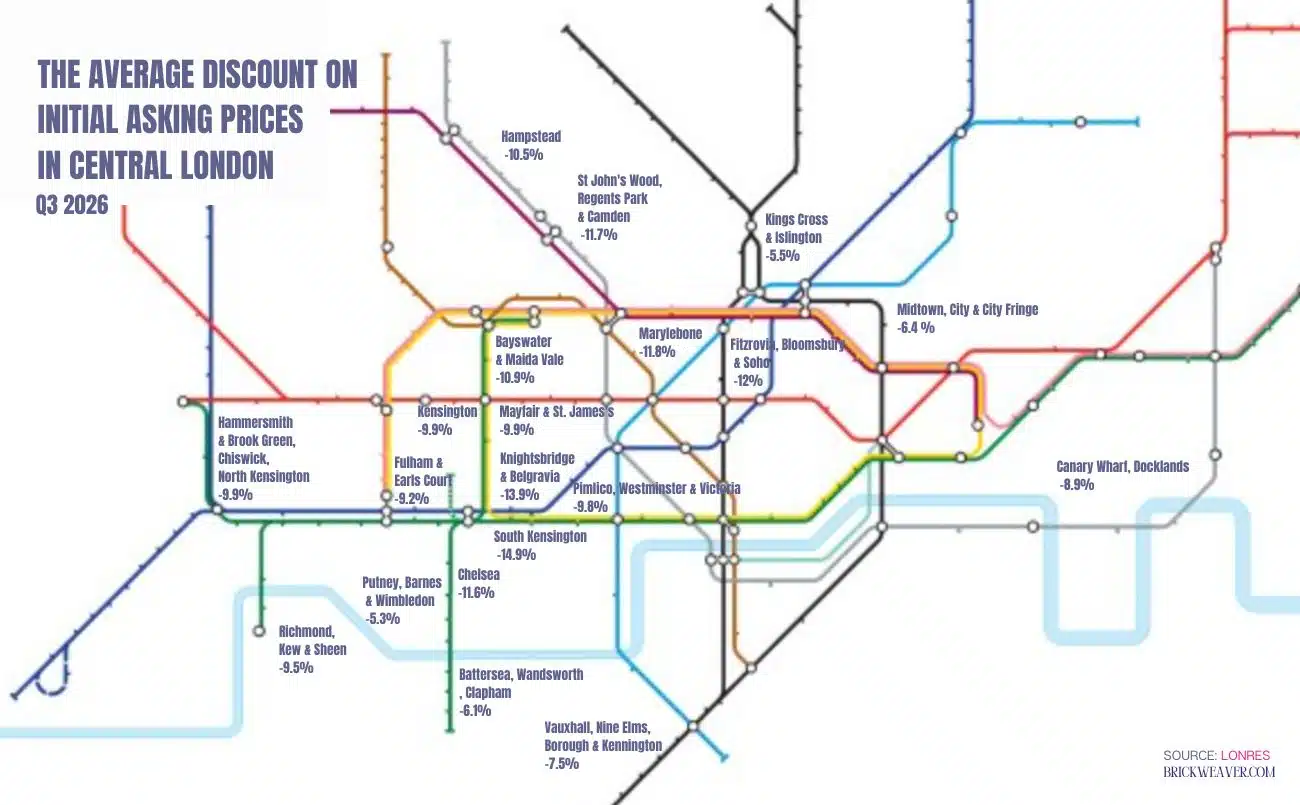
According to Lonres data, the average discount on initial asking prices in London narrowed in some prime central locations in Q3 2026. Mayfair’s discount narrowed from -15.3% in Q2 to -9.9% in Q3 while Pimlico went from -12.6% to -9.8%. However, discounts widened in Richmond from -4.7% to -9.5% and rose in Fitzrovia to -12% from -8.9%. This, however, paled in comparison to South Kensington which overtook Knightsbridge & Belgravia, averaging -14.9%.
 \
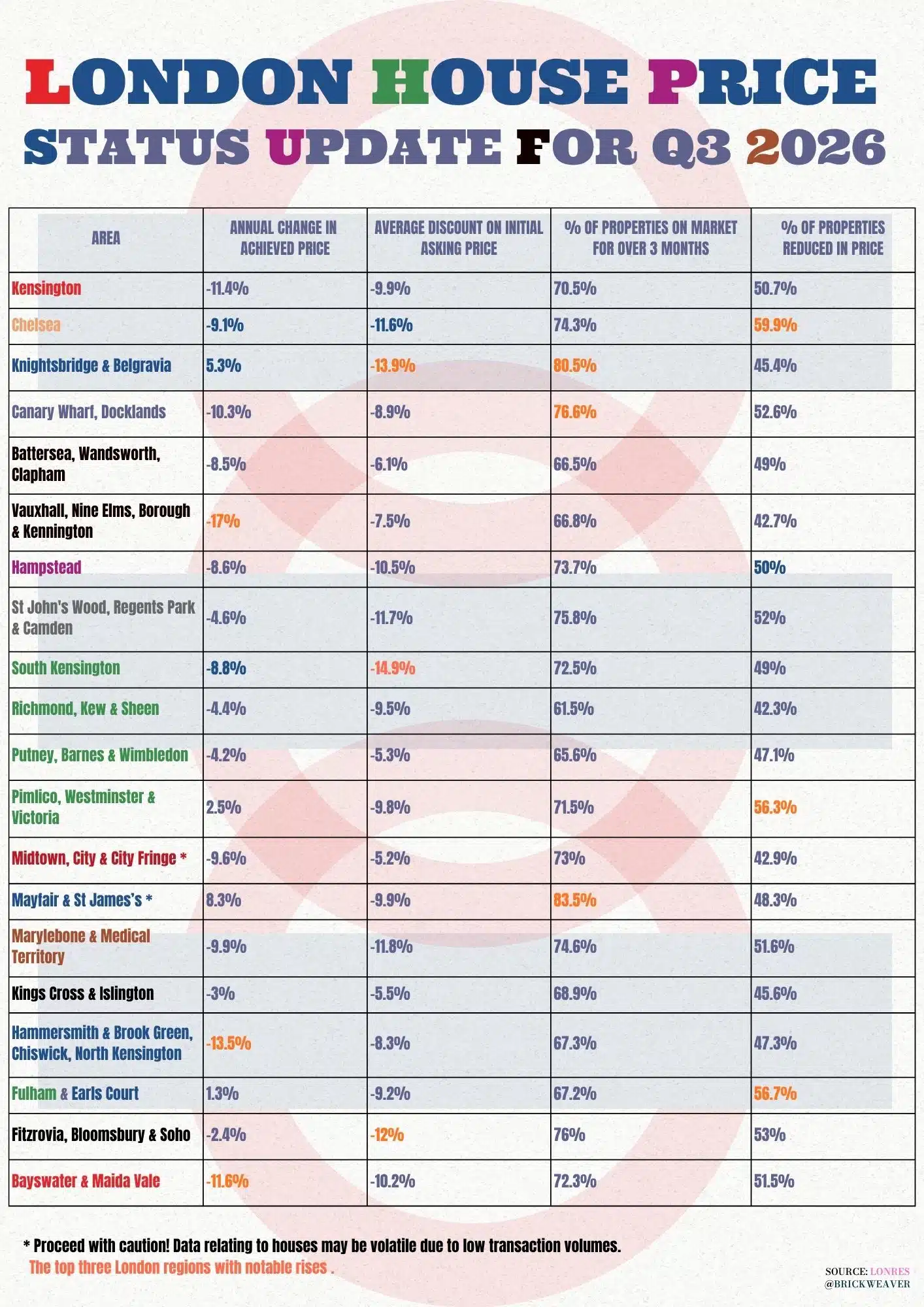
Prime properties across central London all took longer to shift in the last quarter with over 60% of stock in all areas languishing online for over three months. Chelsea recorded the highest proportion of reduced properties at 59.9%, while King’s Cross & Islington saw one of the sharpest increases; the share of homes cutting their asking price rising from 35.3% in Q2 to 45.6% in Q3.The biggest losers, over the course of the year, were Vauxhall, Nine Elms, Borough & Kennington; down from -12.9% to -17%. This was presumably not helped by the volume of flats that dominate the area, with excessive service charges and an absence of foreign investment.
Asking prices rise in spite of market conditions
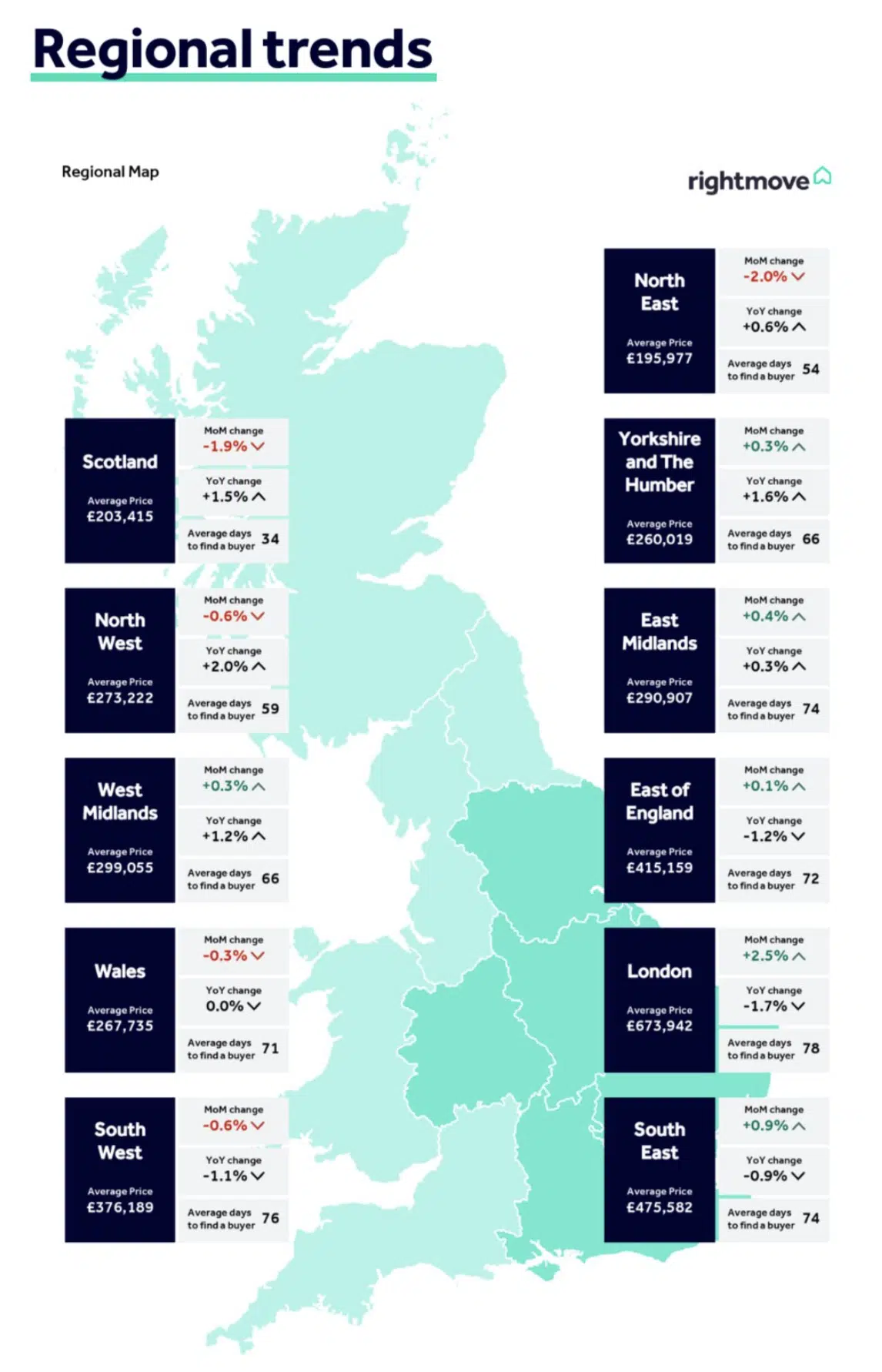
The final push. Sellers are aiming high, subliminally bracing for a fall before winter hits. The capital doggedly refused to accept the current muse music and raised ASKING prices by 2.5% in October in a desperate attempt to recoup earlier losses in the year. In the rest of the country, sellers overall asked for 1% more but some northern and Welsh sellers displayed greater awareness, accepting higher borrowing costs have limited buyer affordability and lowered asking prices.
As a whole, buyers remain cautious, many retreating, waiting to hear what the budget holds or until 2026 is in their rear view mirror and rates are hopefully improving off the back of a peace deal that holds in the East. This, Rightmove reported, saw demand fall 9% when stock “options” rose 3% on last year’s levels causing agreed sales to fall 8%. This could have been a lot worse if buyers had lost their preferential fixed rate or weren’t securing some properties at a fraction of their once listed price.
Catch a rate if you can
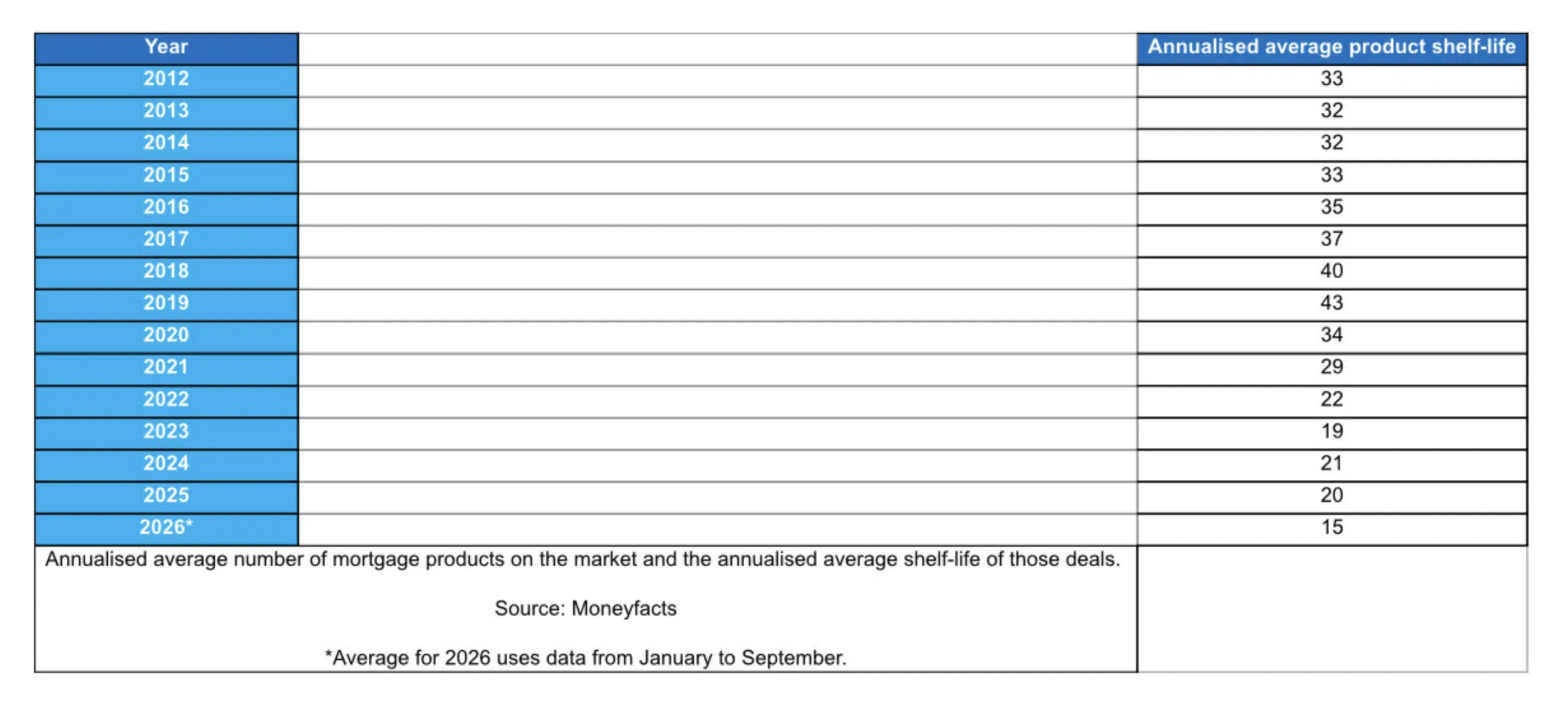
The average shelf life of a mortgage product fell to 13 days in September, averaging 15 annually as swap rates trade places at speed, in reaction to global economic tensions raising the temperature universally.
Court cuts rate by £200 after tenant disputes £50 rise
This is music to tenants’ ears while landlords only hear nails on a chalkboard.
Who wouldn’t “give it a go” at every proposed increase, fair or not, if you only stand to lose £47. It’s the taxpayer who ultimately pays for the tribunal but that will be disregarded. Landlords however, once burnt, will slowly but surely exit the market when the sales market improves, reducing stock levels in areas where they are most needed, ensuring rents remain elevated.
Don’t look back in anger…
Yesterday’s rates make for tricky renewals especially in southern areas where prices have fallen. Today’s buyers face tricky decisions. For those in the north where prices continue to rise; getting on the ladder before they increase further, makes sense for those if it is still affordable. Where prices have flatlined, rising rates are likely to deter stretched buyers until they improve while those watching prices fall, wait for the right property at the right price before making their move.
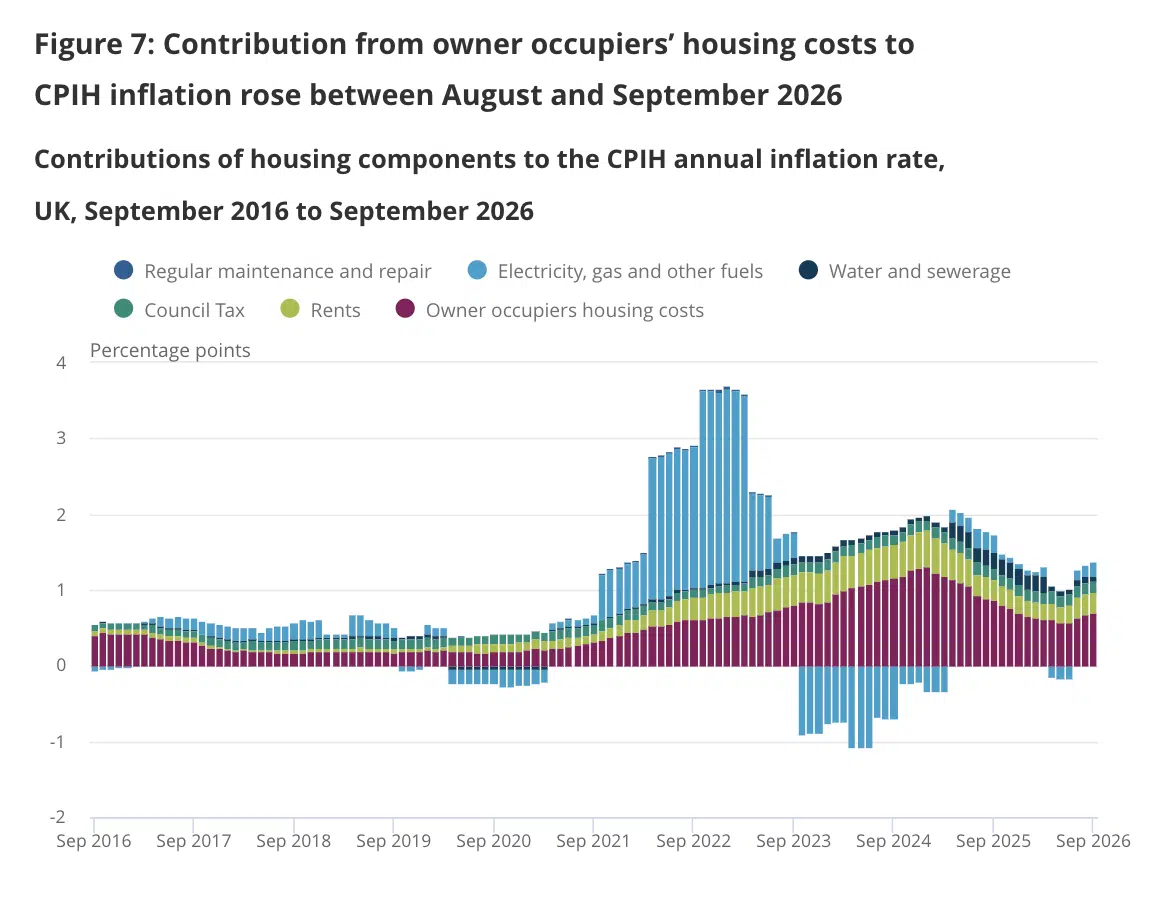
Owner occupier housing costs rise
For the fourth consecutive month, owner occupier housing costs rose up 0.70 percentage points in September 2026. Electricity, gas fuelled a 0.19pp rise while rents stepped up to 0.28pp.
The winter outlook is costly with many facing the dilemma between food and heat.
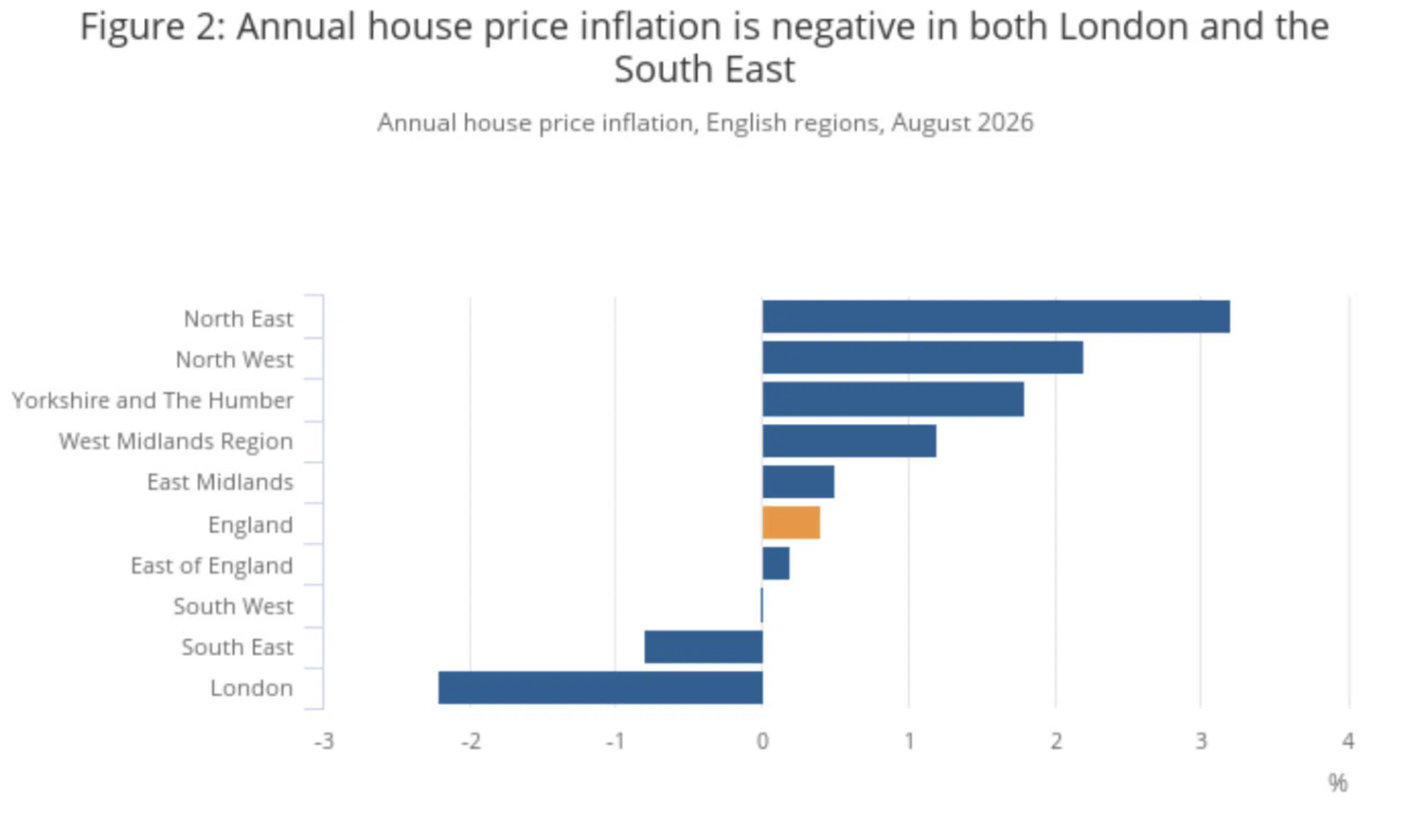
Average UK house price growth slows
House price growth in Northern regions propped up the estimated average UK house price which increased by 0.9%, to £273,000, in the 12 months to August 2026. According to the ONS – at the top of the country, Scotland reported an annual increase of 2.9% while in London prices fell 2.2%. This was driven predominantly by a large fall in the average price of flats, which account for approximately half of sales in London. In the past year alone; the average price of flats decreased by 5.0% while the average price for London houses increased over the same period. The UK property market is dictated by affordability which will continue to be tested while rates rise.
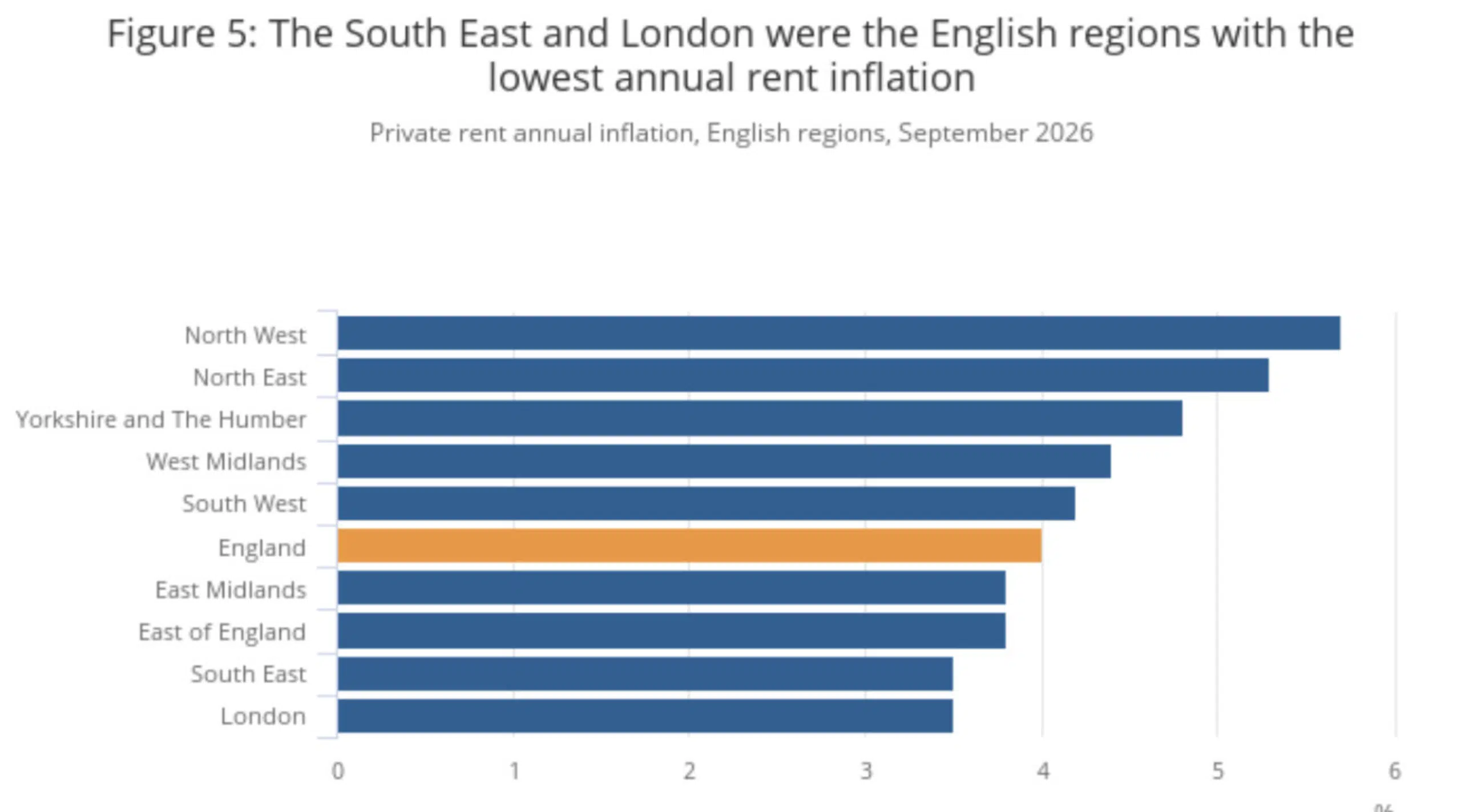
Meanwhile, rental growth held steady at 3.8%, in September 2026, unchanged on August’s efforts. Affordability once again dictated the size of growth in regions across the UK with the North West achieving an estimated 5.7% rise annually while squeezed Londoners saw a 3.5% rise. Regardless, tenants will feel the difference and not in a good way.
Abolishing nought
Five years on from when plans were announced to abolish marriage value on leasehold flats; the government concludes: there “might be good reasons” for instead sticking with deferment rates established in a 2007 court case of 4.75 per cent for houses and 5 per cent for flats. This will be a massive blow to leaseholders who have paused many an extension, in the hope of reform.
Buy-to-let in Q2 2026 rose to £10.7bn
Lending activity appears to have risen in Q2 2026 when compared against the same time last year. However appearances can be deceiving – market activity in Q1 /Q2 2025 was restrained by stamp duty changes making this quarter’s numbers appear to have swollen in comparison. Despite this, activity remained relatively resilient against economic headwinds coming from the East. Buy-to-let mortgages in arrears over 2.5 per cent fell 570 to 8,390 and possessions were down 20.3 per cent from Q2 2025 to 630. Further evidence that lenders are trying to work with borrowers where possible.
First impressions prove costly for some Prime Central London sellers.
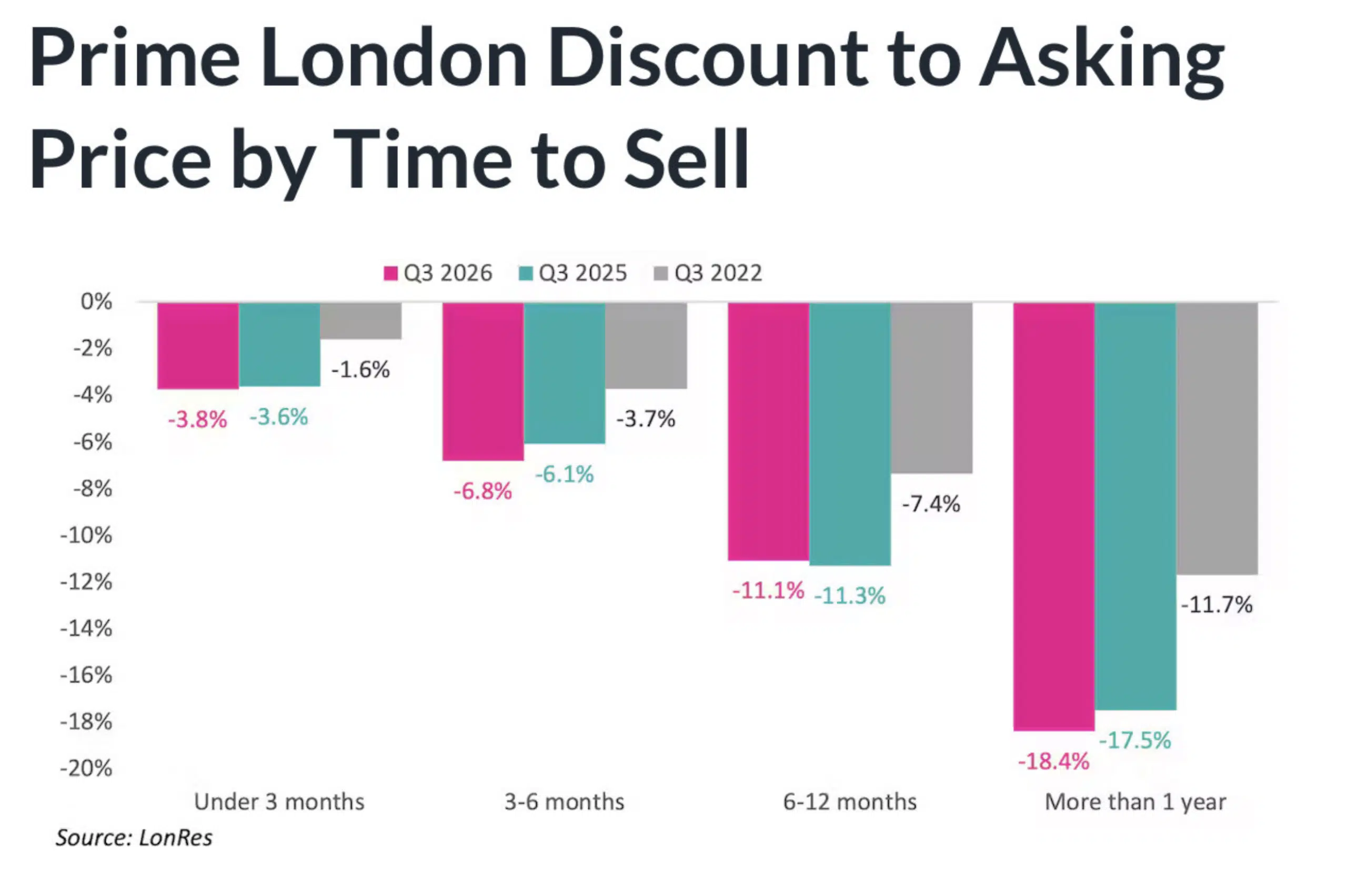
This is not the market to “test,” it will only push back prices further. Lonres found sales were down 16.8% year-on-year, making it the slowest September since 2016. The average discount from the initial asking price is now 10.1% but this can range from 3.8% in the first three months to 18.4% over the course of a year. Clearly some sellers aren’t ready to face reality or announce it to their neighbours.
Stepping up takes time
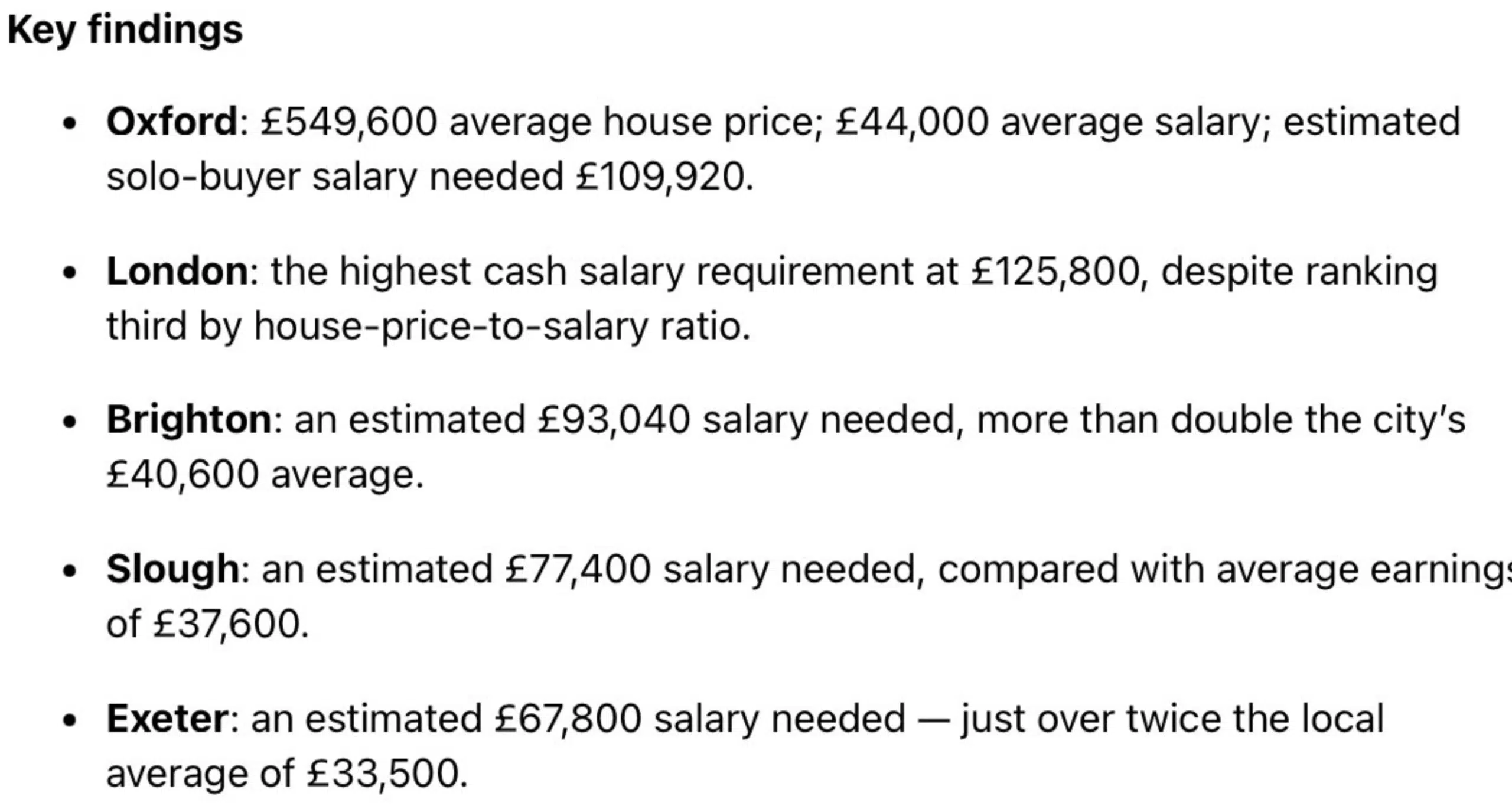
Data collected from financial expert Rusell Hammond suggests that ‘87% of Gen Z and 62% of Millennials report being unable to buy a home’. Unless they partner up or can bank at Mum & Dad many will be waiting long into their mid-thirties until they can afford a home in certain areas.
Extreme weather influences buyer preferences
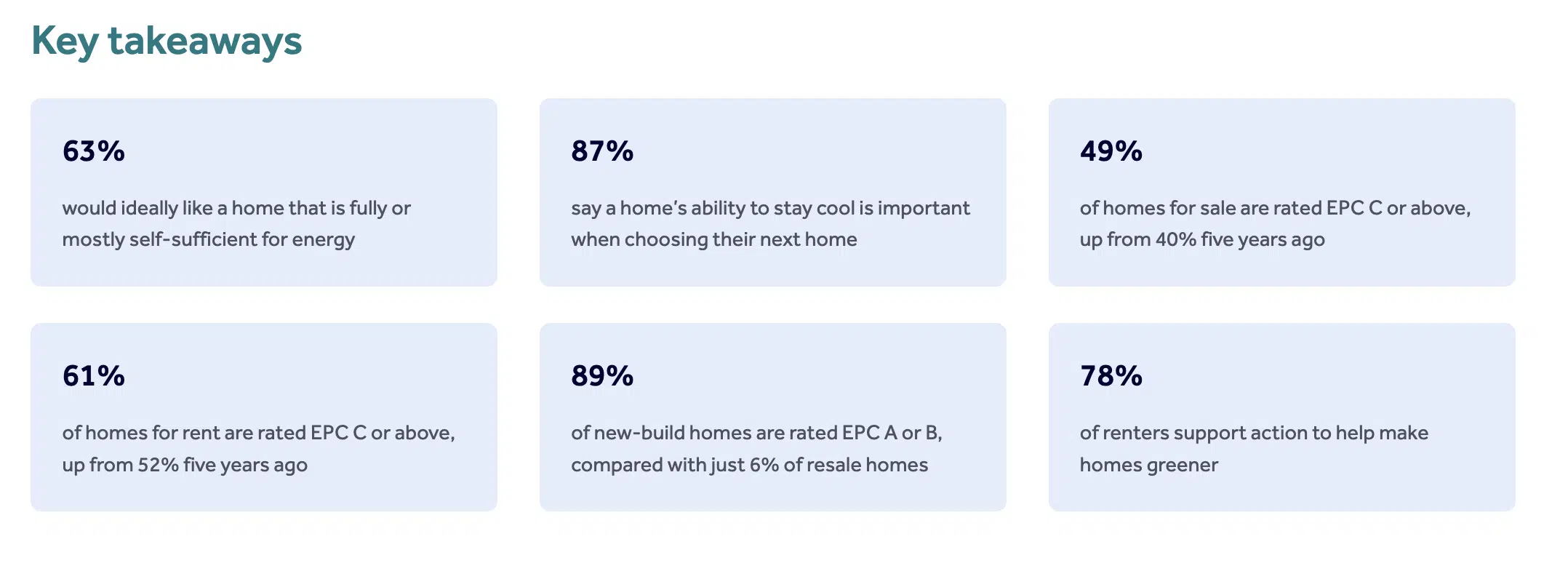
Rightmove’s Greener Home Report found nearly two-thirds of movers want their home to generate most or all of its own energy. Rising heating costs and five consecutive heatwaves have focused buyers’ minds on the resilience and efficiency of the home they buy.
Lender bottles it.
Lenders are calling in Highland Water owner Mahdi Al Tajir’s loans after one too many late repayments. The younger generation seem to have borrowed on borrowed money in their pursuit of having it all, leaving a pile of debt owing at a time when the market is taking no prisoners.
New towns put on hold
Escalating costs has Burnham considering shelving many new town projects in favour of expanding existing towns and cities. Instead mayors would take control of major housing developments absolving central government from some of the responsibility and predominately costs. This is a more realistic approach given the current climate but suggests we remain some way from building on UK housing numbers.
That concludes this week’s UK Property News Recap – 24.10.2026. Any comments or suggestions, please get in touch.


