

The base rate rose to 4% this week raising many a borrowers’ heart rate on their fitness tracker app. To compensate, house price growth continues to slow in northern areas and tumble further south. As a result transactions are forecast to slow as buyers try to second guess the bottom of the market while others opt out of groundhog day if they find the one. Rightmove felt the heat from the spotlight cast on them as their domineering stance – financially lashing estate agents for each listing – was questioned. Lastly, as transactions faltered, the property price caps for the Your First Home scheme were declared, providing a road map for new developments for cash-strapped developers. Welcome to another UK Property News Recap – 06.11.2026.
Moving on is the hardest things to do
Connells Group claimed 100,000 buyers have taken a step back from transactions. Deciphering when to make your next move has become riddled with anxiety for some. High interest rates have deterred those who didn’t fix earlier while others try and time the bottom so as not to be at a disadvantage. Others however are seizing an opportunity should it match long term goals, preferring to move on than remain in limbo with no end in sight.
Rightmove tribunal judges on monopoly
Jeremy Newman’s campaign against Rightmove’s portal domination which has resulted in excessive fees for estate agents that list properties on its online portal kicked off this week. The initial tribunal this week will determine if claims can be made collectively, instead of individually. The former being vital if it goes to trial if all agents stand a chance of being vindicated.
Your First Home – capped
Your First (New Build) Home regional caps were announced this week. They will keep builders profiteering on affordable sites and first timers paying a premium price. A regional breakdown can be found here.
Newham Council agrees to relax a condition governing the sale of 87 shared ownership flats at Deanston Wharf in Silvertown
Shared ownership is rarely if ever “affordable.” Relaxing affordability rules so buyers could proceed” where a detailed affordability assessment demonstrates that spending more than 40 per cent of their income on housing costs would still be CONSIDERED affordable” doesn’t seem particularly responsible when questions remain unanswered about service charges, rent and exit fees…
UK property prices to continue to stuggle in 2027 before regaining ground in 2028
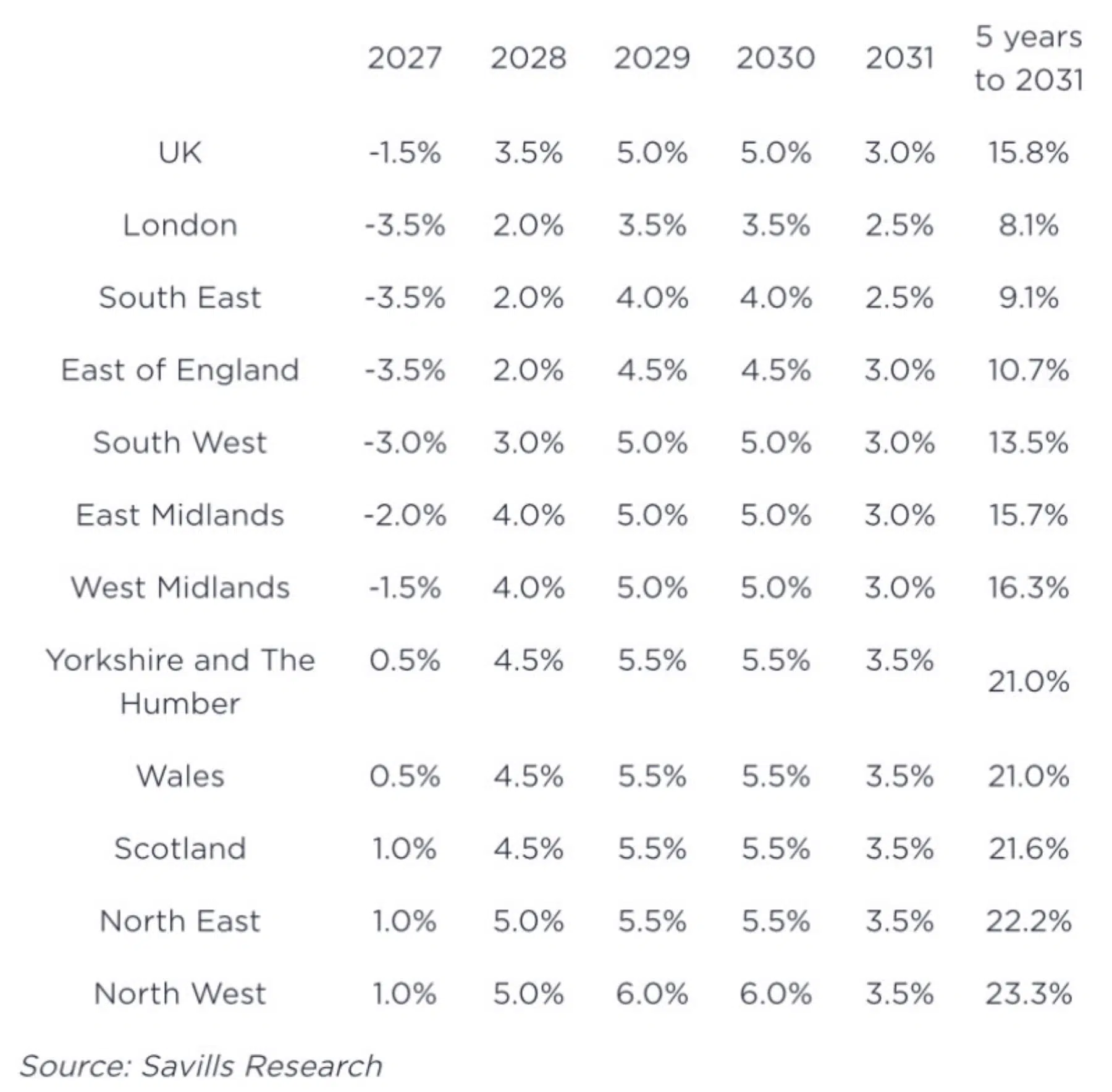
À demain! Another year, another revision. Savills pushes back any recovery to 2028, predicting UK house prices will fall another 1.5% in 2027 as the country continues to feel the impact of the ongoing conflict in the East. Moving forward, the group hopes for significant growth spearheaded in northern regions before trickling down south. If the past few years haven’t taught us that nothing is certain then nothing will. Growth in the next few years is dependent on rates reducing and renewed confidence. For some though, increased taxation and ongoing building safety issues and high service charges will do little to change the current trajectory.
Developer Vistry scales back regions from 25 to 12 in a bid to stay profitable
Challenging conditions and a mismanagement in southern regions have resulted in operations being scaled back and a new CFO, Helen Miles, being appointed in the new year.
Construction remains deconstructed
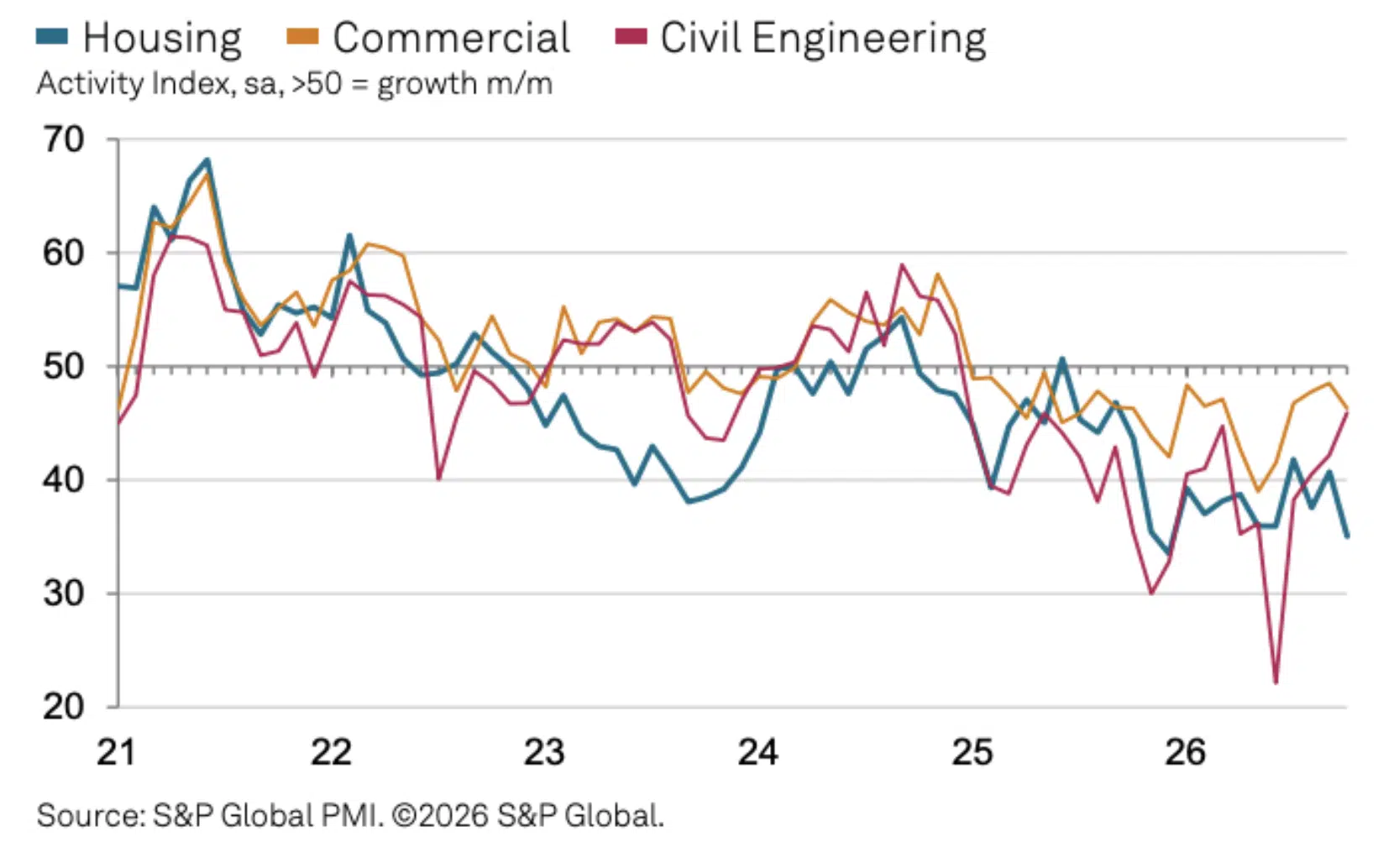
According to S&P Global, UK Construction accelerated its reduction in business activity during October. Residential activity continued to be the hardest hit by the increase in borrowing costs and the lack in confidence overall with the current economic climate. Only Civil engineering slowed its contraction pace as infrastructure projects continued to build bridges to keep some construction moving. In the meantime, fuel costs continue to burn through profits along with a rise in raw material prices.
We remain a long way off a building revolution
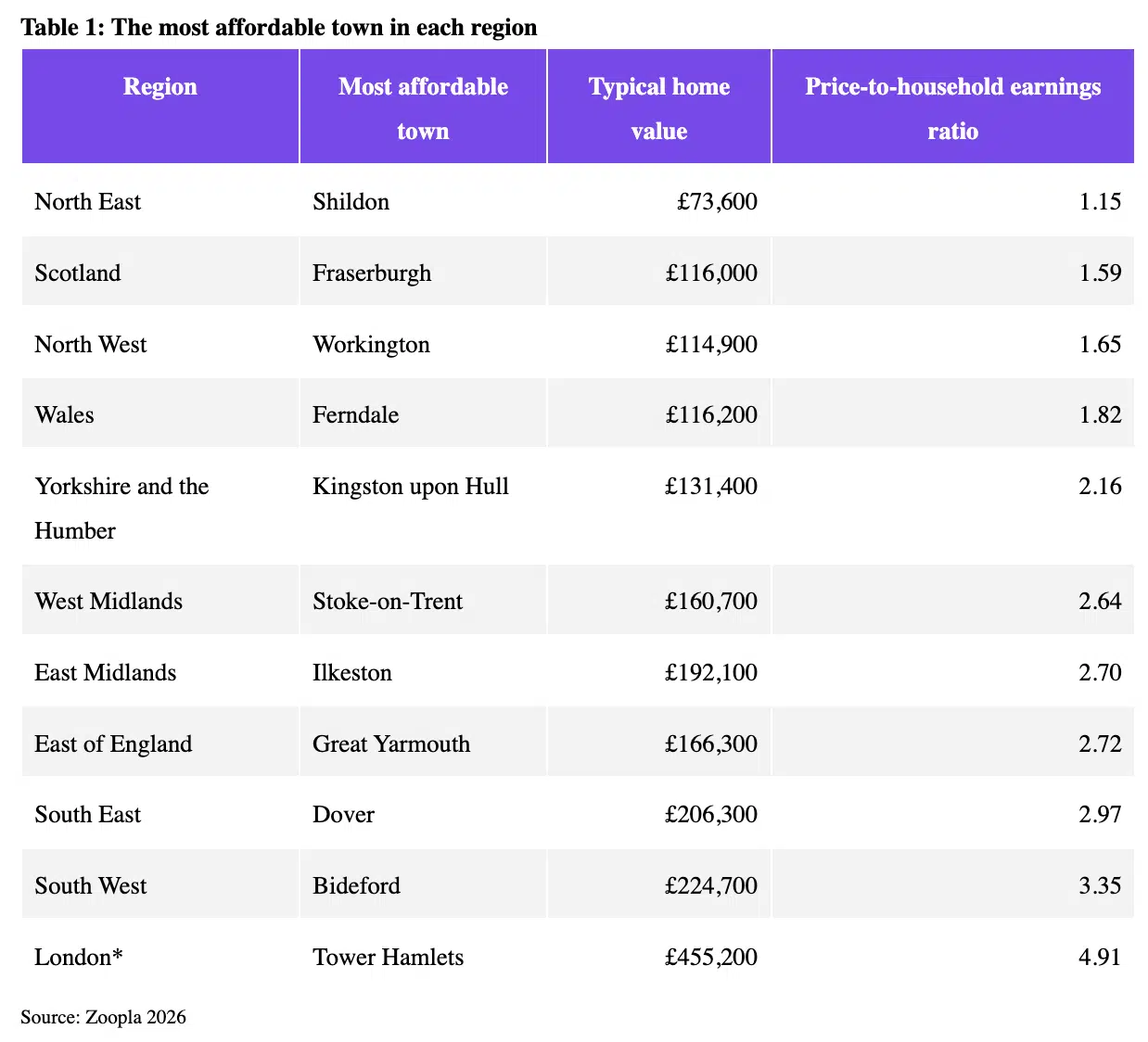
Northern climes dominate affordability – 23 out of the 36 towns that cost less than two years worth of household earnings were in Scotland, according to Zoopla. Despite house prices falling in southern areas they remain considerably more expensive than their northern cousins. Shildon in the north east was the most affordable town at £73,000 while Dover was the cheapest down south at £206,300. Rising rates however are curtailing buyers’ ability nationally, but for the majority of buyers, affordability is important but being in an area that is accessible for work and socialising is more pressing than owning a home that will distance them from both. Finding this balance is key to any successful move.
Base rate rise
The Monetary Policy Committee voted 8–1 to increase Bank Rate by 0.25 percentage points, to 4%. Despite many a lender already factoring in a rise, many borrowers tracking the base rate will feel the increase acutely. Should the conflict in the East persist, further rises are anticipated causing future borrowers to retreat to the rental market and hope their savings rate rises on their deposit amount in the meantime.
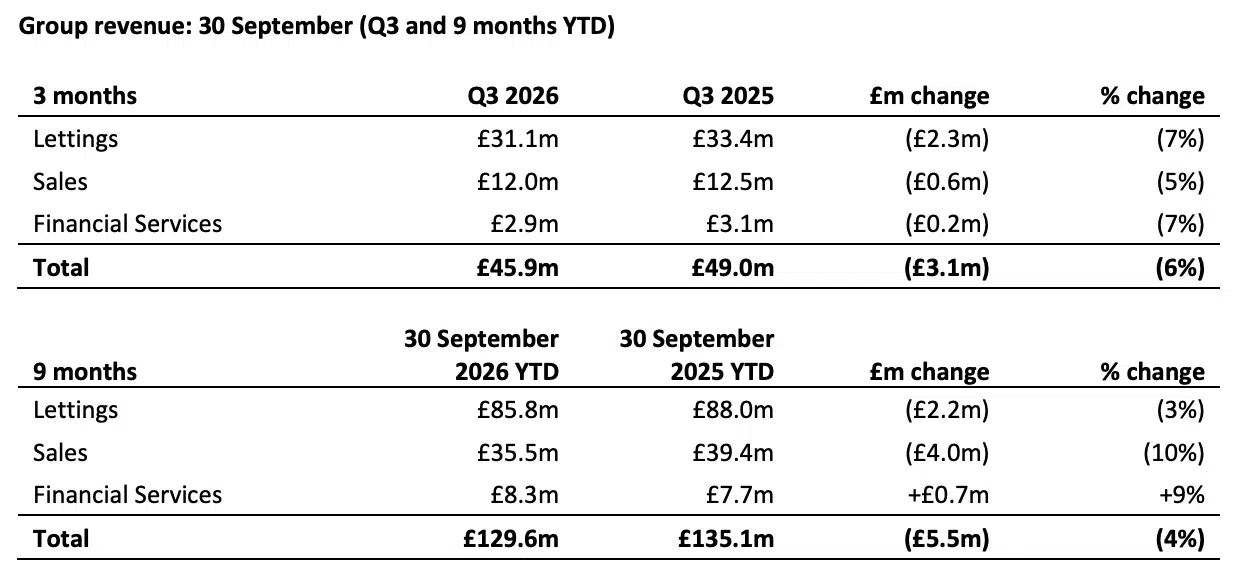
Foxtons reported a 6% Y-O-Y fall in group revenue
The Renters’ Rights Act dented their typically buoyant revenue stream with early terminations in Q3, with revenue down 7% to £2.3m. Meanwhile sales fell 5%, notably the average revenue per transaction falling 8%. Despite lettings being the biggest loser in Q3 overall sales remain the biggest drag on year-on-year profits which fell 10%. Moving forward, lettings are expected to continue to prop up the group’s bottom line till rates start to fall and buying becomes viable again.
Urban Spash ordered to pay £46.5mn cladding repairs
A tribunal made waves by ordering Urban Splash to reimburse the taxpayer for remedial works, causing nervous ripples amongst other developers looking to challenge remedial works bill. This win sends a clear message that consistent threats of a reduction in the development of new homes, if charged, won’t save them
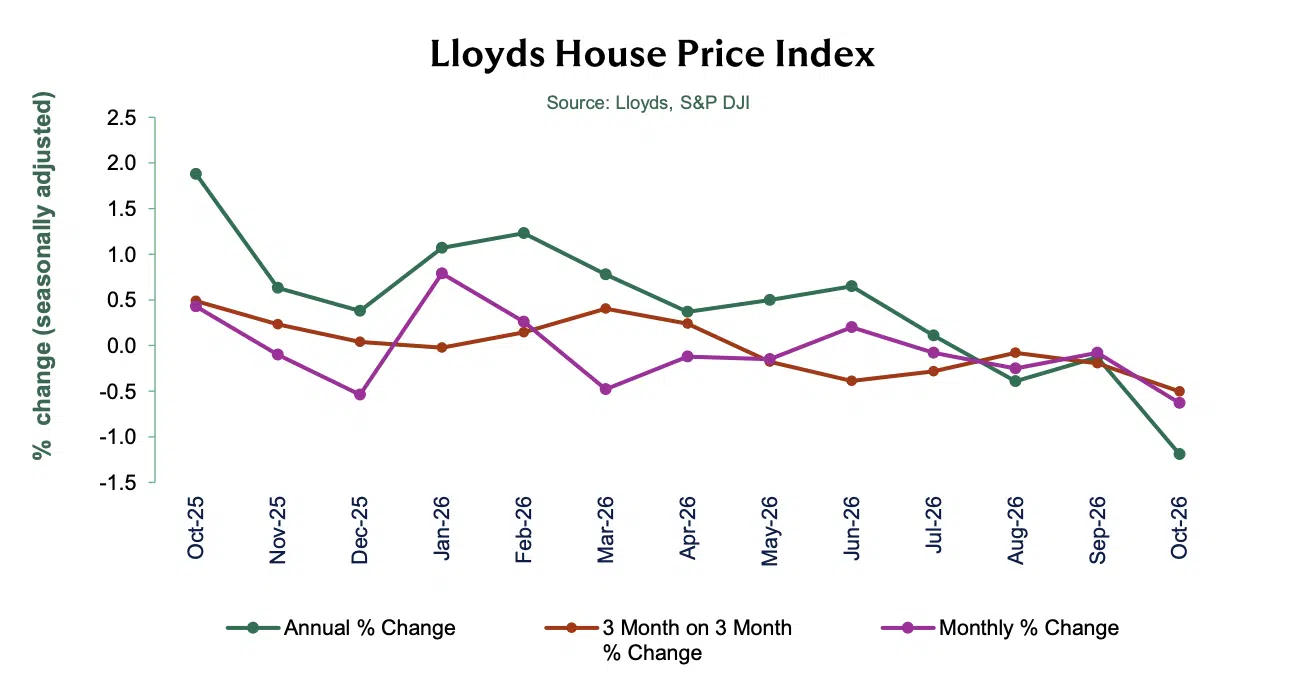
High inflation and taxation continues to prove a drag on UK House prices.
According to Lloyds HPI for October 2026 – UK House prices fell 1.2% annually and 0.6% on last month’s efforts according to Lloyds HPI for October 2026.
Northern Ireland once again continued to dominate annual house price growth at +4 .4 %, followed by Scotland with 2.8% growth and 2.2% in the North West. In contrast, the largest annual decline was in London, which fell -3.1%, followed by the South East and South West, both down -2.4% respectively. Higher listing prices are continuing to be at odds with buyers’ appetite for risk and affordability.
That concludes, this week’s UK Property News Recap – 06.11.2026. Any comments or questions please get in touch.


