


Markets shook this week as bombing resumed in the Middle East, causing further fears of interest rate hikes as swap rates felt the reverberations from a war, far from over. Borrowers’ and sellers’ hopes for the autumn term dwindled along with developers’ aspirations for a healthy turnover. To appease them Andy Burnham shelved plans to restrict foreign buyers from new homes and u-turned on giving first time buyers first dibs. Given new build buyers are currently slim on the ground this will do little to pacify developer calls for a revival of help to build, sorry, BUY. Meanwhile, Huw Pill beat Andrew Bailey out of the gates, claiming the base rate should rise while Bailey avoided the subject, instead focusing on why the Bank of England should remain an independent entity, which resists “pressure from the concentrated interests, thereby protecting the public good like the value of money.” Excuse me for stifling a yawn. Welcome to another UK Property News Recap – 04.09.2026.
Planning times lag due to staffing numbers
The latest report from the Home Builders Federation revealed that despite the government’s aim to accelerate planning times, the lack of funding is leaving them coasting, unable to turnaround approvals in a timely fashion.
“90% of local planning authorities are operating below full staffing capacity, with planning departments working at an average of just 80% of the staffing levels they say they need. On average, councils employ fewer than 36 planning staff despite requiring around 44 to operate at full capacity.” Unable to retain staff they are turning to agency workers which cost more, further draining resources. As a result only 20% of major planning applications are determined within the statutory 13-week target.
Labour parks plans to restrict foreign buyers and enable first time buyers
Ask a politician for directions and you’ll be told to do a U-turn. A manifesto promise to give first time buyers first dibs and ban foreign buyers from buying more than half of new homes in a development gets downgraded to an “option.” To justify this the government has said increases in stamp duty for foreign buyers and the mortgage guarantee scheme for first timers has achieved the same effect. In reality, I suspect it’s because developers have lobbied hard not to restrict any buyer, given there aren’t enough at present.
A room with a view commands a higher price tag
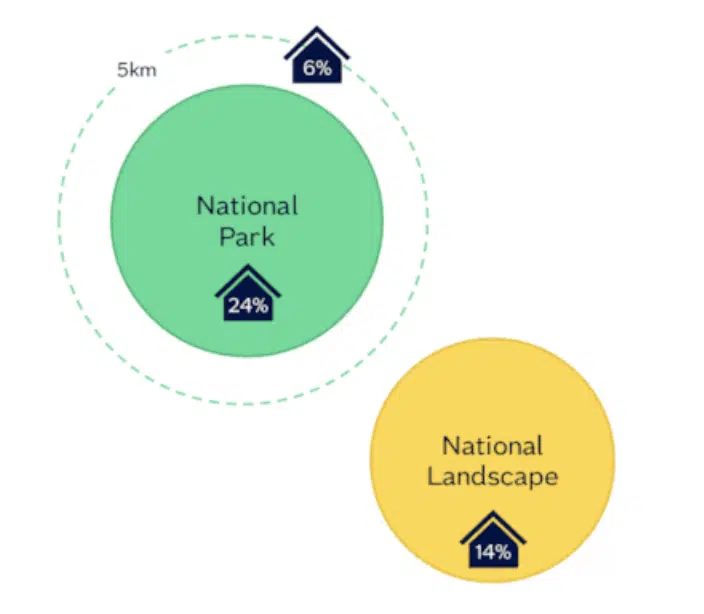
Turns out the grass really is greener. Nationwide reports that homes within 5km of a National Park achieve a 6% premium while those properties located within a National Landscape get a 14% uplift in price. The New Forest remains the most expensive National Park to live in with an average price of £563,000 while Surrey Hills tops the National Landscape leaderboard with an average price of £710,000. A room with a view is clearly a premium some are more than willing to pay to get away from it all.
Banking a good school proves costly
Back to school…getting them in is hard enough and for many they will pay more to be closer to a good state or private school. YopaProperty found that homebuyers face paying an average premium of more than £40,000 to be within the catchment of one of the top state secondary schools in the UK. Top of the leader board was Bishop Vesey’s Grammar School in Sutton Coldfield with a 54.1% premium. However, Benham and Reeves found the premium commanded to be within walking distance of London’s top 50 private schools, for those still able to afford the school fees, rose to 77% for Queen’s College, London and 54.5% for Westminster School and Francis Holland School.
How relevant this data is to schools is questionable. It’s a good thing for new starters that house prices have come down in these areas, but not so good for those who are already there.
House prices remain flat in August
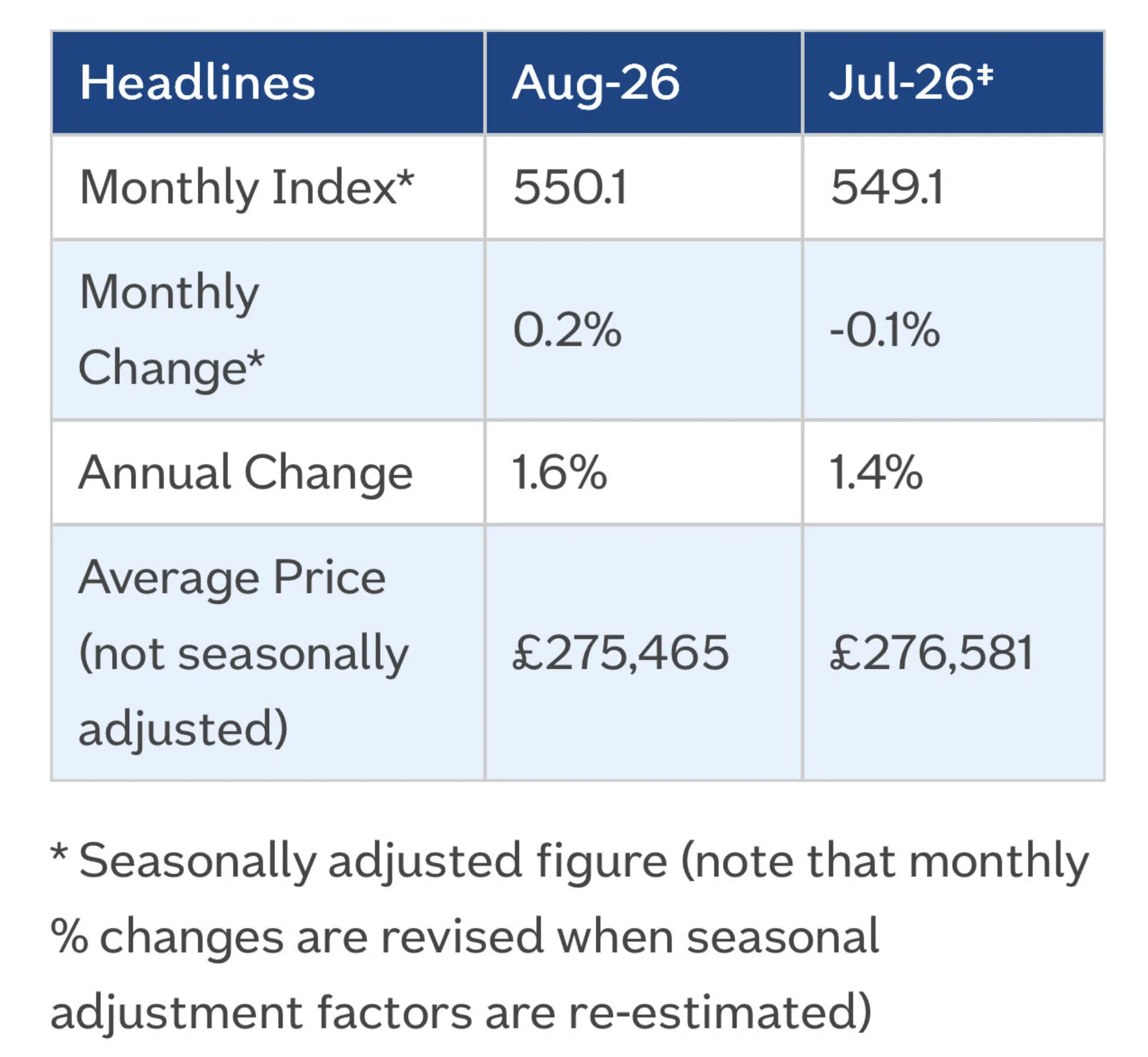
According to Nationwide , after a slight revision on July’s numbers August’s average house price shuffled up 0.2% but broadly remained flat annually with growth at 1.6%. This sweeping overview was of course coloured by activity in northern, more affordable regions while southern areas remained in greyscale.
London flat prices get squashed
Mix one part of additional taxes to two parts of excessive services charges, layer cladding issues then extract foreign buyers and investors and strain through higher rates and you are left with a thimble of interest but only at a lower price point.
When build-to-rent means build-to-comply
The costly “extras” that weren’t mentioned on signing, such as WiFi, Gym membership, and cinema usage all add up. These along with restrictions on guest access and delivery riders have tenants questioning their higher rent. Luxury does, certainly at Shard’s Place in London, come with an additional price tag. Let’s hope other build-to-rent developments don’t follow suit…
Crest Nicholson’s profits hit an economic wall
Developer Crest Nicholson’s wave breaks with an expected £10 million pre-interest and tax loss for the full year, versus the £10 million profit previously anticipated. Completions also tumbled from 1,500 to 1,350-1,400 units. The economic swell is hitting developers hard along with housing numbers.
Period properties “could” feel a little more insulated
The National Planning Policy Framework has been revised, instructing local authorities to CONSIDER energy-efficiency or low-carbon improvements as “important public benefits” when making decisions on whether to approve upgrades to listed buildings. The problem is they don’t have any issues with considering issues. They like to “consider” a few times, pocketing application fees with each attempt. It’s agreeing that is the problem. These same planners who can’t accept like-for-like windows with double glazing or toughened glass are the same ones who are tasked with building new council homes. Given common sense hasn’t prevailed with existing homes, hopes for more homes remain thin on the ground
The S&P Global UK Construction Index
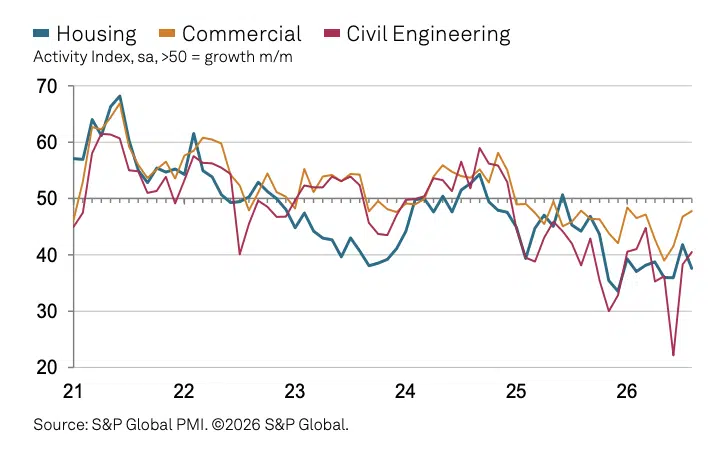
Residential development nosedived in August as peace talks were shelved and interest rates rose. S&P Global UK Construction PMI marked a slow down in new orders and employment overall as developers struggled to make construction numbers stack. Commercial and civil engineering were the two sectors where their work load marginally improved but remained historically low. Moving forward expect more of the same until a resolution is sought further afield.
Rates come under fire
Rate increases start to build upward momentum in response to recent missile launches in the East. Those looking to move this year are locking down rates they didn’t want; resigned to the ongoing volatility that has hindered progress. According to Moneyfacts the average two and five year residential fixed mortgage increased 0.01 percentage point to 5.60% and 5.64% respectively. Expectations for further rises next week are high leaving hopes low.
Borrowing more only to pay more for longer….
First time buyers can now borrow 6.5 times their salary. Lenders’ desperation to lend is hidden behind concern for first time buyers’ inability to access the ladder – not how long they will be on the hook
That concludes this week’s UK Property News Recap. Any comments or questions do please get in touch.


