


The heat remained on the UK property market this week, leaving asking prices to melt from prolonged exposure on the portal shelves. Buyers remain uneasy by the ongoing uncertainty in the Middle East which is causing rates to swell and confidence to dwindle. However, cash rich investors are circling, seizing their advantage, picking up the best yields for a fraction of the price on certain properties. Welcome to another UK Property News Recap – 21.08.2026.
Ask and you shall receive falls short
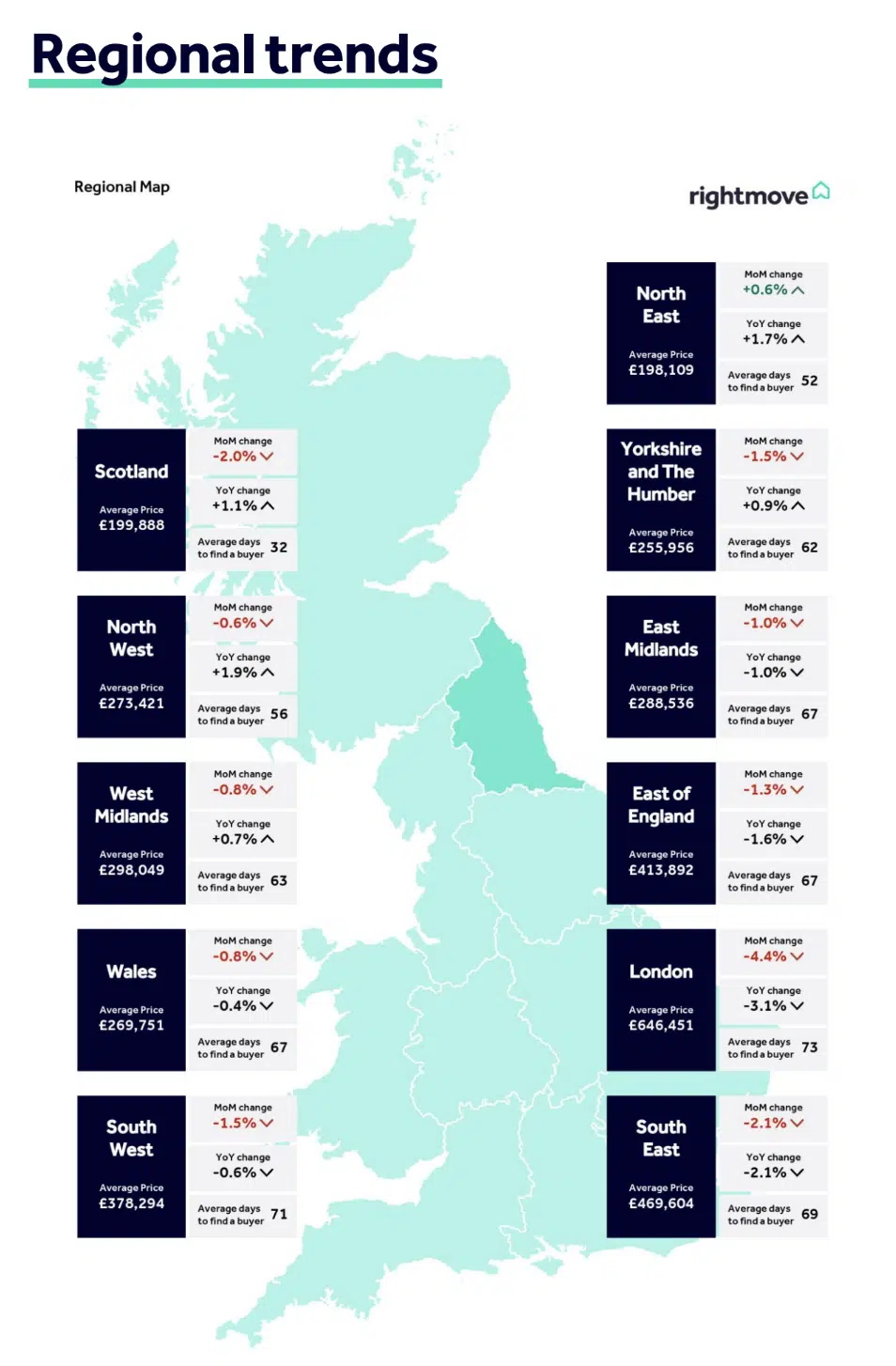
Sellers felt the economic heat in August and reduced UK AVERAGE ASKING prices a further 2% as they continued to struggle to win over buyers. The top of the ladder was the worst hit with a monthly fall of 2.8% while the bottom saw prices drop 0.3% when London was excluded. As a result of consistent economic strain and conflict in the East, average house prices are now 1% below last year. However regionally the country remains divided with Northern prices continuing to outperform with growth of 1.5% while in London asking prices fell another 3.1% and 1.8% in southern England. The affordability issue remains a sticking point as interest rates about-turned leading to further fears of overexposure and caution on how much and what to spend should things continue as they are. This led Rightmove to revise down its forecast for house price growth this year to between 0% to -2%.
Cash investors take advantage of house price falls
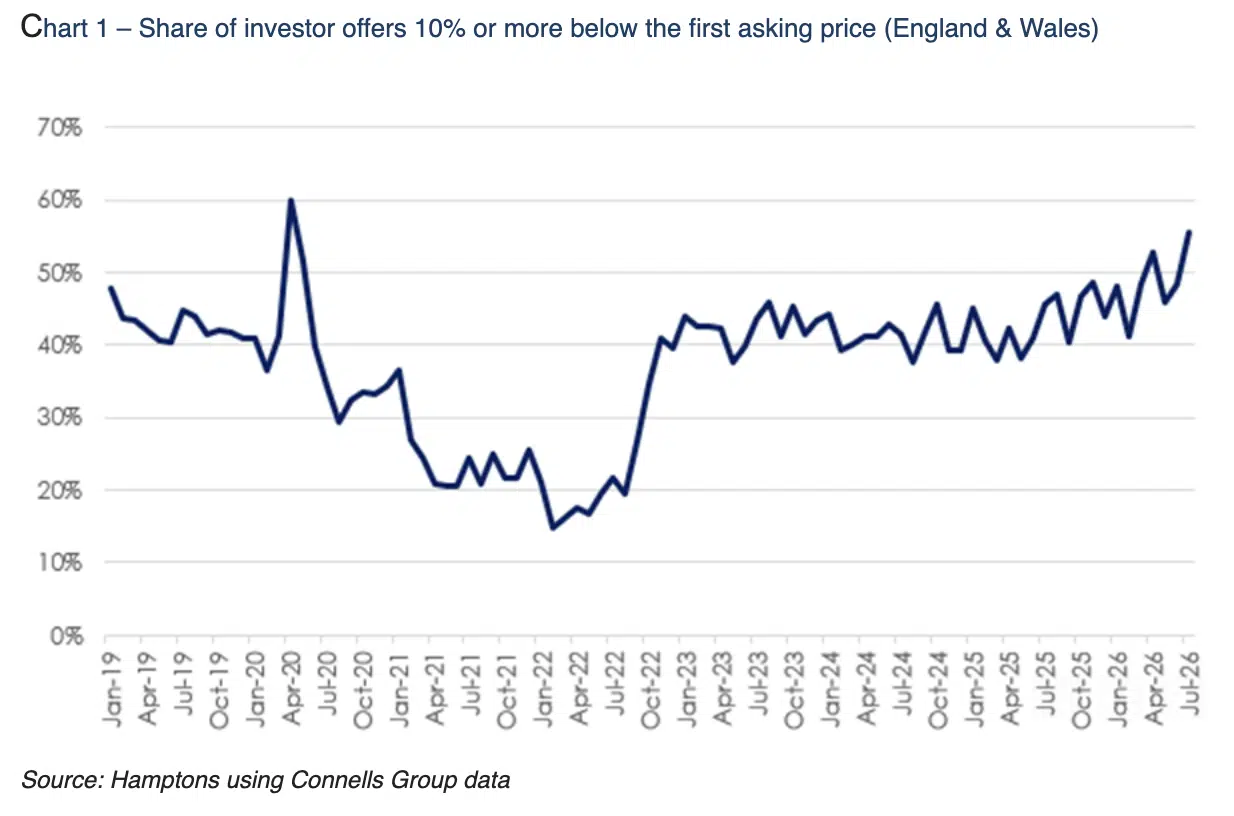
Cash and chain free investors circle praying on sellers’ desperation to move on, achieving 10%+ discounts on 27% of properties that were stagnating from overexposure online in July. Lowball offers were prolific in July with around 53% at least 10% below the initial asking price – rising to 63% among landlords paying in cash. Though unacceptable at present the longer properties languish on the portals the higher the probability of being accepted down the line. Investors’ interest is piqued in response to increased rental growth for new lets in Great Britain. This was driven by a recent rental growth spurt in southern England where sellers have struggled the most to sell. As a result, rents overall rose 1.9% year-on-year in July, taking the average rent back above £1,401 per month. This opportunity for those not indebted is too good for some to miss.
The government paves the way for development by railways
New homes are scheduled to be due “within reasonable walking distance of well-connected stations, alongside new minimum expectations for how much housing should be built in these areas.” The government has just got to persuade developers now that there are passengers willing to board for a reasonable price. Without them, no developer is going to depart.
The time to sell drags over the summer
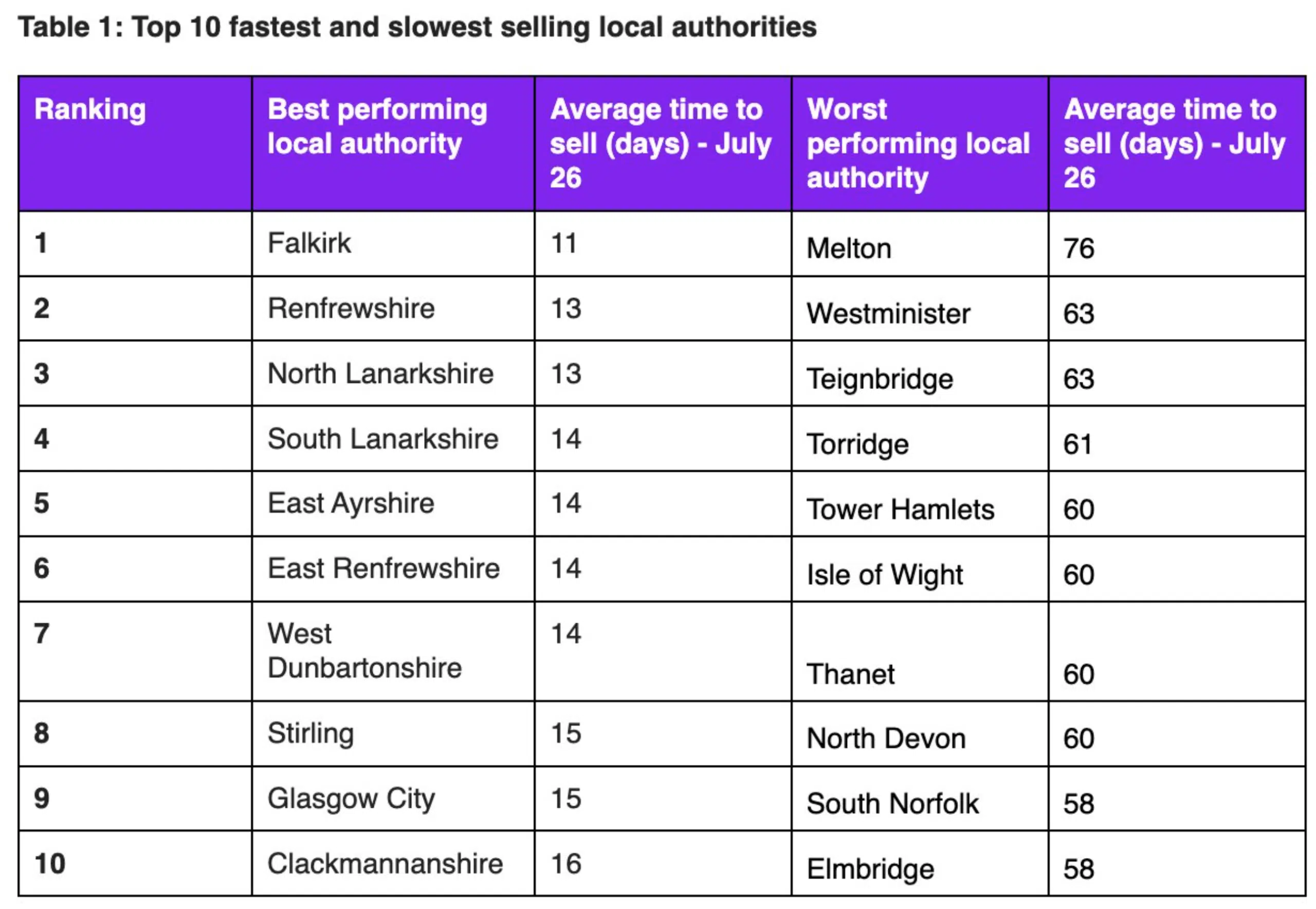
Sellers faced a sticky summer with homes taking significantly longer to sell in certain less connected or affordable regions. Zoopla found overall the average time to to sell hadn’t changed from 42 days. Yet for half of UK homes they struggled to garner any attention as interest rates rose, Trump continued his vocal tirade and bombardment and Burnham speculation swirled. Falkirk in Scotland defied the market, sellers securing a buyer in a record breaking 11 days. Meanwhile Melton fell out of favour, the average property taking 76 days to shift, 21 days longer than last year. Westminster followed with 63 days as buyers put off by higher taxes and service charges rejected unrealistic asking prices. To sell, it is vital that you know today’s market for your property in your area. Yesterday’s prices are now redundant. The difference in some regions will be stark but it is unlikely to change for the foreseeable. If you are serious about moving; price right the first time or pay a bigger price later.
House prices rise in the Northern regions while rents continue to swell nationally
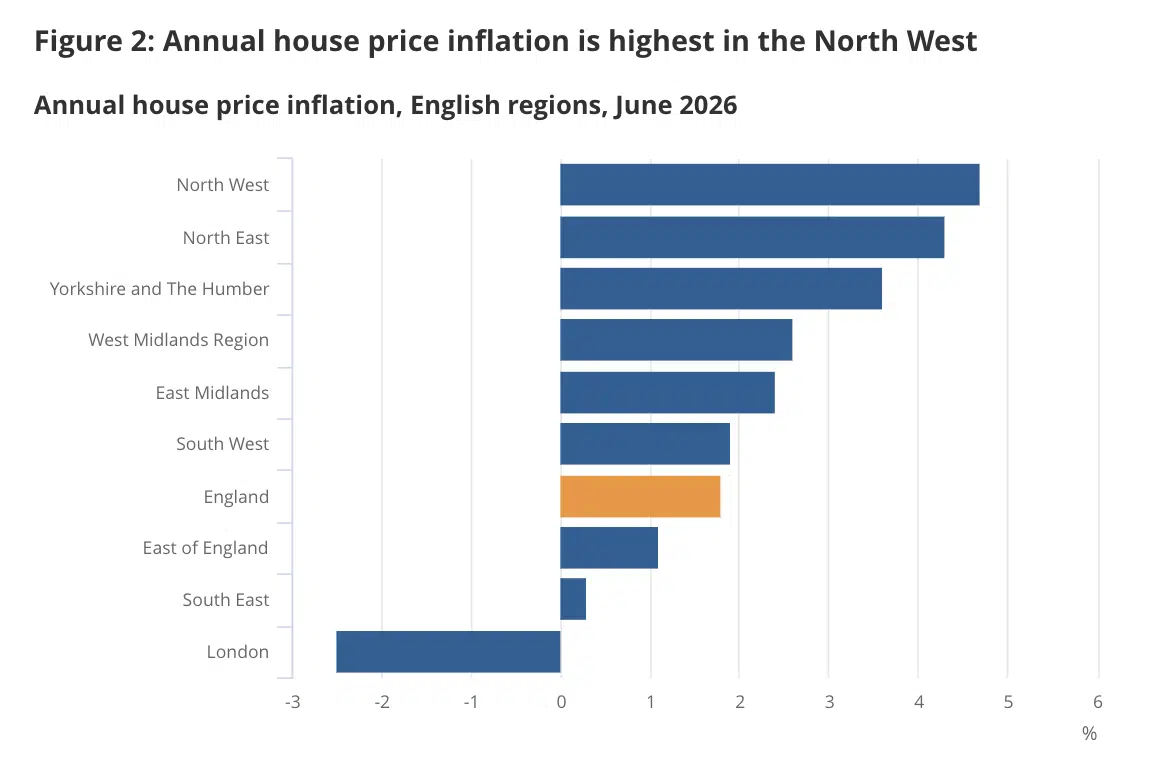
UK House price growth was estimated by the ONS to have slowed from 3% to 2% in June 2026 as the summer’s economic heat continued to melt southern prices. London, once again, was hit the hardest , down 2.5% annually while the North West continued to outperform other English regions with 4.7% growth. Northern Ireland also continued its ascent, up 9.2% in Q2, followed by Scotland, up 2.3% and Wales and England 1.8%.
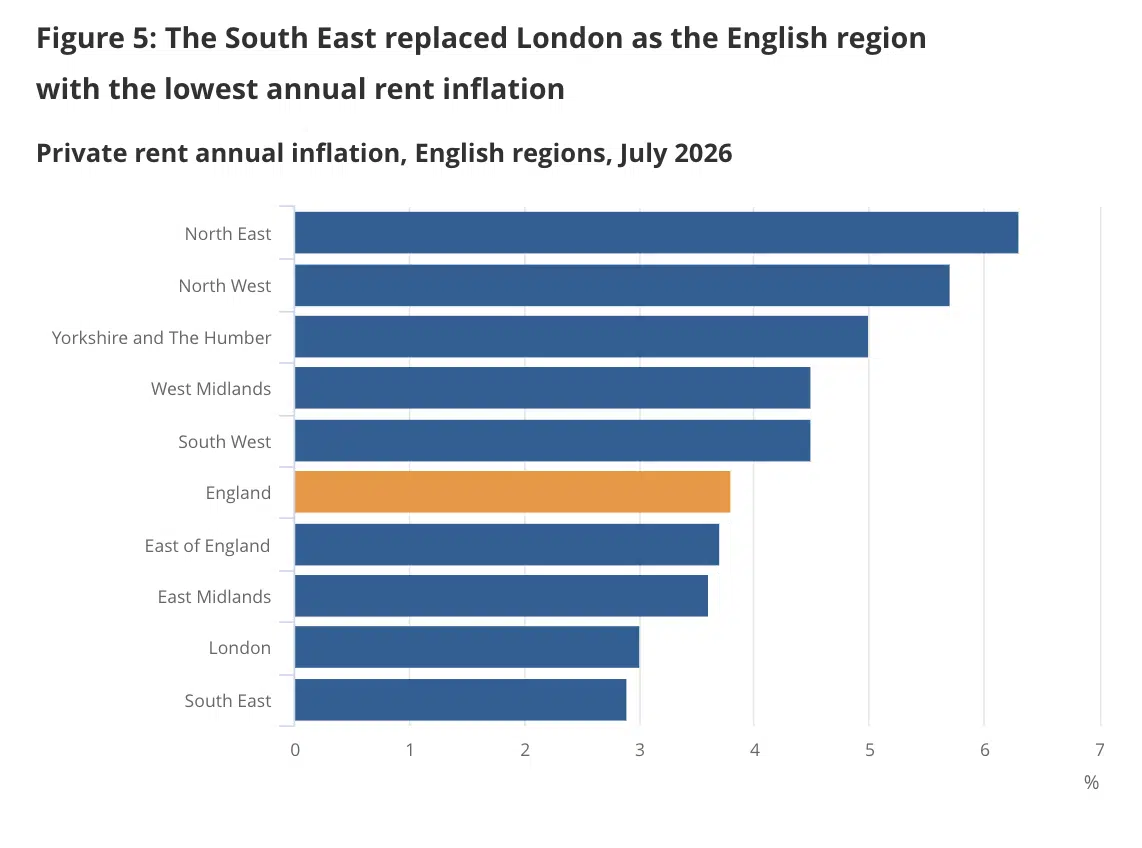
UK rents continued to put pressure on tenants as they rose over the summer, increasing 3.7% from 3.3% in June 2026. Once again the North East dominated growth, up 6.3% while its counterpart only managed 2.9% in the South East. Wales also continued to see prices swell, up 4.5%, followed by England with 3.8% and Northern Ireland 2.3%. Leaving Scotland to trail behind with 1.7% growth.
The cladding manufacturer Arconic appeases shareholders before those who lost
The cladding manufacturer Arconic who intentionally manipulated and misrepresented fire safety tests in order to mislead the market over combustible materials has paid more financial compensation to its shareholders than to those who have lost lives in the Grenfell disaster.. “A settlement with its shareholders for economic loss arising from misleading statements in connection with the safety of Reynobond PE was valued at $74m, according to the research. Meanwhile, a civil settlement with the victims and survivors of the fire was found to be worth $43m.”
8 in 10 leasehold flats remain on the market after six months
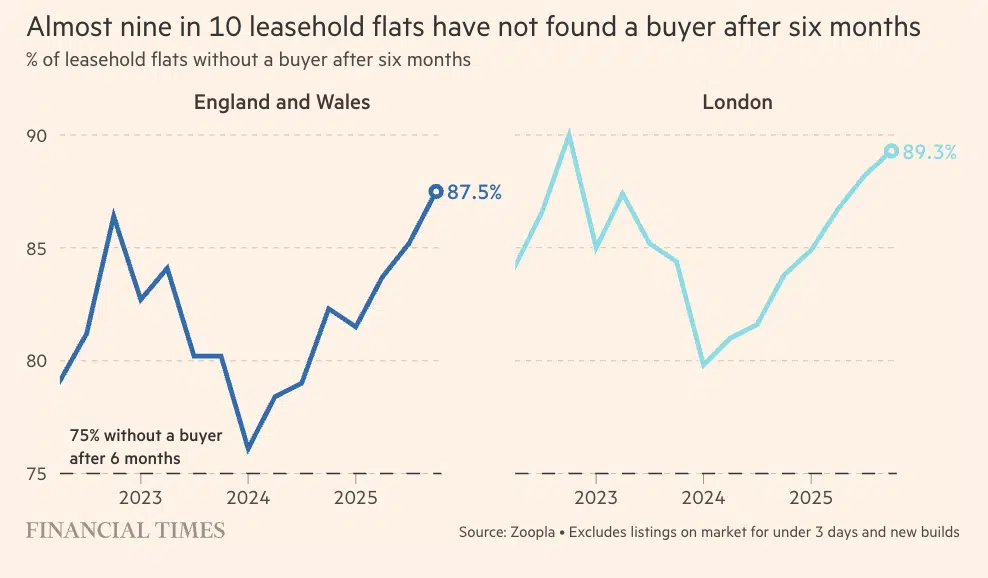
According to Zoopla, indebted landlords continue to fail to read the room and list 13% above the average sale price for leasehold flats in Q4 2025. This added to the many reasons why 87% of leasehold flats remained unsold six months later.
The distrust around leasehold proves costly to those trying to move on. Unless service charges and ground rent reform is instigated they will remain in limbo. For those trapped due to cladding issues they remain imprisoned until remedial works are resolved. This alongside increased interest rates has buyers swiping left in favour of share of freehold or freehold homes. If the government wants developers to build more it needs to sort the existing issues to appease buyers’ concerns.
Labour Council group asks from more
And just like that…you wave your magic wand and poof – all the debt is gone…removed from council accounts and left for the tax payer to supplement. Labour Campaign Group for Council Housing has written to the chancellor John Healy asking that approximately £31.8bn is written off councils’ books so they can invest (spare me) and maintain existing blocks which they failed to do previously.
Banking on Mum and Dad
Once upon a decade – getting out of the family home as fast as you could was seen as a badge of honour; a coming of age. Today due to rising rents, excessive student loans and previous house price growth off the back of low interest rates; kids are forced to save at home or be gifted money from their folks to reach the first rungs of the ladder. Savills estimated that based on a rent of £160 a week – the hotel of mum and dad collectively gave £7.6bn away. Though I’m sure they don’t see it that way – maybe their sanity might be strained for longer but at this point that went long ago so what’s a few more years. Meanwhile Legal and General calculated “families are expected to gift £11.3 billion to their children for their first home in 2026” financially impacting them more.
That concludes this weeks’ UK Property News Recap 21.08.2026. Any comments or questions please don’t hesitate to get in touch.


