


Softening prices and ongoing global uncertainty are reshaping the UK housing market. While North American buyers are taking advantage of discounted opportunities in London, domestic demand shows signs of fatigue, with buyers and landlords alike adjusting to tighter margins and shifting conditions. At the same time, mortgage pressures persist, and energy efficiency is increasingly influencing rental values. Against a backdrop of geopolitical tension and constrained construction output, the market is not simply slowing — it is evolving. Welcome to another UK Property News Recap – 08.05.2026.
Americans seize the UK housing opportunities
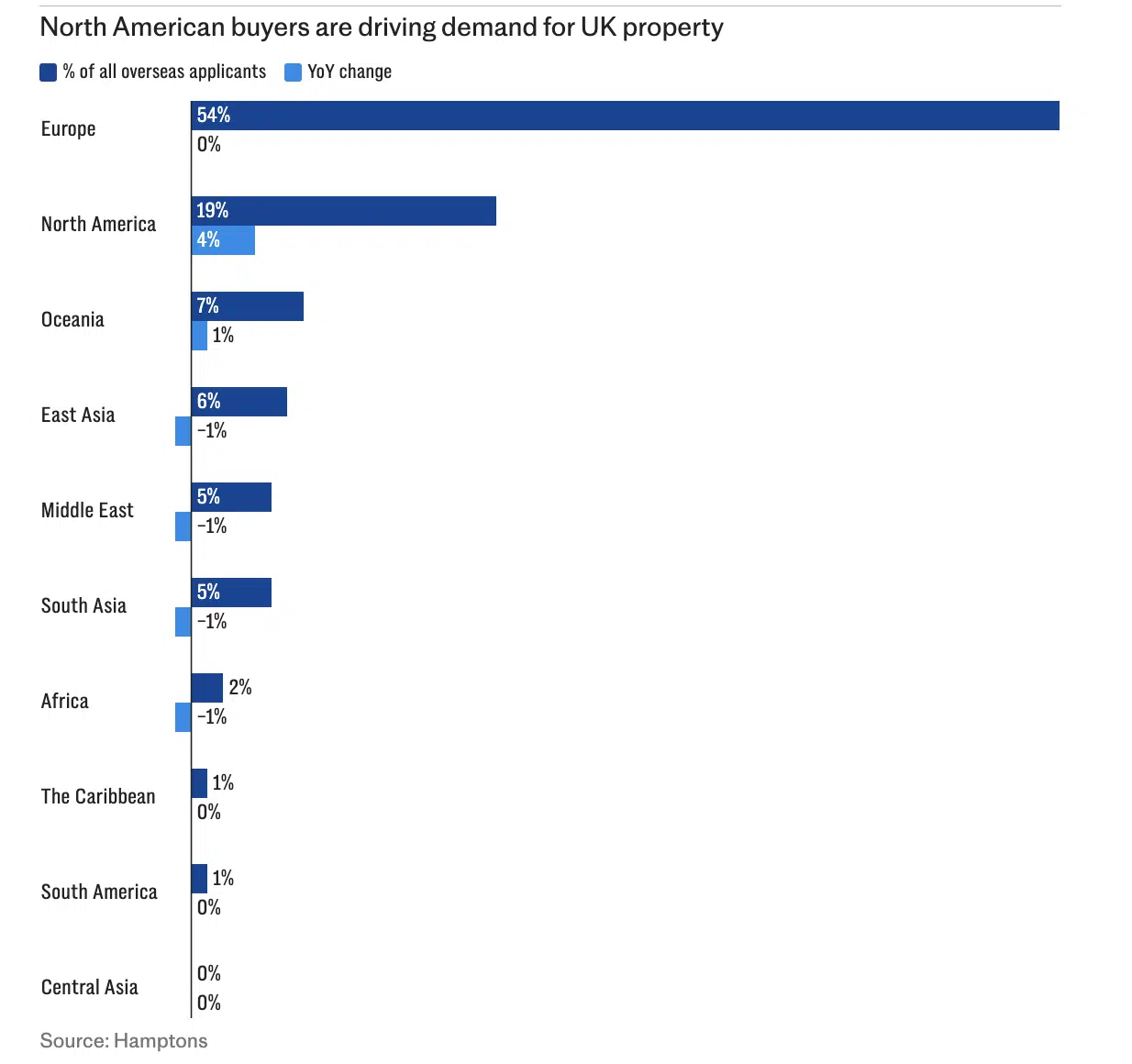
Despite increased taxes some North Americans are capitalising on the capital’s house price downfall; buying property at a discount while the dollar is up against the pound.
EPC properties attract a rental premium
New research from The Mortgage Works found an A or B-energy efficient rated rental property currently attracts an 8.1% rental premium compared to a similar D-rated property. Buy-to-let properties in the North East benefit from the highest rental premia, with an A or B-rated property commanding a 13% higher monthly rent. In contrast, the South of England only commands a 5% premium. Overall the number of private rented stock in England rated A to C has risen 51%. Detached properties remained the least energy efficient within the PRS stock, with 18% rated E or worse. However, these account for only 6% of the overall private rental sector stock.
Mansion tax costs spiral
Despite the best laid “mansion” tax plans…the social crowd pleaser is proving less of a money spinner as threshold crossings are reduced. With set up costs estimated at £120 million and stamp duty and inheritance tax receipts expected to slump by £230 million in the next three years, the mansion tax is proving a costly tax for all.
Mortgage affordability tightens
The north/south house price growth divide appears to be at odds with lending demands. According to the latest research from UK Finance, the East Midlands and East Anglia was the region with the highest annual borrowing growth up 20 per cent, closely followed by southern districts. Both of these regions face increased affordability issues hence the need to push lending boundaries. However, borrowing in London was comparatively weak, with only 12 per cent growth as buyers potentially held off from moving due to increased affordability issues.
Demand has been well documented in Northern Ireland and Scotland boosting house price growth but the need to borrow here was weakest with the number of purchase loans rising by only eleven and eight per cent respectively. This suggests investors and homeowners are pivoting to more affordable housing with higher yields armed with cash.
Unsurprisingly, in the capital the number of variable and interest only loans was highest due to borrowers either coming to the end of historic longer terms and opting to avoid a more costly higher fixed rate, or from those unable to afford switching to any alternative.
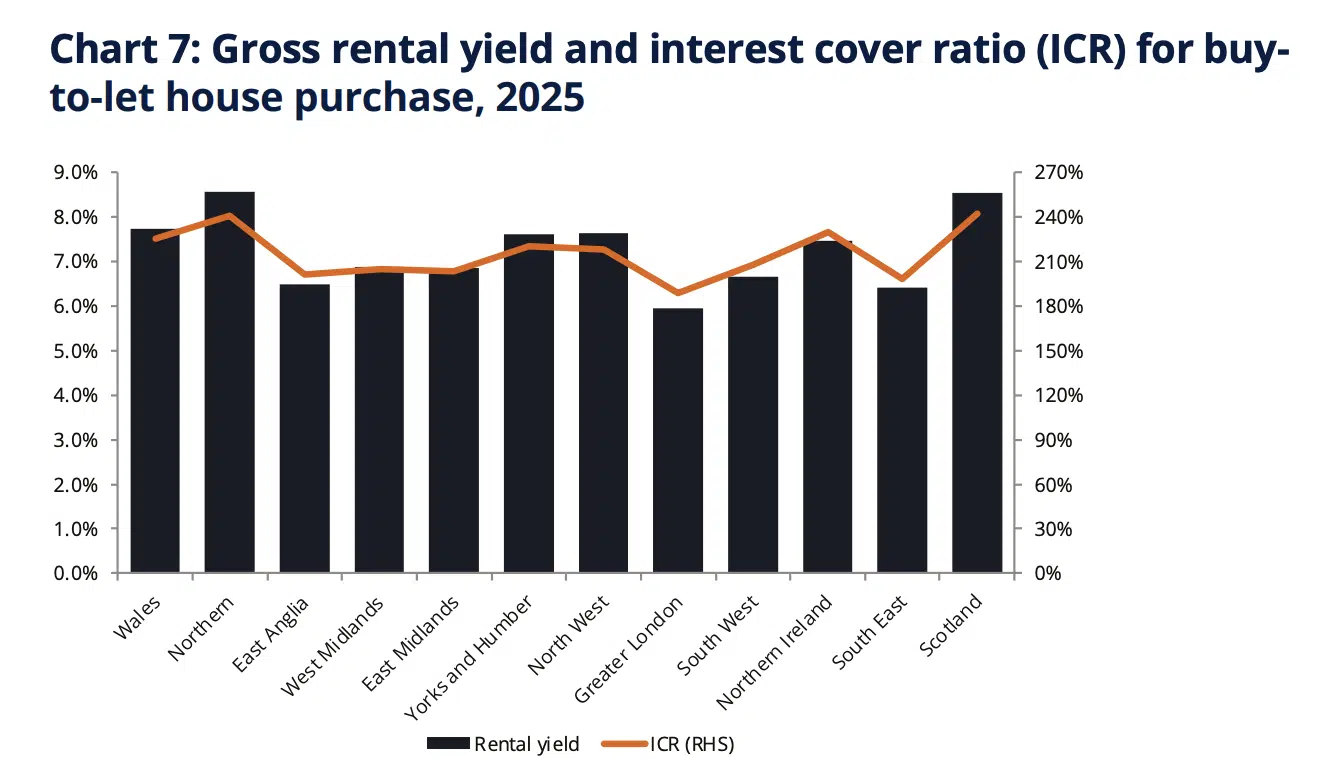
Buy-to-let borrowing was highest in Wales, the number of loans rising by 29 per cent. The northern region of England, trailed behind with only 18 per cent growth. The weakest regional performers were Scotland and the South East. The former due to cheaper stock and higher yields negating the need for lending from cash-rich investors, versus the latter where higher price stock versus weaker returns makes for a costly investment.
Property qualifications on the rise
With time on their hands, estate agents are increasingly looking for a qualification to convince both buyers and renters they know what they are talking about…Since 2020, Propertymark has seen a 51% uplift in demand for qualifications as forward thinking agencies look to mitigate the ever pressing requirement for all agents to be qualified. To date most agencies have one member of staff who is ARLA registered for rentals while sales teams lean on AML departments and solicitors to do the heavy lifting. Today however, Rightmove’s consumer research showed seven in 10 home-movers would prefer to work with a qualified agent, while over 70% of renters and homeowners believe agents should hold formal qualifications. Naturally, both Rightmove and Propertymark have a vested interest in making training mandatory. The exams aren’t cheap, but training is useful if it provides confidence and trust. However for many old timers it’ll seem like another box ticking exercise when time and money is short.
Mortgage cost set to rise if Trumpflation persists
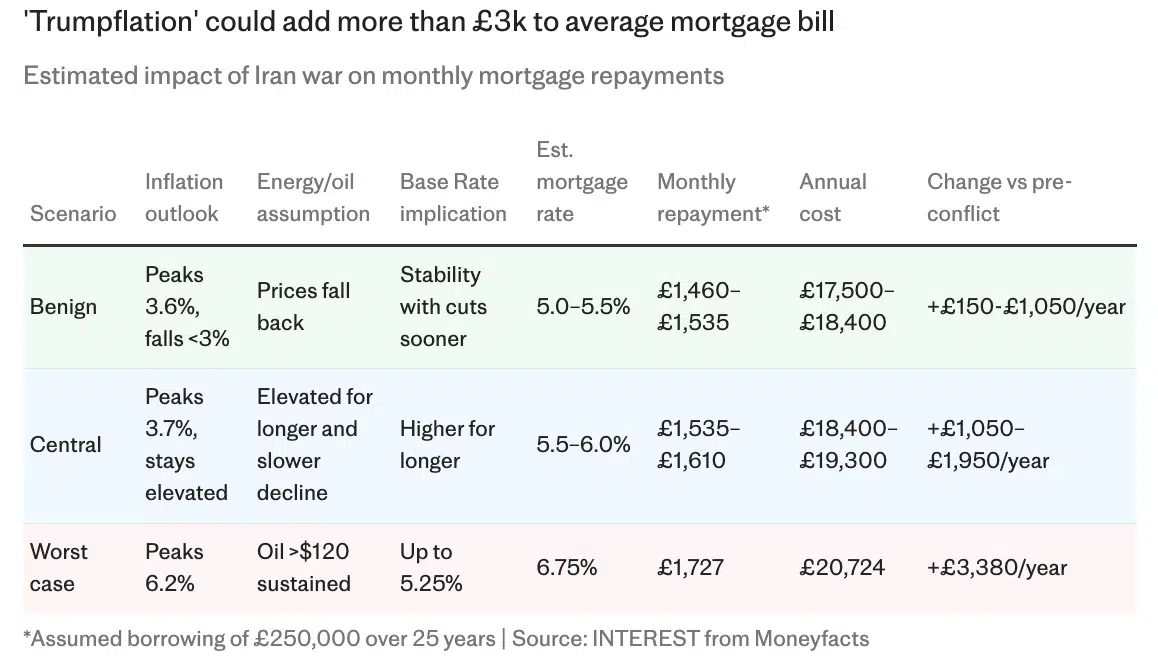
Homeowners who thought the heady rates post the mini budget were behind us could find themselves replaying the same scenario if Trumpflation persists. Some who fixed in the hope that rates would have improved by the time they came to renew will find themselves back where they started. For others, who put off buying due to affordability issues and looked to the 2026 horizon for rate motivation – now find themselves forced to shelve their plans to move, once again. The only positive for buyers is house prices could further fall but for those who need to sell this could dampen their onward dreams.
The Bank of England estimated that an inflation spike of “6.2pc and a Bank Rate of 5.25pc, which would result in mortgage rates of around 6.75pc. This, Moneyfacts calculated, would add “£3,380 a year to a £250,000, 25-year mortgage.”
Construction struggles to make the numbers stack
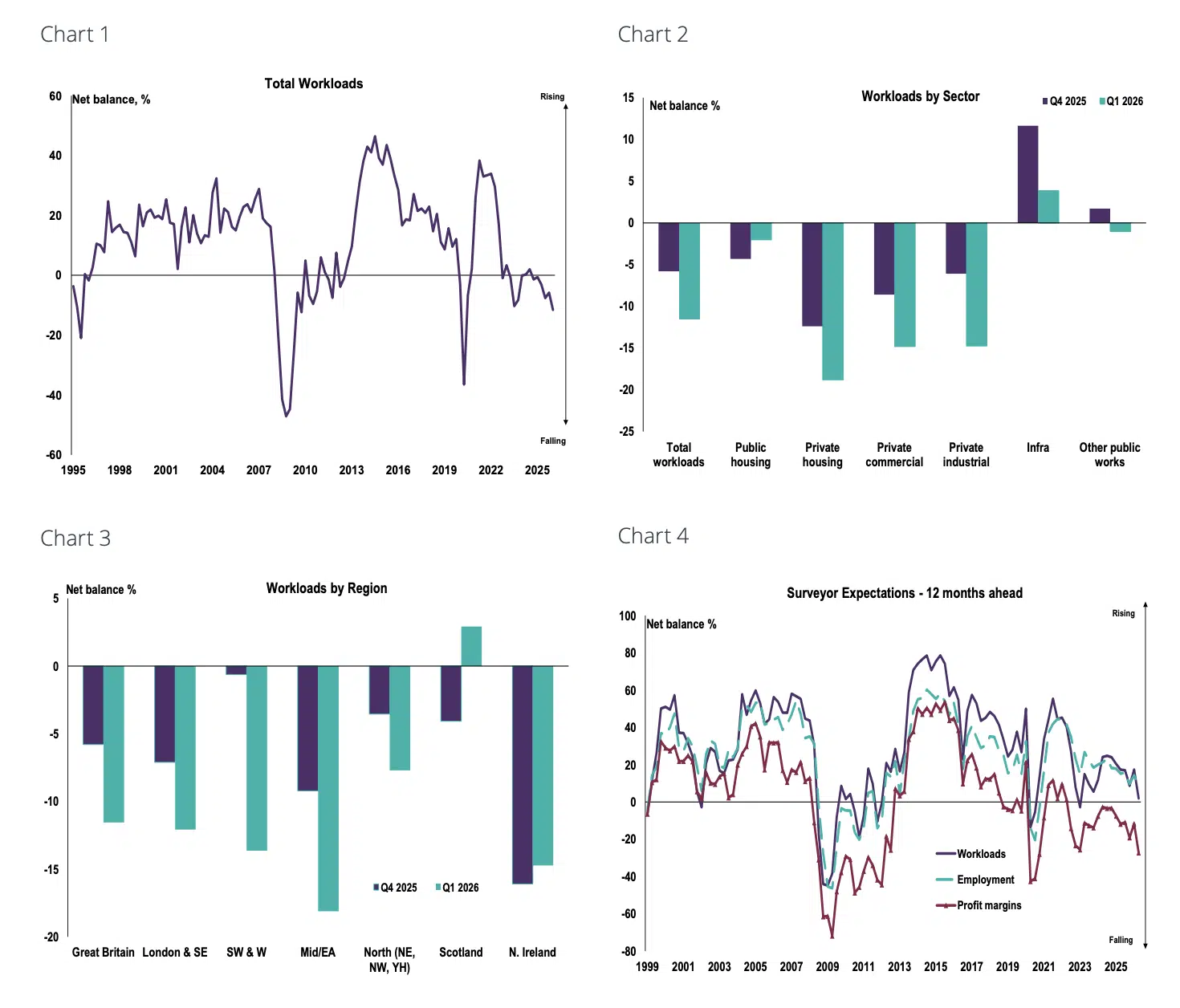
The knock-on effects of Trumpflation has left the construction industry reeling and any new homes target out of range. According to the latest RICS UK Construction Monitor report for Q1 2026, workloads fell a further 12%, down from -6% in the previous quarter. Private housing was hit the hardest falling another 19%, while private commercial and private industrial workloads reduced another 15%. Only infrastructure continued to flow up stream powered by energy upgrades and water and sewage works. The major blockage comes from worsening credit conditions, planning and regulation constraints. This is anticipated to increase construction cost by 6.6% over the next 12 months with materials costs projected to rise by 7.5%. This in turn will cause tender prices to increase by 5.6%, making many projects unviable as what little profits there were to be had are consumed. All of this, however, greatly depends on the action or perhaps the lack of it in the Middle East. Until we see tankers and ships bobbing down the Strait of Hormuz without fear of attack, these and any other figures mean next to nothing.
Northern regions see largest increase in second homeowner tax receipts
Northern councils feel the benefit from the additional council tax generated off second homeowners as the increase in stamp duty from 3 to 5% drove tax receipts for local authorities in Yorkshire and the Humber up 93%, and 92% in the north-east of England in 2025. This is partly due to investors pivoting northwards; keen to maximise on higher yields with more affordable homes and from others shifting to company ownership. This however isn’t restricted to the north as buy-to-let lender Paragon Bank found “that 164 local authorities generated more than half of their stamp duty receipts from the additional dwelling surcharge in 2024-25.”
Over time, if investors remain unperturbed by additional rates of tax, I suspect northerners will suffer the same fate as first time southerners did – affordability becoming an issue as prices rise.
Construction remains a non-starter
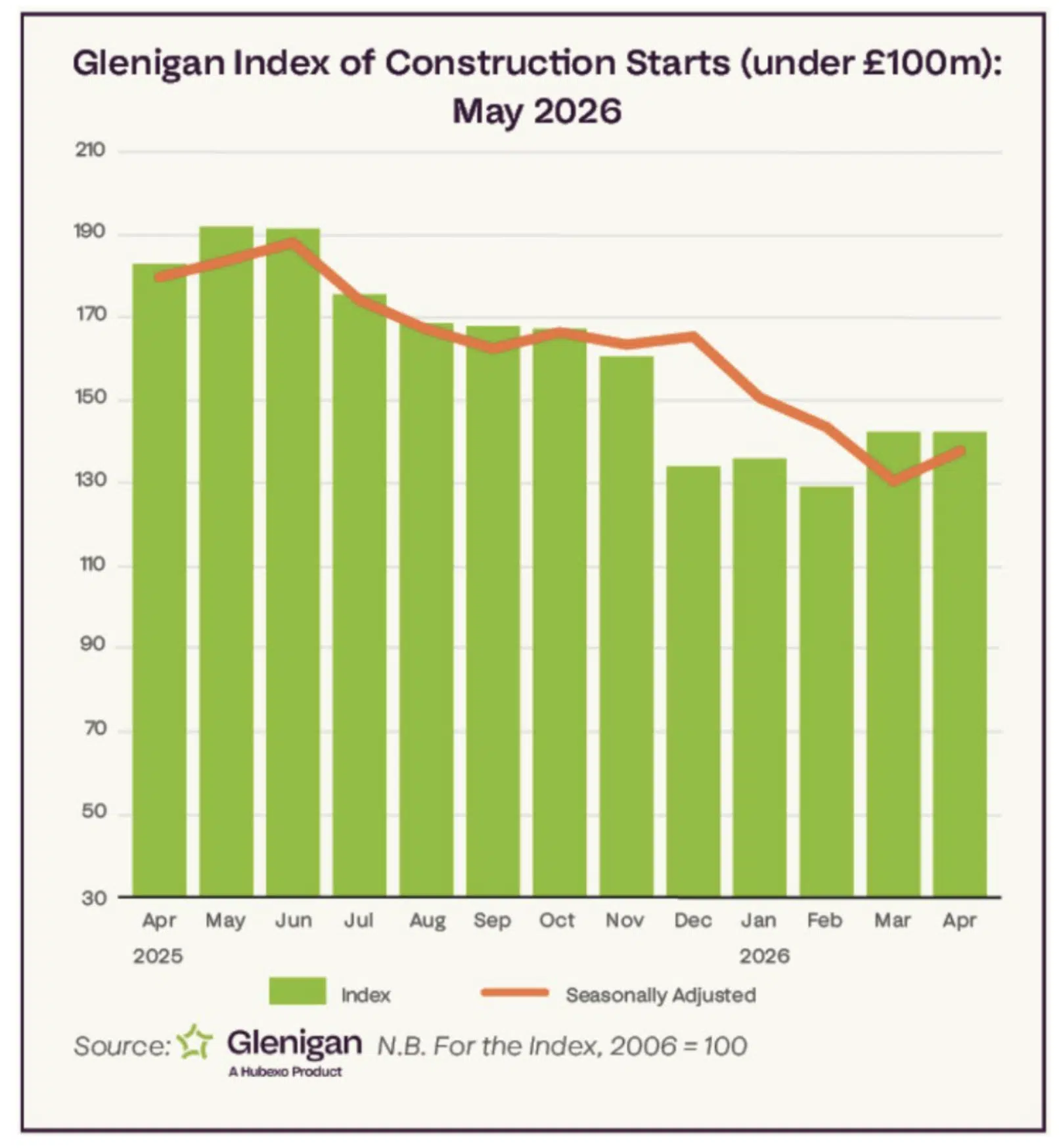
Geopolitical turmoil continued to rain on residential development parade starts. The sector continued its downward trajectory, reducing 8% on the preceding three months and declined 33% against 2025 Glenigan figures. Only non-residential work managed to maintain an even keel, boosted by office developments, predominantly in the Capital, which resulted in 99% growth over the preceding three months. Overall UK construction remains on high alert, cautious of further rising costs and supply issues coming down the line if a resolution in the Middle East can’t be reached swiftly.
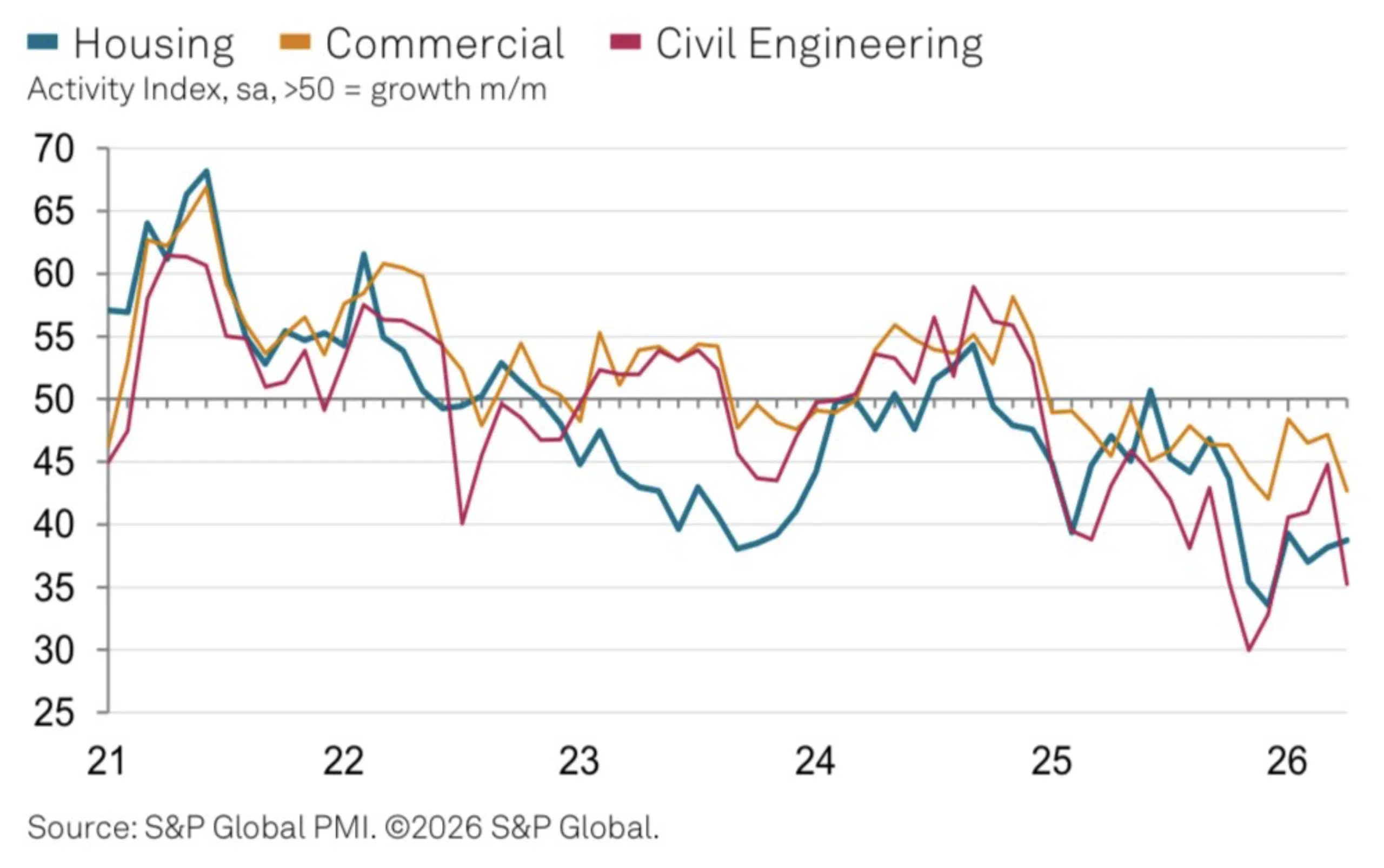
S&P Global UK Construction Purchasing Managers’ Index for April 2026 painted a similar picture. Construction remained choked by the conflict in the Middle East, causing many to postpone further development projects.
Reform drives rental price growth in the Capital
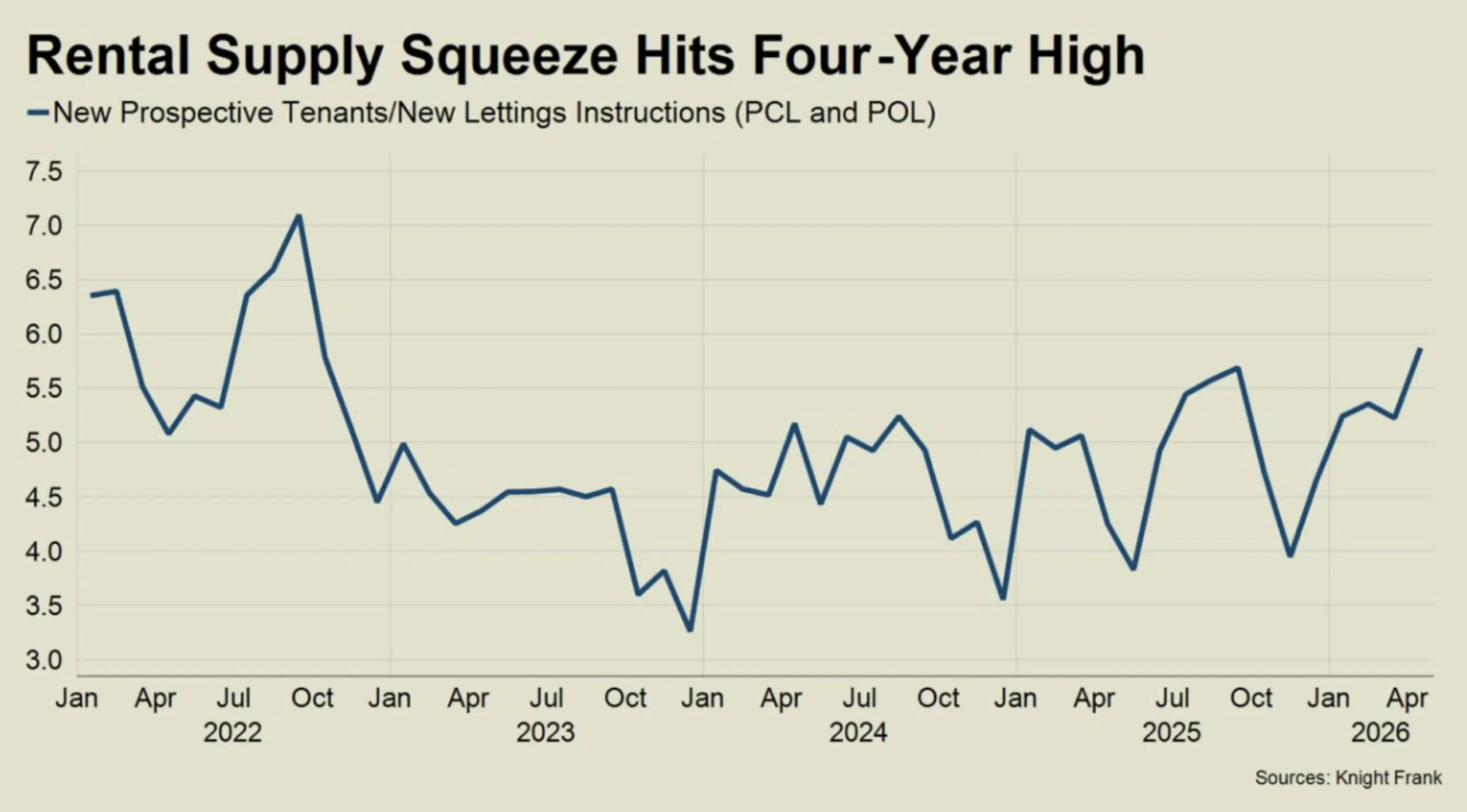
The Capital has seen PCL and POL rents rise 1% and 3% respectively in the year to April 2026 as Landlords, regained and re-listed, pre-reform, at higher prices to help combat diminished yields against soaring outgoings and uncertainty. This has only squeezed tenants further and with supply levels 15% below the five-year average this trend looks set to continue.
Halifax HPI shows a market bracing for impact
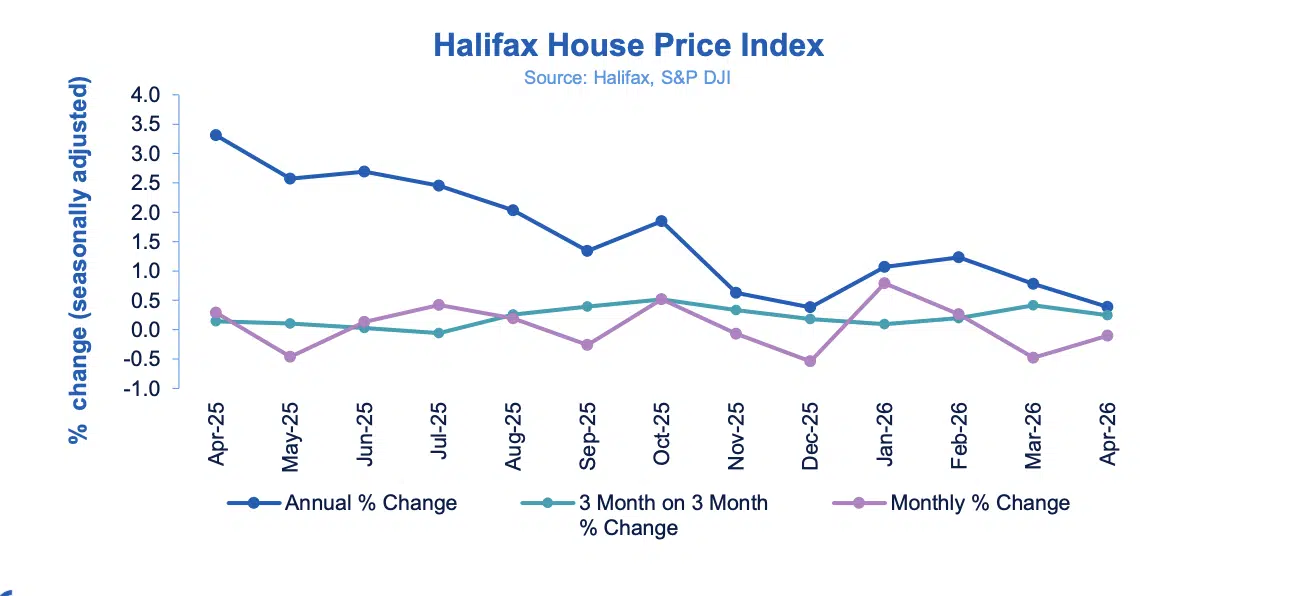
UK house prices begin to show the strain from the persistent tension in the Middle East falling 0.1% in April, making the typical property now worth £299,313. Should a resolution not be forthcoming further falls can be expected, dampening sellers’ expectations while enabling buyers who aren’t reliant on significant borrowing. Annually, growth remains strongest in the North East of England, with prices up 4.5%, and lowest in their counterpart, the South East where prices fell 2.0%.
PCL sees transaction numbers fall and discounts rise
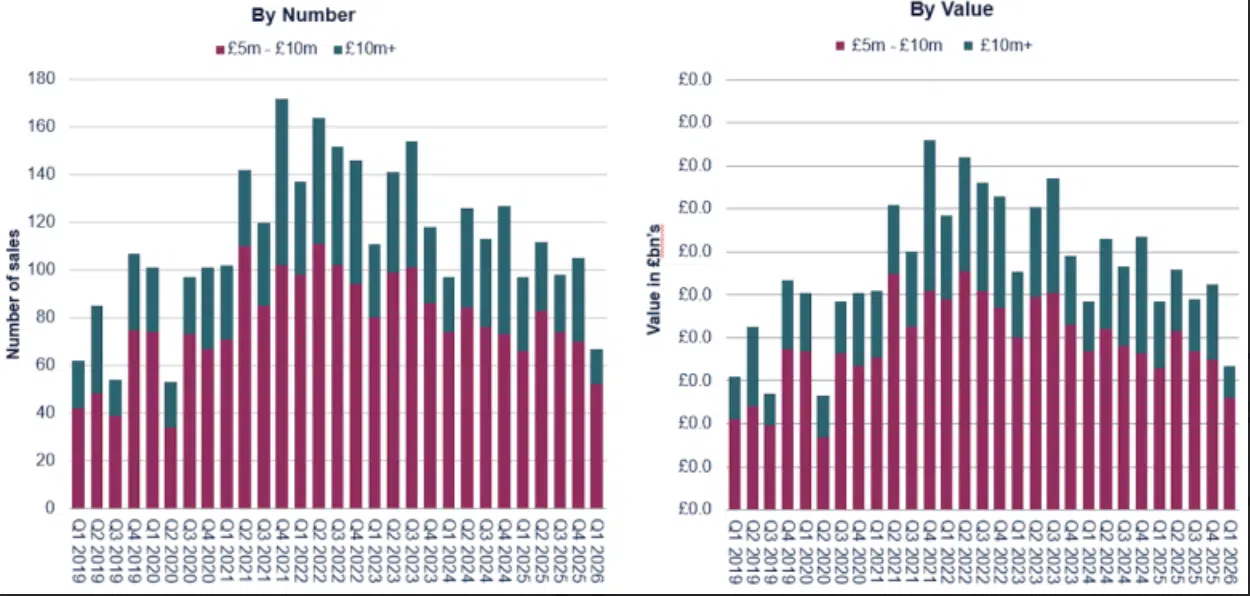
In Q1, Savills found there were just 68 £5m- plus transactions in the Capital; 35% fewer than the previous year. Those that are buying, are focusing on “golden” postcodes, picking up prime property for a fraction of what it once was worth when there was a flurry of international buyers vying for the PO BOX.
That concludes another UK Property News Recap – 08.05.2026. Any comments or suggestions please get in touch.


