


Confidence has become the UK property market’s most valuable commodity—and right now it’s in short supply. Buyers are stalling and rents are rising as house prices fall. They are even under strain in northern areas that have, for the past year, propped up the National Average house price. Flats are all out of luck and developers are on their knees lobbying the government for incentives to get them building again. The market is at a loss. Without certainty, a peace deal and some economic stability we remain in flux. Welcome to another UK Property News Recap – 14.08.2026.
Why flats aren’t selling
Lower rates pushed house prices up making it harder for first time buyers to reach them. Wage growth, though improved recently, has historically been sluggish. This alongside excessive student loan demands, the removal of cheap rates and buyer demand for flats has left many waiting till they can afford a three bed house in their thirties. With flats out of favour, the option to staircase your way up is gone so the leap from a rental or the family home is big. Initiatives will no doubt come to enable the young onto the new build ladder in areas generally lacking but promising amenities. However, until affordability improves, service charges and cladding are tackled, and leasehold is reformed; the market will remain hard to penetrate for first timers and leaseholders will remain trapped.
Rental prices rise in the capital further squeezing London renters
Propertymark’s latest rental price tracker marked a 4.2% month-on-month increase in the average rental property in the Capital. This rise means the annual salary required to secure an AVERAGE rental property in London has increased to £74,520. London is anything but cheap, step outside your door and you spend money. Unless renters have managed to secure a 6.4% year-on-year salary increase many will be struggling on what’s left over.
Dubai investors seek rental yields
Young expats are betting on the rental market long term as a reliable and constant source of income from those unable to ever get on the ladder or stalling till they can. From afar, they save tax where they can and leave management companies to get on with it while they make more money doing their day job, withholding a greater proportion of it, outside the UK
Developer Vistry is constrained by increased credit limits
Insurer Allianz kicked developer Vistry when it was down by reducing credit limits adding to its share price woes. The consistent hammering will leave the company further exposed to discounts on both sales of properties and land that will add fuel to the rumours of nationalisation.
Unused CIL payments leave developers and residents questioning councils’ abilities
Through Section 106 agreements, developers have paid councils around £269.3mn, 54% of which has been spent leaving £73.8mn “allocated to projects” yet to see the light of day. Tower Hamlets pocketed £179.8mn but only spent £65.1mn. Councils’ inability to get the job done means money is wasted through their inability to action infrastructure projects at speed making them unaffordable by the time they want to proceed. The only people benefitting are consultants and architects while residents are denied the amenities and infrastructure promised when they bought. This raises the question of how giving more money to inefficient councils to manage boroughs will actually work to the benefit of the residents they supposedly serve.
Average house price growth shows signs of strain
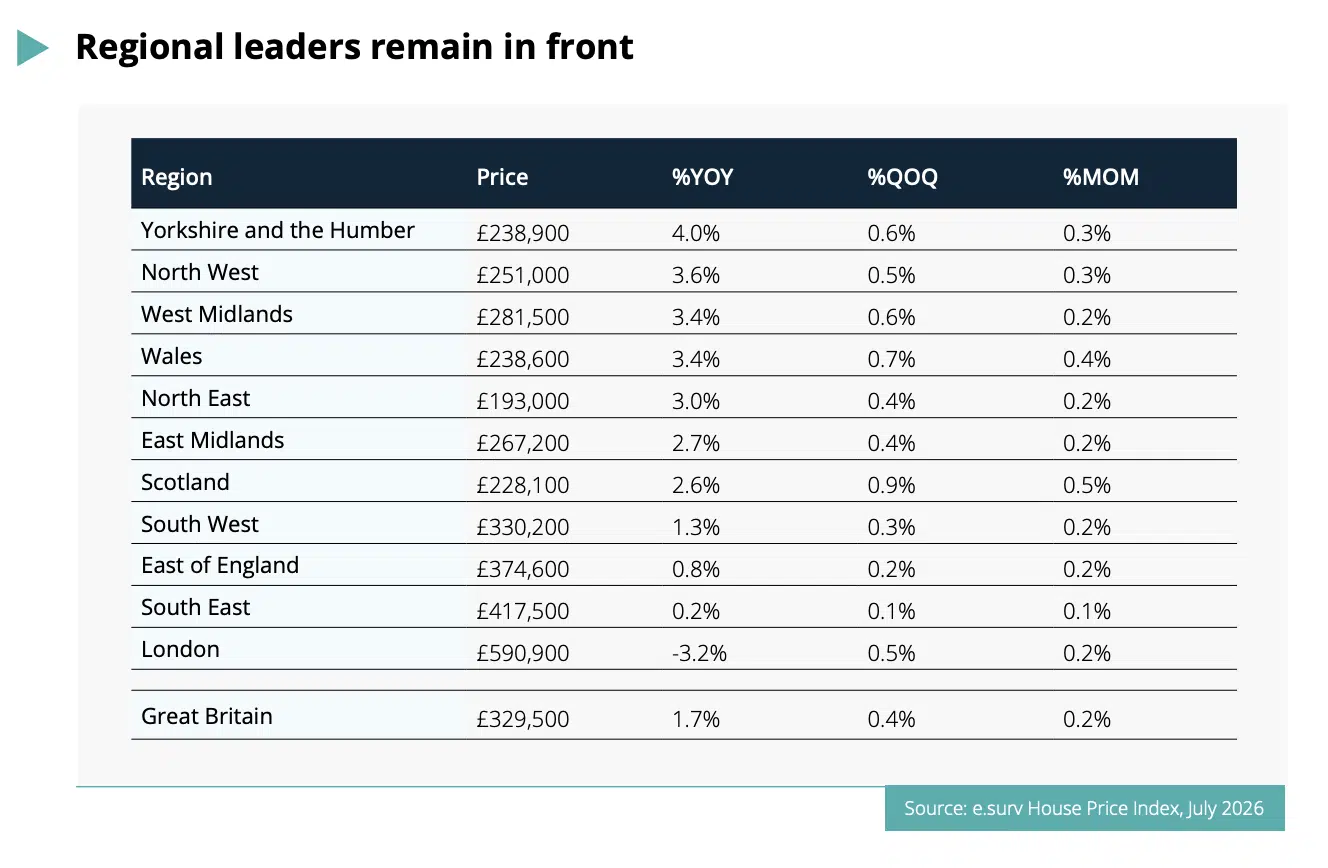
Northern house price growth has boosted the national average which was recorded by Esurv to have increased 1.7% annually and 0.4% over the quarter. Yorkshire dominated house price growth up 4% annually while London saw prices fall 3.2% as the backlash over increased taxes and nervousness around leasehold flats dampened buyer demand and their appetite to spend. Despite all this, the pace of growth is showing signs of fatigue even in booming Northern regions. Yorkshire and the Humber and the North West reported price rises of 0.56% and 0.51% respectively over the latest three months, around 0.4 percentage points below the quarterly pace implied by their annual growth rates. It appears even the most bullish markets are coming under Eastern Fire.
 ,
,
Developer Bellway’s completions rise
Bulk deals saw developer Bellway out perform others with 10.8% growth in total housing completions. Yet, reduced reservations left their forward order book lacking with only 4,206 homes as of the 31st of July 2026 versus 5,307 homes in 2025 – representing a fall in value from £1,519.4m to £1,197.2m. The economic environment remains a drag on the developer’s bottom line, which led to a veiled threat from the group that unless the government provides some form of first time buyer incentive and stamp duty is reformed, housing targets will wane.
The rise of the AI complaint
Years of discontent and not being heard has enraged many a tenant. AI works to empower tenants rightfully lodging complaints but also empowers others to give it a go. Estate agents SHOULD know instinctively if the complaint has legs or not, the time taken in responding may seem laborious but no doubt it too will also be AI generated.
Government incentives pylon discontent
Electric upgrades attract controversy as the government plans to up the country’s voltage capacity while repelling buyers and property prices in the vicinity. In an attempt to neutralise resistance the government “pylon” a meaningless incentive – £2,500 off your electricity bill over 10 years. Unsurprisingly this has homeowners far from charged up.
House prices fall as rents edge up
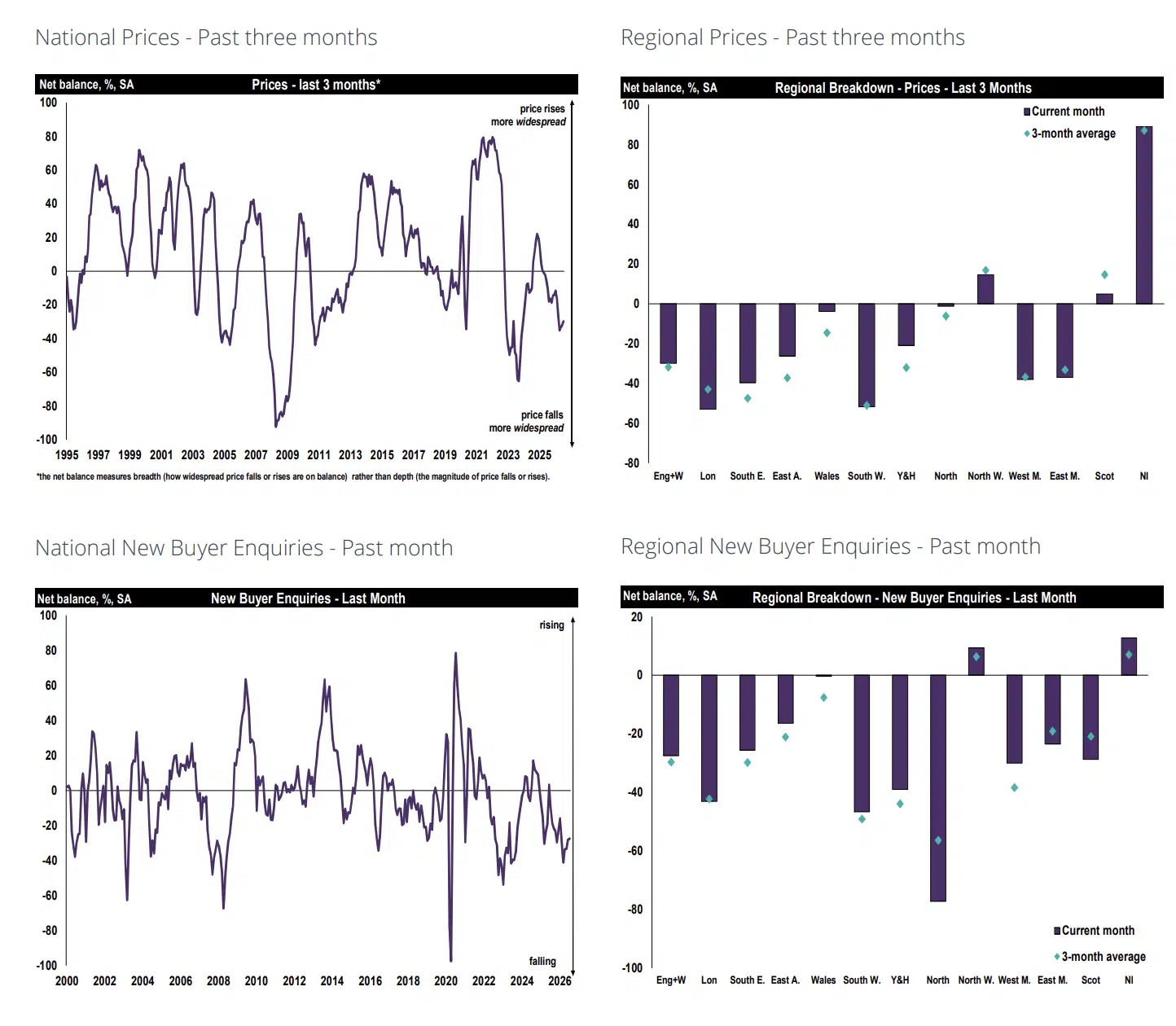
A market debilitated from the economic and actual heat saw little change over July. Demand and buyer enquiries remained consistent according to those surveyed by RICS. This presumably was driven by optimistic cash buyers or others with a preferential fixed rate they’d prefer to use than lose. Meanwhile stock levels remained relatively downbeat, not entirely unexpected for the summer while others eyed up the autumn market to list.
UK house prices remained downbeat in southern regions while Northern Ireland continued to outperform. However Scotland showed signs of strain as the rate of growth in the region slowed after consistent rises.
Overall, surveyors were cautiously optimistic for the majority of regions over the next 12 months with the capital remaining the outlier with further price falls expected on flats and higher end properties. Nationally though, a lot depends on world leaders parking their egos so the rest of us can move on.
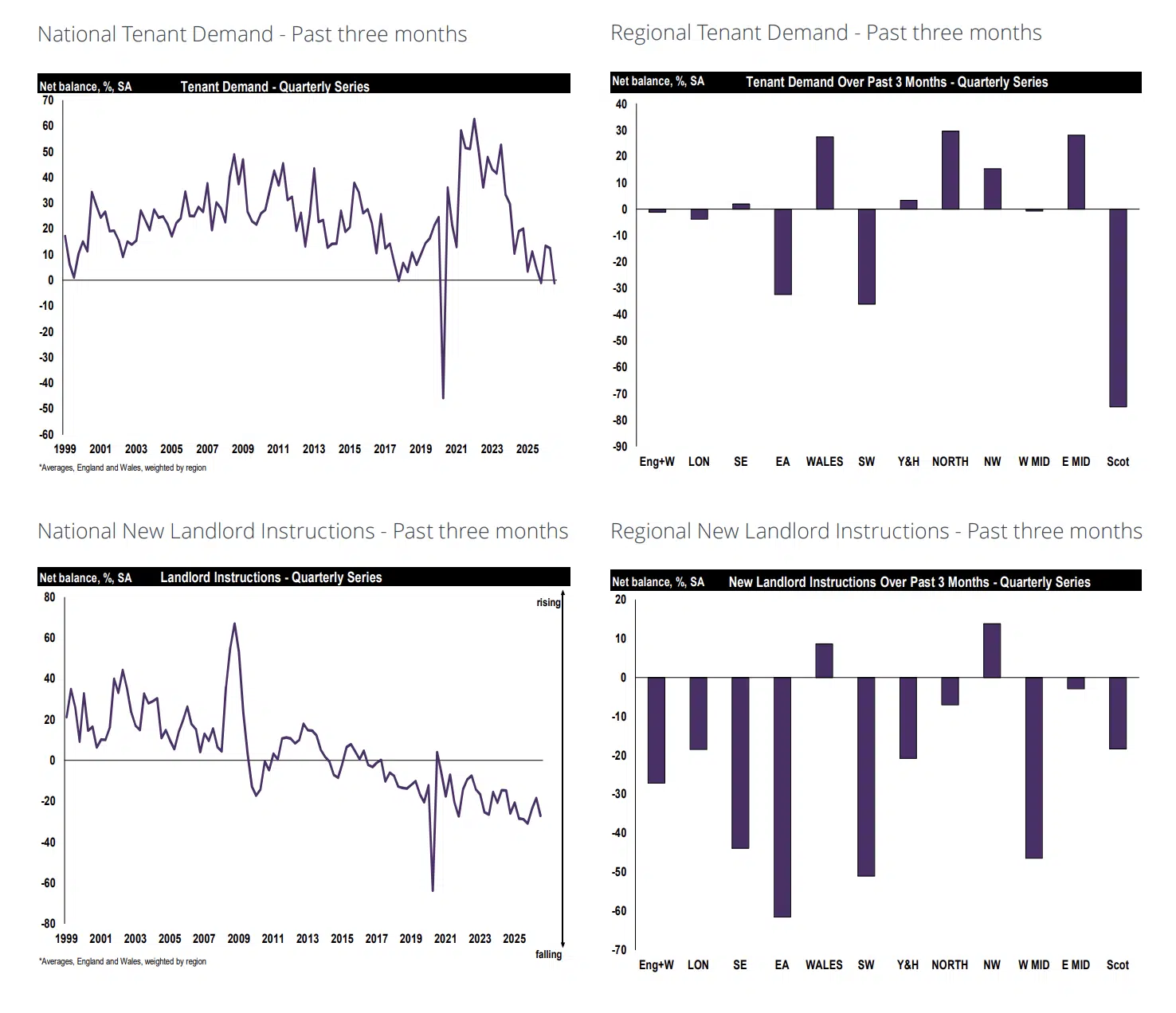
The rental sector remained at the mercy of reduced stock levels. Demand softened but not enough to compensate for the change in stock levels. As a result rental prices have remained elevated with steady but minimal growth expected.
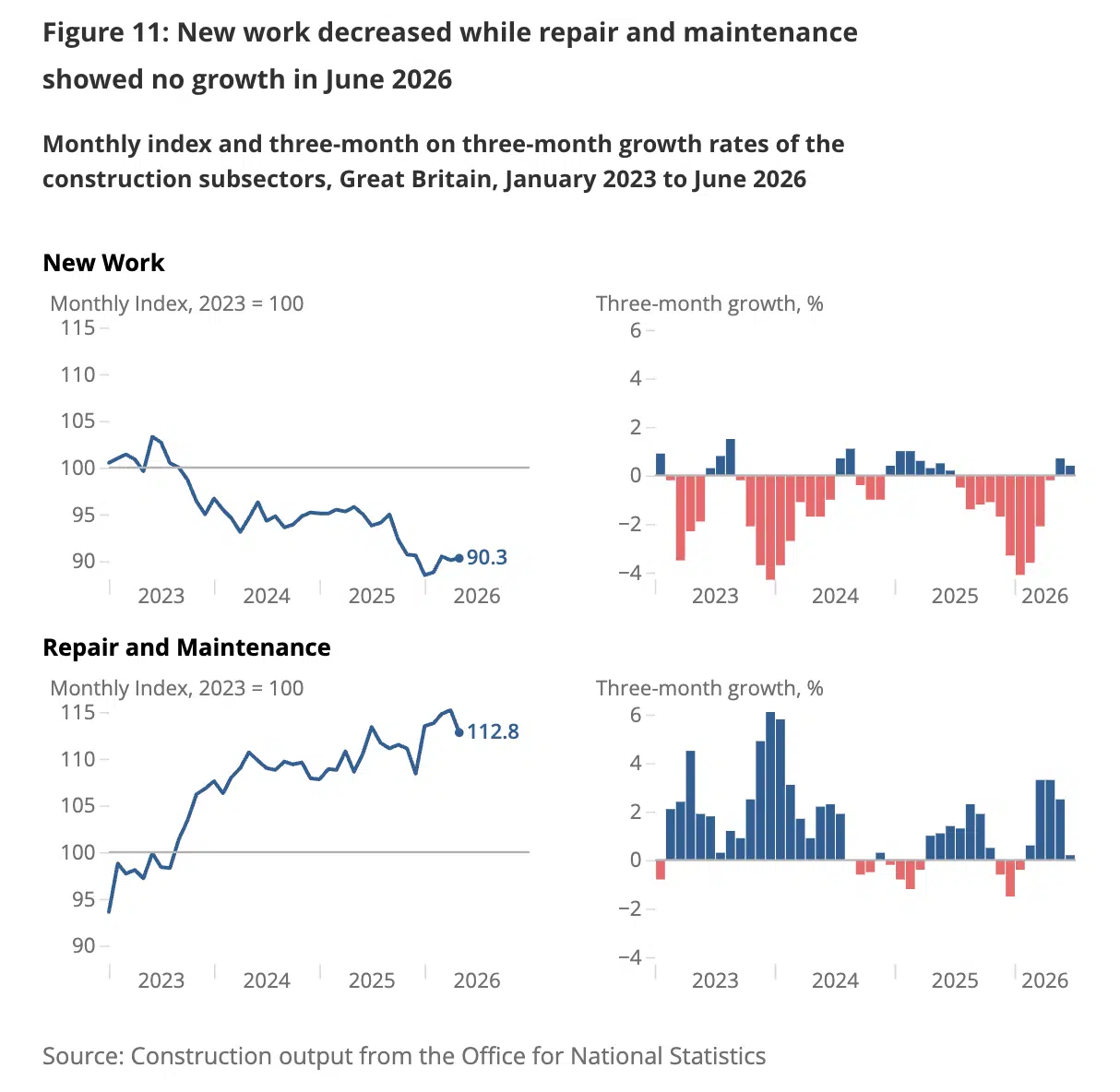
Construction remains grounded
Construction output built on the previous three months’ efforts; increasing 0.3% off the back of an increase in infrastructure work. The monthly picture however was less encouraging, falling 0.1% in June predominately due to new work drying up.
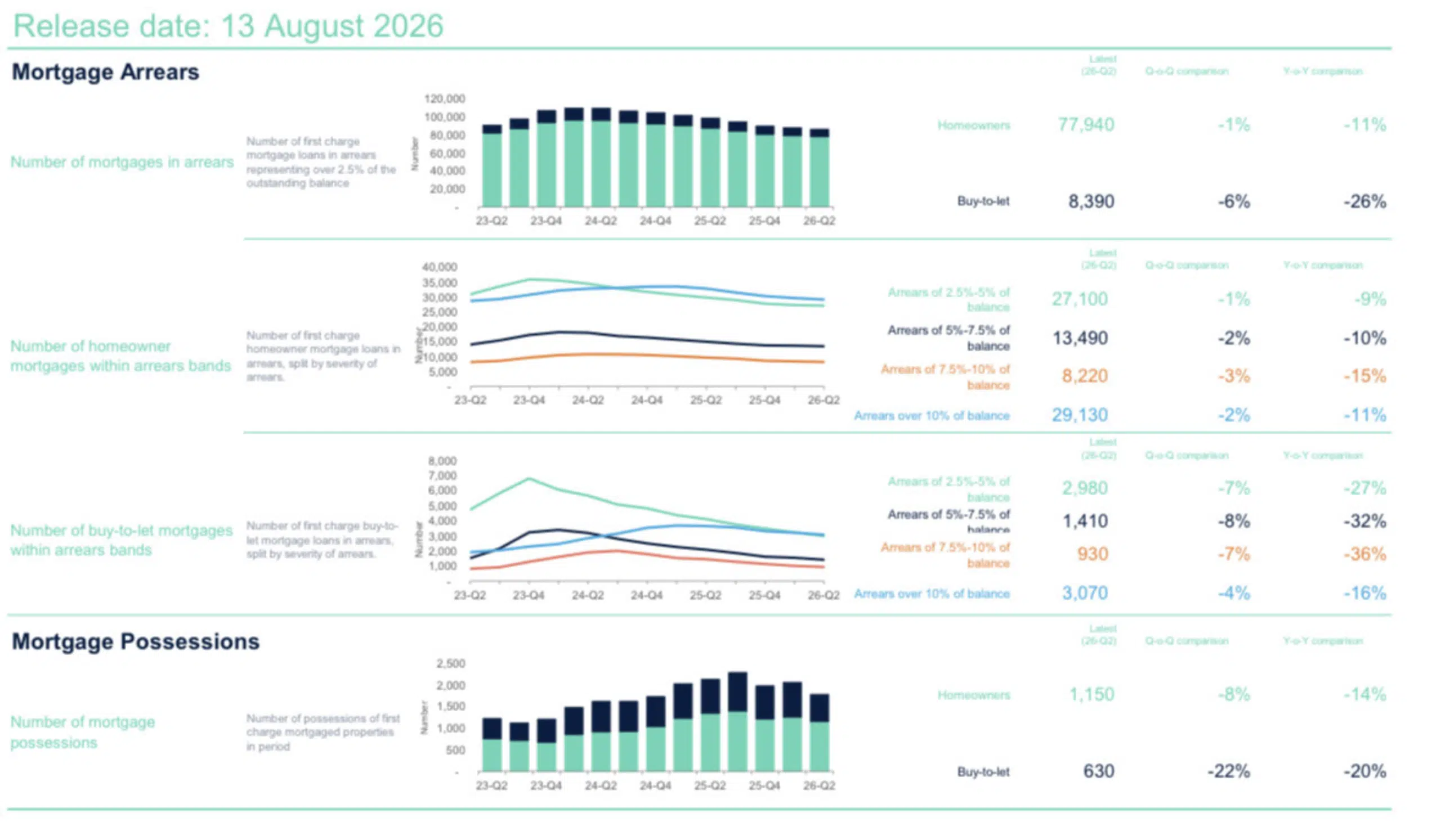
Mortgage arrears and possessions fall
According to UK Finance, lender flexibility caused residential and buy-to-let arrears and possessions to fall in Q2 2026.
Residential mortgage arrears fell 1% in Q2 for those with 2.5% + and 2.5% to 5% or more owing. The buy-to-let sector saw even greater falls of 6% and 7% for those owning 2.5% or more and 2.5% to 5% respectively.
The number of possessions also fell, residential property falling 8% to 1,150 homes while buy-to-let properties fell 22% to 630.
UK taxpayer bails out US hedge fund owner over remedial bill
The government’s new “payment plan” for the group means “instead of Avant delivering the remediation works, buildings will receive government funding for the works, which the government will seek to recover from Avant over an UNSPECIFIED payment period.” No provision appears to have been made should the company claim insolvency. The government has absolutely no idea how to negotiate or with whom. Their desperation to keep developers on side, whatever the cost is, is mind-blowing.
Climate change changes search preferences over the summer
Searches for homes for sale with air conditioning on Rightmove were up 104% compared with the same period last year. At the same time, 87% of those surveyed said that “a property’s ability to stay cool was important when choosing their next home.”
`That concludes this week’s UK Property News Recap – 14.08.2026. Any comments or suggestions do please get in touch.


