


Andy Burnham felt some heat this week as his council house revolution came under scrutiny, when his promised numbers dwindled to incorporate shared ownership. Sellers continued to list as buyers returned to sift through the well-stocked portal shelved. Those in the North discovered price increases while those in the south saw further falls. Rising rates have reduced buyers’ potential, leaving those who need to borrow either on the sidelines, unprepared to compromise on the space they want, or ploughing ahead in areas where growth remains. Developers continued to lobby the government for help to “build” while existing southern stock looked on shaky ground as subsidence claims rose. Welcome to another UK Property News Recap – 28.08.2026.
The more affordable and connected the property, the faster the house price growth.
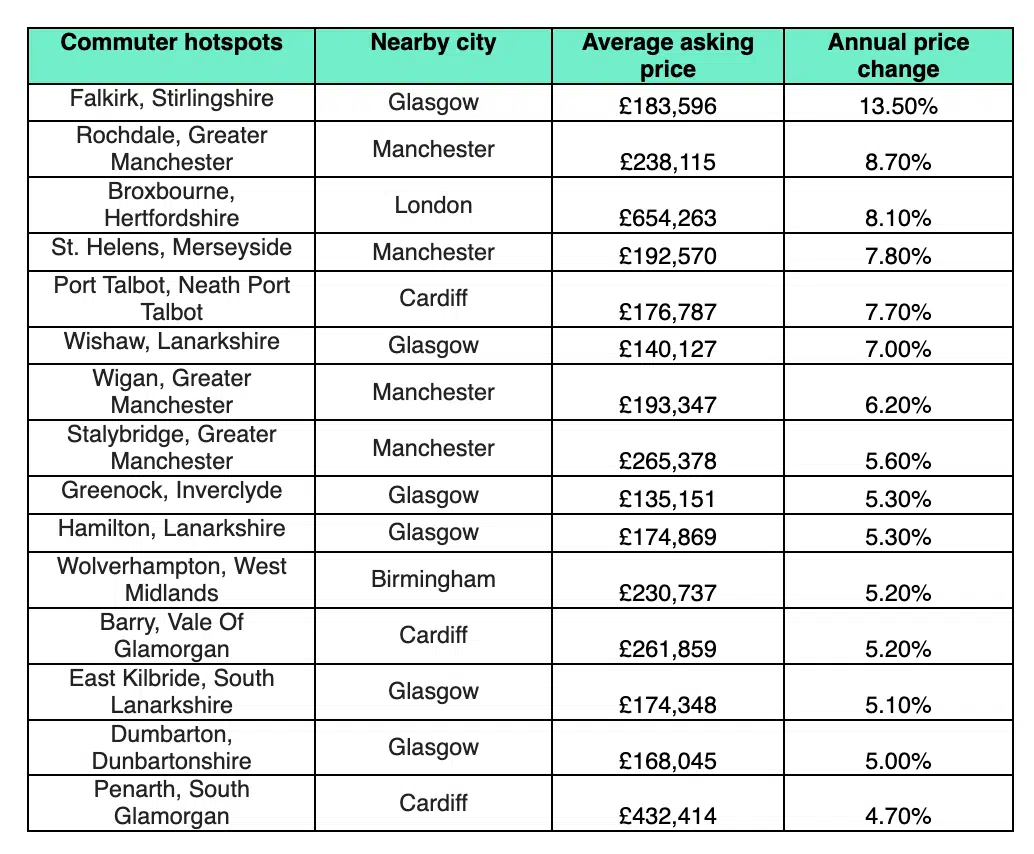
Rightmove found commuter towns with an average asking price under £250,000 saw prices rise, while those that exceed this fell behind. The only exception to this, in the portals top 15, was in Broxbourne, Hertfordshire, which came in third place, with growth of 8.10% despite having an average house price of £654,263. Top of the leader board was Falkirk in Stirlingshire with 13.5% growth while at the other end of the board was Haywards Heath in West Sussex where prices fell 4.8%. The north-south divide continues with prices pulling in conflicting directions dictated by affordability and higher taxes.
Help-to-buy pleas rise with developers
It was revealed this week that small builders are struggling to sell 10 homes a year. As a result they are pleading for some financial scaffolding to prop up their sites and profit margins. Namely, Help-to-buy. In reality, this isn’t there to assist buyers, but to facilitate developers to build. Unless building and land costs come down and buyers’ affordability and leasehold terms improve; nothing is going to change for the foreseeable.
Burnham’s council house revolution falls short
Under the plans announced at the start of the week, the government intends to spend £10bn to build 70,000 homes outside London; 60% of which will be social rented houses. The rest will be other types of accommodation such as shared ownership schemes and sheltered housing. This falls significantly short of his electoral promise to dedicate all £39bn of the Affordable Homes Programme on council homes.
With a lack of private buyers on the scene. Many developers will welcome their new client who has funds in place and the power to override objections to get the job done. But with build cost inflation as it is, pricing the job to make any form of worthwhile profit will continue to be a challenge for them. The government, who needs developers to build, has clearly bent the knee by enabling shared ownership to enter the equation.
The rise of the subsidence claim
As our climate warms so our housing foundations falter. London and the South East are the most exposed to subsidence issues due to the clay soil they sit on. As a result expect premiums to rise as house prices slide for those struggling to maintain their form. Insurers will pay out the average £17,264 to repair but homeowners will pay annually for it moving forward and future buyers with lenders will continually question it.
IFS warns rent controls could push down house prices and rise rents long term
A short term win for tenants could mean long term pain for those left behind. Despite house prices falling due to the scale of ex-landlord stock for sale, many may still find it hard to save to buy with the cost of living only rising . For those tenants left behind they could face rising competition over what rental stock remains keeping prices high.
Buyers return to a well stocked market
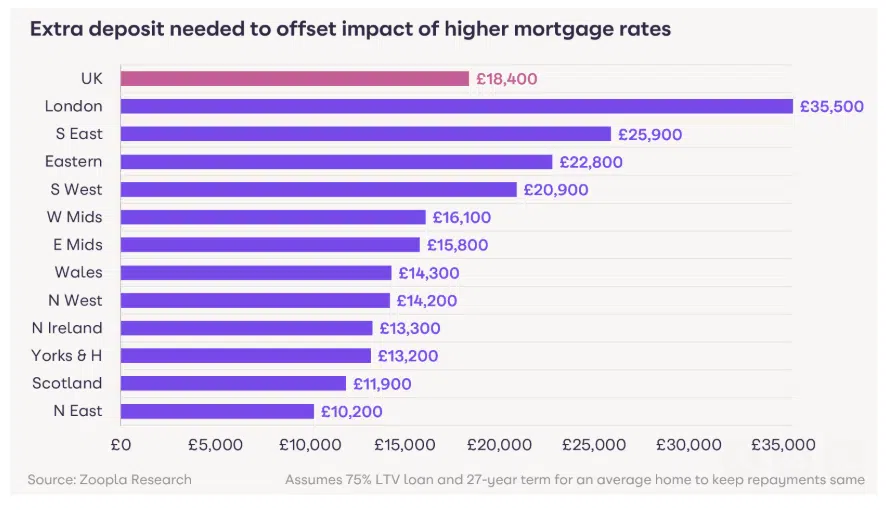
Minds focus on the new term ahead as searches jump 7% on Zoopla‘s portal. Over the summer, sellers have ploughed ahead with listing despite the dry spell of buyers. On their return, buyers face well-stocked portal shelves to sift through but without an additional £18,200 or £35,000 in London, those looking to borrow the same amount as they could back in January, will be forced to wait for a rate reversal. Many buyers will be hoping prices will have fallen enough to accommodate this but in Northern regions where prices rose 1.7% in Yorkshire and 3.1% in the North West, and 5.4% in Northern Ireland; some buyers will struggle to reach. Meanwhile buyers in southern regions continue to watch house prices decline in their favour with annual falls from -0.3% in the South East to -1% in London. Here pricing to sell is imperative if sellers actually want to move on without losing both time and more money.
The number of landlords facing rent increase tribunals rise
Without the threat of a section 21 being issued tenants are increasingly challenging rent rises. In 60% of the cases examined, Lonres found a median reduction was awarded of 3.9%. For the £49 it costs to question a rise at a tribunal we can expect more tenants to “give it a go”
Leaseholder win case for the right to manage
The Supreme Court demonstrated common sense by ruling in favour of leaseholders’ right to manage after a property tribunal sided with the freeholder after they deemed the claim invalid. This was due to a new resident not receiving an invitation to participate as HMRC delays hadn’t registered the property transfer due to the backlog. This sends a clear message to freeholders that if they excessively and needlessly draw down on leaseholders, they will, in increasing numbers, call time on them.
Property transactions rise in July but seasonally activity slows
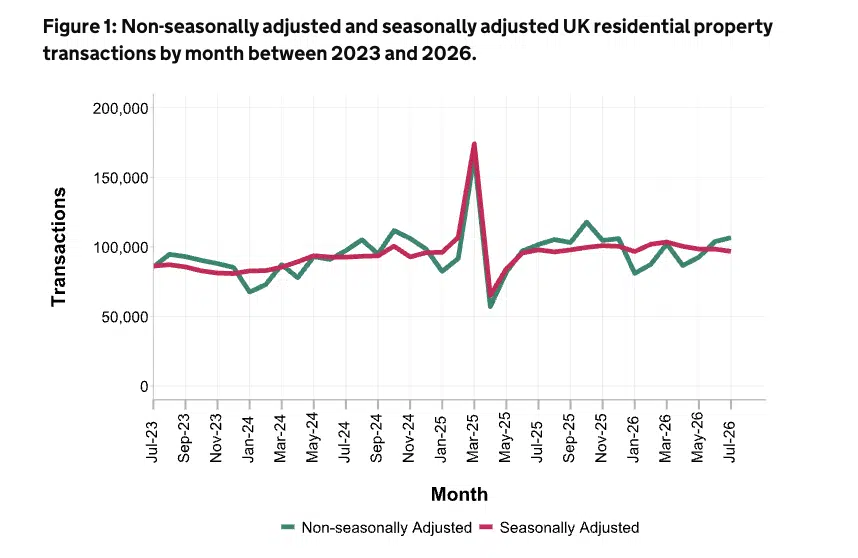
Take the seasonality out of it and the volume of UK residential transactions rose 5% in July 2026, up 3% on June 2026 efforts. Seasonally transactions were estimated to have reduced 1% annually but given the volume of transactions actually rose it would suggest that buyers are still moving on properties where they either can see prices continually rising in Northern areas. Are cash buyers taking advantage of desperate sellers or those keen to move on? Or, are those who fixed a preferential rate before the conflict in the East unwilling to lose it, so pressing on with their purchase?
Bailiffs and rogue builders to be regulated
The government is introducing mandatory regulation for private bailiffs in England and Wales. Unless they are accredited by the ECB they will not be able to act and face an independent complaints process. Meanwhile, builders will also be encouraged to sign up to an approved code scheme and Trusted Payments app so customers have better redress and confidence in both their work and payments. This however appears not to be mandatory so customers can still take their chances elsewhere but could well pay the price for it.
This concludes this week’s UK Property News Recap – 28.08.2026. Any comment or questions please don’t hesitate to get in touch.


